


Returns feel like a punch to the gut for any online business. You made the sale, shipped the product, and then it comes right back. It’s not just lost revenue; it’s a drain on your team's time, a hit to your inventory, and a dent in your bottom line. But what if you could get ahead of the problem? Understanding the most common reasons for returns is the first, most important step to building a smarter, more profitable store.
It's tempting to blame 'bad customers' or one-off mistakes, but the data shows clear, predictable patterns behind why people start a return. For instance, a huge chunk of returns, especially in clothing, comes from customers struggling with sizing and fit. To get ahead of these common issues and make customers happier, think about providing resources on smart online shopping strategies, such as learning how to shop for clothes online like a pro to help them make more confident decisions.
In this breakdown, we'll dive straight into the 8 most common reasons shoppers send products back, from product quality issues to simple buyer's remorse. More importantly, we’ll explore the real business impact of each and give you simple, practical tactics you can use today. Our goal is to help you cut down on returns, keep your customers happy, and stop preventable chargebacks before they ever happen. By figuring out the root causes, you can stop fixing individual problems and start building a system that prevents them altogether.
1. Product Quality Issues and Defects
When a customer opens their package only to find a damaged or defective item, it's more than just a hassle; it's a breach of trust. Product quality issues are consistently one of the top reasons for returns, making up a big slice of all e-commerce returns. These issues range from manufacturing flaws, like a shirt with a torn seam, to items damaged in transit, such as a cracked phone screen or water-logged electronics from poor packaging.
The impact goes far beyond the cost of a single returned item. Poor quality wears down customer confidence and tarnishes your brand's reputation. A customer who gets a defective product is unlikely to shop with you again and may share their bad experience online, scaring away potential new customers. On top of that, if the return process is a pain, these situations often turn into chargebacks, adding administrative costs and fees to the initial loss.
How to Prevent Quality-Related Returns
Getting on top of quality is the most effective strategy. It starts long before an item ever ships. Putting solid manufacturing quality management systems in place is key to minimizing product defects at the source and making customers happier overall.
Here are some practical steps you can take:
- Rigorous Quality Control (QC): Don't just trust your supplier. Set up your own pre-shipment QC checks. This could mean spot-checking a percentage of inventory as it arrives at your warehouse or hiring a third-party inspection service for larger batches.
- Invest in Protective Packaging: The journey from your warehouse to the customer's doorstep can be rough. Use durable boxes, bubble wrap, air pillows, and other appropriate materials to make sure products arrive in perfect condition. Test your packaging by shipping items to yourself to see how they hold up.
- Track Supplier Performance: Keep an eye on return rates by SKU and by supplier. If a particular product or partner consistently has high defect rates, it's time to rethink that relationship. This data is essential for holding suppliers accountable.
- Streamline Your Response: When a defective item does slip through, how you respond is critical. Offer an immediate and hassle-free replacement or refund. A quick, positive solution can turn a negative experience into a display of excellent customer service. Properly documenting these legitimate returns also helps you defend against fraudulent disputes. You can learn more about how quality issues can lead to product unacceptable chargebacks and how to manage them.
2. Size and Fit Problems
"It doesn't fit" is one of the most common and frustrating phrases in e-commerce, especially for apparel and footwear brands. Problems with size and fit are a leading cause of returns, often accounting for 20-30% of all items sent back. This issue comes from a lack of universal sizing standards, confusing size charts, and the simple reality that customers can't try items on before they buy, leading them to order multiple sizes with the plan to return some.

The financial impact of fit-related returns is massive. It's not just the cost of return shipping and restocking; high return rates on specific items can make them unprofitable. For fashion retailers like ASOS, where return rates can top 30%, managing this challenge is a core part of the business. When customers are disappointed by the fit, it erodes their confidence in making future purchases and can lead to negative reviews about sizing accuracy, which is one of the key reasons for returns that shoppers look for.
How to Prevent Size-Related Returns
The best defense is a good offense: give customers as much information as possible to choose the right size on their first try. Your goal is to recreate the in-store fitting room experience online through data and technology.
Here are some practical steps you can take:
- Create Ultra-Detailed Size Guides: Go beyond a basic chart. Include photos and videos showing how to measure, list the specific measurements of the model (height, weight, and what size they are wearing), and provide garment-specific dimensions (e.g., inseam, sleeve length).
- Implement Sizing Technology: AI-powered virtual try-on tools and size recommendation quizzes can significantly boost customer confidence. These tools use customer data or body measurements to suggest the best fit, reducing guesswork.
- Leverage Customer Feedback: Actively collect and display reviews that mention fit. Encourage customers to share their height, weight, and the size they purchased. This user-generated content acts as a powerful, real-world guide for new shoppers.
- Offer Flexible Exchange Policies: Make it easy and free for customers to exchange for a different size. This recovers a sale that would otherwise be a full refund and keeps the customer happy. When a legitimate size-related return happens, properly documenting it can help you defend against invalid "item not as described" chargebacks if a customer later claims the sizing was fraudulent.
3. Changed Mind or Buyer's Remorse
Unlike returns driven by a product flaw, buyer's remorse happens when a customer's perception or need changes after the purchase. This is one of the more frustrating reasons for returns for merchants, as the product is perfectly fine, yet it still comes back. These returns, often stemming from impulse buys, finding a better deal elsewhere, or simply post-purchase regret, can make up as much as 15% of all e-commerce returns, directly impacting your bottom line.
The impact of buyer's remorse is significant because it doubles your logistical costs for a sale that never really happened. You pay for the initial shipping and then for the return processing, all while the item is out of your sellable inventory. In a worst-case scenario, a customer might bypass the return process entirely and file a chargeback, falsely claiming an issue to get their money back. This can sometimes look like friendly fraud, a major headache for any online business.
How to Prevent Buyer's Remorse Returns
Addressing buyer's remorse is about reinforcing the customer's decision and setting clear expectations. While you can't eliminate it completely, you can build a strategy to reduce how often it happens and how much it costs. It's about psychology as much as it is about policy.
Here are some practical steps you can take:
- Implement a Clear Return Window: A concise 14 to 30-day return window creates a sense of urgency and reduces the time a customer has to second-guess their purchase. Indefinite or overly long return periods can encourage casual returns.
- Reinforce Purchase Value: Use your post-purchase email sequence to do more than just send a receipt. Send emails that highlight the product's benefits, offer usage tips, or share positive customer reviews. This helps reaffirm that they made a great choice.
- Offer Store Credit Incentives: When a customer starts a return, offer them the option of store credit with a small bonus (e.g., 10% extra). This keeps the revenue within your business and encourages a future purchase, turning a potential loss into a retained customer.
- Establish Restocking Fees (Carefully): For non-defective returns, consider implementing a small restocking fee to cover your processing costs. Be sure this policy is stated clearly on your product and return pages, and check local regulations to ensure compliance.
- Distinguish Returns from Fraud: It's crucial to tell the difference between a legitimate remorse-driven return and a fraudulent chargeback. Customers may file a chargeback with a false reason code to avoid your return policy. To understand this behavior better, you can learn more about how friendly fraud works and how to protect your business.
4. Item Not as Described or Misleading Product Information
When a customer receives a product that doesn't match the online photos, description, or specifications, the disappointment is immediate. This discrepancy, often cited as "item not as described," is a powerful driver behind the reasons for returns, contributing to as much as 20% of all items sent back. This issue can be as simple as a clothing color appearing different due to photo lighting or as significant as a piece of furniture having incorrect dimensions.

The fallout from misleading information goes well beyond a simple return. It directly undermines customer trust and can lead to negative reviews that paint your business as deceptive. More critically, this is a major trigger for chargebacks. A customer feeling misled is highly likely to dispute the charge directly with their bank, citing misrepresentation. Winning these disputes is tough without ironclad proof that your listing was accurate.
How to Prevent "Not as Described" Returns
Accuracy and transparency on your product pages are your best defense. The goal is to set clear, realistic expectations so there are no surprises when the customer unboxes their order. Think of your product detail page as a contract with your customer.
Here are some practical steps you can take:
- Provide Comprehensive Visuals: Use multiple, high-quality photos from different angles. Include lifestyle images to show scale, close-ups to detail materials, and even short videos demonstrating the product in use.
- Write Detailed Specifications: Don't skimp on the details. Clearly list all dimensions, weight, materials, color codes (e.g., Pantone), and included accessories. If a feature or accessory shown in a lifestyle photo is not included, state it explicitly.
- Gather and Use Customer Feedback: Pay attention to return comments and product questions. If multiple customers say a color is different than expected, update your product description and consider re-shooting your photos to be more accurate.
- Automate Your Chargeback Defense: When a "not as described" claim escalates to a chargeback, how you respond is key. Using a service like ChargePay can automatically compile compelling evidence from your product descriptions, order details, and customer communications to fight the dispute. This preparation is critical if you want to learn how to win a credit card dispute and protect your revenue.
5. Shipping Delays and Late Deliveries
In an age of on-demand everything, delivery speed is a huge part of the customer experience. When an order arrives much later than promised, it often becomes an unwanted item. Shipping delays are one of the most frustrating reasons for returns for customers, especially for time-sensitive purchases like a gift for a birthday that has already passed or holiday items that arrive after the celebration. These situations don't just lead to returns; they can also trigger immediate chargebacks from customers who feel the service promise was broken.
The business impact of late deliveries is twofold. First, you have the direct cost of the return and the potential loss of the sale. Second, and more damaging, is the erosion of customer trust. A single missed delivery deadline can convince a customer to never shop with you again. This is especially true if communication about the delay is poor or non-existent, leaving the customer feeling ignored and unimportant.
How to Prevent Returns from Late Deliveries
Managing customer expectations and keeping communication clear are key to reducing returns caused by shipping issues. Transparency can turn a potentially negative experience into an opportunity to show off excellent customer service.
Here are some practical steps you can take:
- Set Realistic Delivery Estimates: It's better to under-promise and over-deliver. Use conservative, data-informed estimates at checkout that account for potential processing and carrier delays. Avoid overly optimistic delivery windows that you can't consistently meet.
- Provide Proactive Communication: Don't wait for the customer to ask where their order is. Set up automated alerts to notify customers the moment a delay is detected in the carrier network. A simple, honest email explaining the situation can prevent frustration and a potential return.
- Offer Multiple Shipping Options: Give customers control by offering a range of shipping speeds at checkout, including expedited options for those who need their items by a specific date. This helps manage expectations from the very beginning.
- Monitor Carrier Performance: Don't just set and forget your shipping partners. Track their on-time delivery rates and hold them accountable to their service-level agreements (SLAs). If a carrier is consistently underperforming, it's time to find a more reliable alternative.
- Maintain Detailed Shipping Records: When a dispute arises from a delivery issue, solid documentation is your best defense. Keeping meticulous records of shipping dates, tracking information, and delivery confirmations is essential for winning these cases. You can learn more about how to effectively manage shipping chargebacks and protect your revenue.
6. Damaged or Lost Items in Transit
Even with perfect products, the journey from your warehouse to the customer's doorstep is full of risks. Items that arrive damaged or never show up at all are frustrating for everyone involved and are a distinct category among the top reasons for returns. While these issues are caused by logistics and shipping carriers, the customer often holds the merchant responsible. This category accounts for an estimated 2-5% of all returns and can quickly escalate if not handled properly.
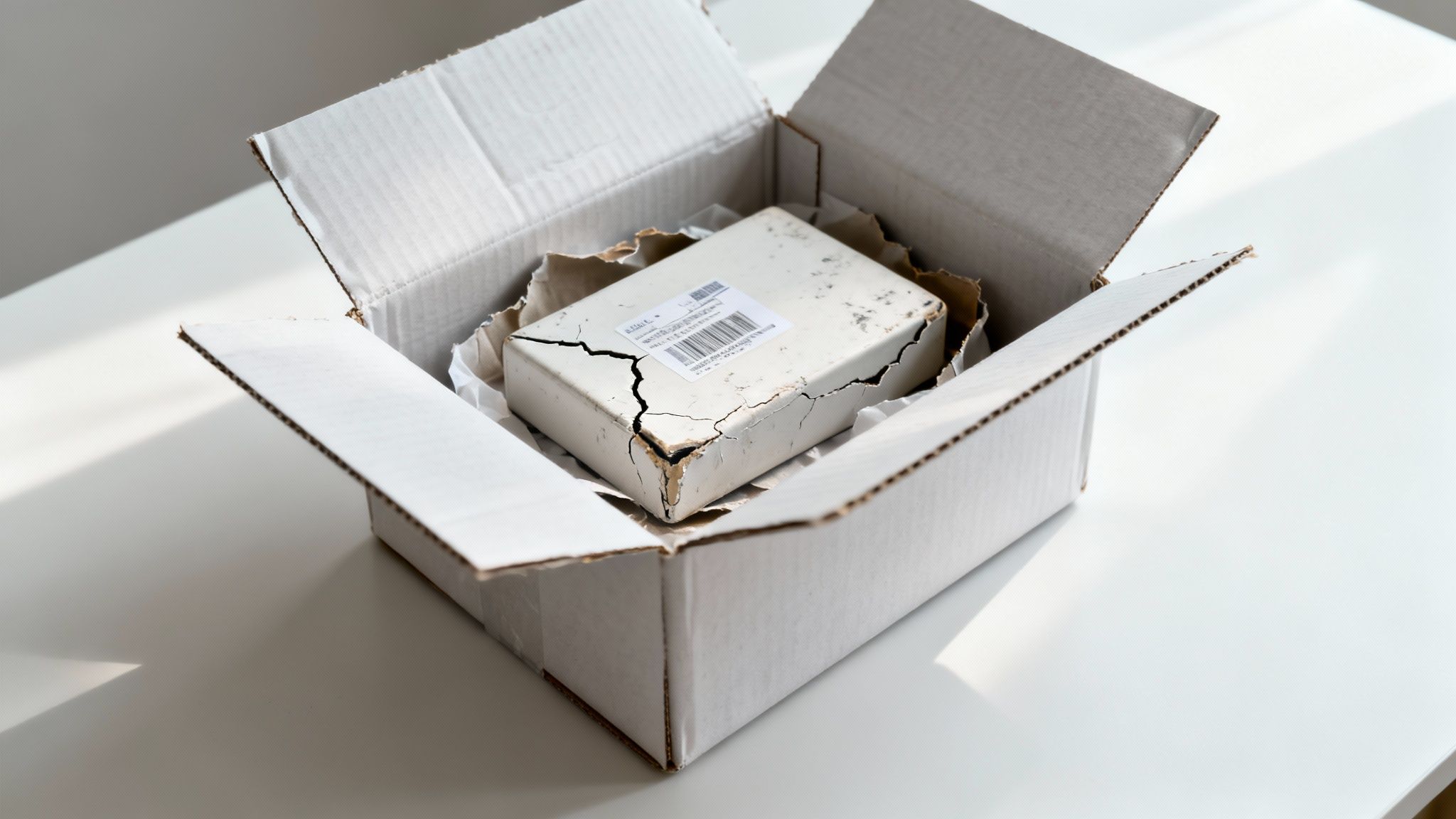
The fallout from a lost or damaged package extends beyond the cost of the item. A customer who paid for a product and received nothing (or a broken version) feels cheated. If a refund or replacement isn't offered immediately, they are highly likely to start a chargeback for "item not received." This not only results in a lost sale but also racks up additional fees and damages your merchant standing with payment processors.
How to Prevent Transit-Related Returns
Reducing transit-related issues requires a proactive logistics strategy and a customer-focused response plan. Protecting your shipments and your business starts before the package ever leaves your facility. By setting up strong shipping protocols, you can significantly reduce the likelihood of these costly problems.
Here are some practical steps you can take:
- Document and Insure Shipments: Take photos of high-value items in their packaging before you seal the box. Always purchase carrier insurance and use signature confirmation for expensive orders to create an undeniable record of shipment and delivery. This documentation is your best defense against false claims.
- Track Carrier Performance: Don't treat all carriers equally. Monitor metrics like on-time delivery rates, damage claims, and lost package incidents for each carrier you use. If one consistently underperforms, it’s time to renegotiate terms or switch providers.
- Offer Immediate Resolution: When a customer reports a lost or damaged package, don't make them wait for the carrier claim to process. Immediately offer to ship a replacement or issue a full refund. This excellent customer service can prevent a chargeback and salvage the customer relationship.
- Automate Your Defense: Your response to an "item not received" chargeback must be fast and thorough. Tools like ChargePay are designed to help by automatically compiling and submitting all necessary shipping details, carrier information, and proof of delivery. This creates an airtight defense, increasing your win rate and recovering lost revenue.
7. Duplicate or Incorrect Orders
Receiving the wrong item, or worse, a duplicate shipment followed by a double charge, is an incredibly frustrating customer experience. These fulfillment errors, which include anything from an incorrect size or color to a completely wrong product, are significant reasons for returns. While they make up a smaller slice of the return pie than sizing or quality issues, they are almost entirely preventable and cause immense damage to customer trust.
The impact of these errors is immediate and costly. Not only do you pay for return shipping and the labor to process the incorrect item, but you also have to cover the cost of shipping the correct item. Each mistake doubles your fulfillment expenses for that single order. More importantly, it signals operational carelessness to the customer, making them hesitant to order again. If not resolved quickly with great service, these situations can easily lead to chargebacks as customers seek a faster resolution through their bank.
How to Prevent Fulfillment-Related Returns
Accuracy in the warehouse is the key to eliminating these entirely avoidable returns. This means moving from manual processes to system-driven checks that leave little room for human error. A well-organized fulfillment process is your best defense against sending the wrong package.
Here are some practical steps you can take:
- Implement Barcode Scanning: This is the single most effective way to reduce picking errors. Scanners verify that the item being packed matches the item in the order, flagging mistakes before the box is sealed. It's a fundamental part of modern warehouse management.
- Establish a QA Checkpoint: Designate a final quality assurance (QA) station where a different team member reviews orders before they are labeled for shipment. This second set of eyes can catch errors in item selection, quantity, or even packaging.
- Enhance Order Confirmations: Your automated order confirmation email should be crystal clear. Include product images, SKUs, sizes, and colors, giving the customer one last chance to spot a mistake they might have made during checkout.
- Integrate Your Systems: Make sure your e-commerce platform (like Shopify) is tightly integrated with your inventory management system. This synchronization prevents overselling and reduces the risk of system glitches that could duplicate orders or send incorrect stock information to your pickers.
- Act Fast on Mistakes: When an error occurs, own it and fix it immediately. A proactive and apologetic response that includes a quick reshipment of the correct item can salvage the customer relationship. Properly documenting these resolutions, including communication records and new tracking numbers, is also vital for defending against potential chargebacks later on.
8. Fraudulent Purchases and Unauthorized Transactions
While not a traditional product return, a chargeback due to a fraudulent or unauthorized transaction has an even more damaging financial impact. This issue comes up when a cardholder reports a charge they claim they did not authorize. It is a big challenge for merchants, particularly in high-risk areas like digital goods, gaming, and subscription services. These disputes stem from either true fraud, where a stolen credit card is used, or friendly fraud, where a legitimate customer falsely claims a purchase was unauthorized.
The financial repercussions are severe. Unlike a standard return where you might get the product back, a chargeback results in the loss of the product, the revenue from the sale, and an additional chargeback fee from your payment processor. This direct hit to your bottom line eats into profitability and, if it happens often, can even put your ability to process payments at risk. These disputes are not just about lost money; they represent a direct attack on your revenue stream.
How to Prevent Unauthorized Transaction Chargebacks
Preventing these chargebacks requires a multi-layered security and documentation strategy. The goal is to both block genuinely fraudulent orders and build a solid evidence file to dispute friendly fraud effectively. Proving that the legitimate cardholder authorized the transaction is your primary defense.
Here are some practical steps you can take:
- Implement Robust Fraud Detection: Use tools that check AVS (Address Verification System) and CVV (Card Verification Value) on every transaction. Additionally, use fraud scoring systems that analyze IP addresses, device fingerprints, and purchase velocity to flag high-risk orders for manual review.
- Maintain Meticulous Records: Log everything. Store customer IP addresses, device information, and a complete history of communications. For subscriptions, keep clear records of sign-up agreements and cancellation requests. These details are your ammunition when fighting a dispute.
- Send Immediate Confirmations: As soon as a purchase is made, send a detailed order confirmation email. This creates a digital paper trail and gives the legitimate cardholder an immediate opportunity to flag any unrecognized activity on their account.
- Strengthen Authentication: For high-value orders or account changes, require multi-factor authentication (MFA). This adds a crucial layer of security, making it much harder for fraudsters to succeed and strengthening your case that the real customer approved the transaction.
When a fraudulent chargeback occurs, your response must be swift and evidence-based. For example, a PayPal unauthorized transaction claim requires specific proof that you delivered the goods or services to the verified account holder. Automated tools can be invaluable here, compiling transaction data, communication logs, and behavioral patterns into a compelling representment package to fight and win these costly disputes.
8-Point Comparison: Reasons for Returns
Turn Your Return Problem into a Growth Opportunity
We’ve journeyed through the complex world of e-commerce returns, breaking down the top reasons for returns that every merchant faces. From product quality issues and sizing mishaps to buyer’s remorse and shipping damage, it’s clear that returns are more than just a line item on your balance sheet. They are a direct, unfiltered feedback loop from your most important asset: your customers.
Thinking about returns as a "cost of doing business" is a missed opportunity. Instead, view each return as a data point revealing a specific friction point in your customer's journey. A "wrong size" return isn't just a lost sale; it's a signal to improve your size chart or add a virtual try-on tool. An item arriving damaged isn't just a refund; it's a call to re-evaluate your packaging or shipping carrier. By tackling the root causes we've discussed, you're not just plugging a leak; you're fundamentally strengthening your business from the inside out.
From Reactive Fixes to Proactive Growth
The most successful e-commerce brands don't just process returns efficiently; they use the insights to build a better, more resilient operation. The key is to shift from a reactive mindset to a proactive one. Let's recap the core strategy:
- Product & Presentation: Your product pages are your first line of defense. High-resolution photos, detailed videos, accurate descriptions, and comprehensive sizing guides are non-negotiable. They set clear expectations and are the most powerful tools for preventing returns related to "item not as described."
- Quality & Fulfillment: Your commitment to quality doesn't end when a product is manufactured. It extends through rigorous quality control checks, robust packaging solutions, and reliable shipping partners. Every step is a chance to prevent defects, damage, and delays.
- Policy & Experience: A clear, fair, and easy-to-understand returns policy builds trust. It can turn a potentially negative experience into a positive one, encouraging customer loyalty even when a purchase doesn't work out.
By focusing on these three pillars, you do more than just lower your return rate. You enhance the entire customer experience, which leads to higher satisfaction, better reviews, and increased lifetime value. The goal isn't to achieve zero returns—that's unrealistic. The goal is to create an operation so fine-tuned that the only returns you get are from genuine preference changes, not from operational failures.
The Inevitable Challenge: Fraud and Chargebacks
While you can control your product quality and shipping, you can't always control bad actors. Fraudulent transactions and unauthorized purchases represent a particularly costly subset of returns, often showing up as chargebacks. These disputes bypass your return policy entirely, pulling money directly from your account and hitting you with additional fees.
This is where a strategic safety net becomes essential. Manually fighting chargebacks is a time-consuming, resource-draining battle with a low success rate. You need to focus on marketing, product development, and customer service, not on compiling evidence and submitting paperwork. An automated solution is no longer a luxury; it’s a necessity for scaling your business securely.
Ultimately, understanding the common reasons for returns is the first step on a much larger journey. It’s about transforming a business challenge into a powerful engine for growth. Each return you prevent strengthens your profit margins, and each piece of feedback you implement deepens your customer relationships. By being methodical, data-driven, and proactive, you can build a brand that people not only want to buy from but are excited to keep.
While you work on preventing returns, let ChargePay handle the chargebacks you can't avoid. Our fully automated system uses AI to fight and win disputes on your behalf, recovering lost revenue so you can focus on building your brand. Stop losing money to chargebacks and see how ChargePay can protect your bottom line.


.svg)



.svg)


.svg)
.svg)
.svg)