


Dealing with chargebacks can feel like an uphill battle, but it doesn't have to be. A well-written rebuttal letter is your best tool for fighting back and protecting your hard-earned revenue. Whether a customer claims they never received their item or you're facing an "unauthorized transaction" you know was legitimate, the right words and evidence make all the difference. Losing these disputes not only costs you the sale but can also increase your processing fees and even put your payment accounts at risk.
This guide gets straight to the point. We provide a detailed breakdown of seven different rebuttal sample letter templates, each designed for the most common disputes you'll face as an e-commerce merchant. We're not just giving you a template; we're explaining the strategy behind it. For each example, you’ll get a clear customization guide, a checklist of essential evidence, and a recommended subject line to make sure your response gets seen.
This process is vital for your business's health. In a worst-case scenario, unresolved disputes can lead to more than just lost income; they can escalate to account holds or suspensions. Responding effectively is a skill every merchant needs. If you're dealing with a more severe platform issue, you can learn from a proven reinstatement guide for suspended Amazon accounts to see how structured, evidence-based responses work in high-stakes situations. Let's start winning back your money.
1. Standard Chargeback Dispute Response Letter
The standard chargeback dispute response letter is your go-to tool for fighting payment disputes. Think of it as the universal template accepted by major card networks like Visa, Mastercard, and American Express. It's a structured, professional document that presents your side of the story clearly to the issuing bank.
This letter isn't just a simple email; it’s a formal rebuttal that needs to have specific, non-negotiable elements. A strong rebuttal sample letter will always include key transaction details, a clear story explaining why the charge is valid, and direct references to the evidence you’re submitting. This structure ensures the bank's review team can quickly understand your case without confusion.
For merchants on platforms like Shopify or PayPal, this template is the foundation of any dispute response. Whether you're a Shopify store owner refuting an "unauthorized purchase" claim or a digital product vendor proving an item was delivered, this format is your starting point for building a winning case.
Key Components and Strategy
A successful rebuttal letter follows a simple formula to make the biggest impact. The goal is to make it easy for the bank to rule in your favor.
- Transaction Details: Always lead with the essentials: transaction date, amount, customer name, and the last four digits of the credit card.
- Reason Code Reference: Directly address the specific chargeback reason code (e.g., "Reason Code 10.4: Other Fraud"). This shows you understand the claim and are responding to it directly.
- Compelling Narrative: Write a brief, factual summary of the transaction. Explain the customer’s purchase history and any interactions you had. Avoid emotion and stick to the facts.
- Evidence Checklist: Clearly list every piece of supporting documentation you've attached, such as AVS/CVV match results, IP address logs, delivery confirmations, and customer communications.
Strategic Insight: Your rebuttal letter is the cover letter for your evidence package. Its main job is to guide the bank's reviewer through your proof, connecting each document back to your core argument that the transaction was legitimate.
This structured approach is crucial for navigating the formal representment process. You can learn more about how to structure your arguments by reading our guide on how to win a credit card dispute. A well-organized letter, supported by compelling evidence, significantly increases your chances of recovering the revenue.
2. Proof of Delivery & Service Fulfillment Rebuttal
When a customer files a chargeback claiming an "Item Not Received" (INR), this specialized rebuttal letter is your most important defense. It’s designed to methodically take apart the claim by presenting concrete evidence of successful product delivery or digital service fulfillment. This letter shifts the focus from the customer's claim to your documented proof.
This type of rebuttal sample letter is the go-to for e-commerce merchants, especially those on Shopify, and SaaS providers. Instead of a general story, it builds a direct, evidence-based case. For a physical product, it centers on shipping details; for a digital service, it highlights user activity logs. The goal is to leave no doubt that you fulfilled your end of the transaction.
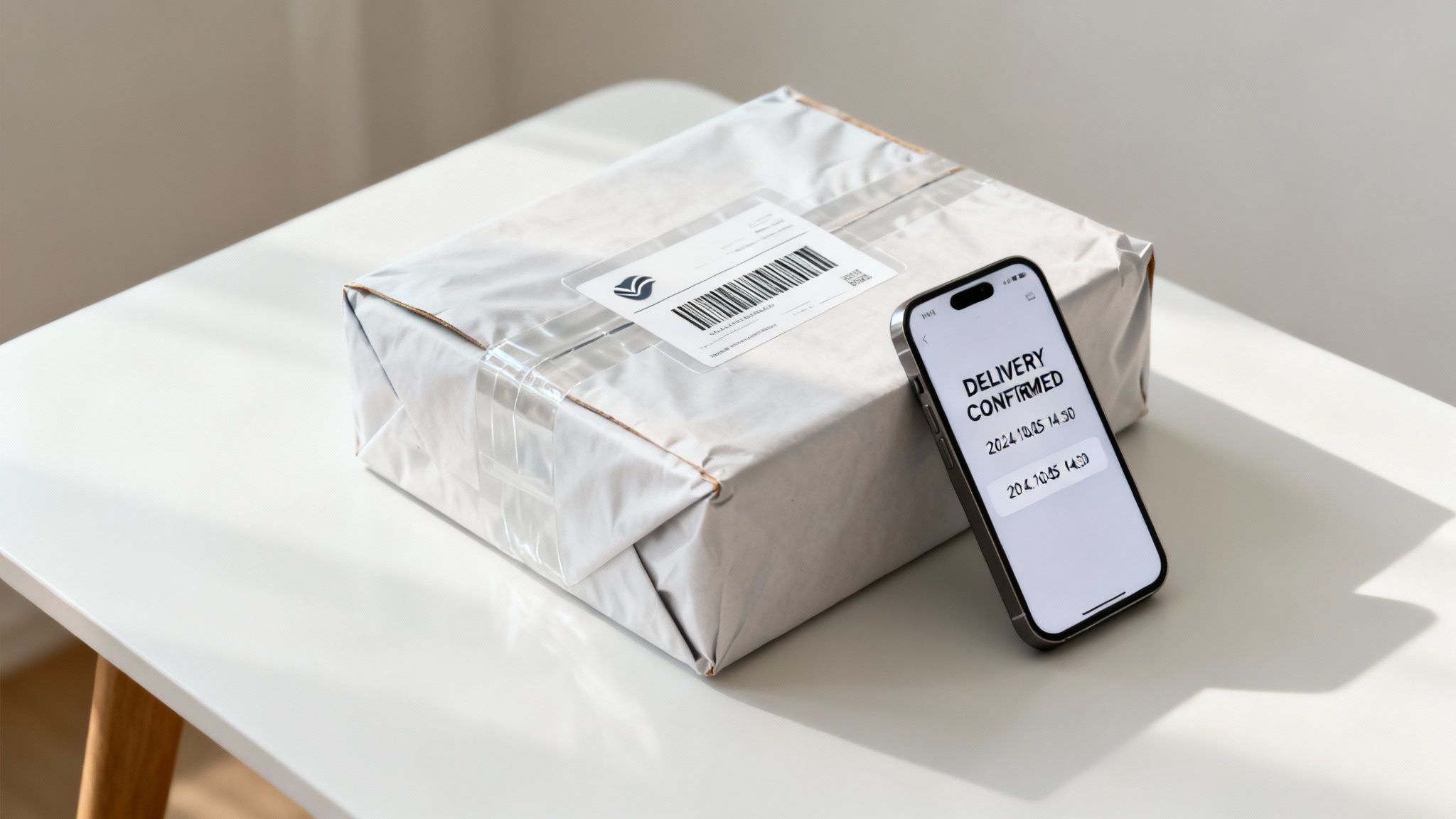
Whether you're a Shopify merchant showing a package left at the correct doorstep or a SaaS company proving a user logged in and used your software, this rebuttal provides a clear, factual counter-argument. It’s a powerful tool against one of the most common forms of disputes.
Key Components and Strategy
A successful proof-of-delivery rebuttal is all about indisputable documentation. Your letter must connect the transaction to the fulfillment records logically and directly.
- Tracking and Confirmation: Lead with the shipping carrier name and tracking number. State the final delivery date, time, and location clearly.
- Service Fulfillment Data: For digital goods, provide user account details (username, email), IP address logs of access, and timestamps of key actions like downloads or logins.
- Address Verification: Reiterate that the item was shipped to the address provided by the customer at checkout and confirmed by the AVS check.
- Evidence Summary: List attached documents like a screenshot of the delivery confirmation page, a photo of the package at the door, or a copy of the signature confirmation. To effectively counter a 'not received' chargeback, your rebuttal letter must include irrefutable reliable proof of delivery from your shipping partner.
Strategic Insight: This rebuttal isn't about telling a story; it's about presenting a timeline of facts. The letter should guide the reviewer from the moment of purchase to the moment of confirmed delivery or service access, with each step validated by evidence.
This targeted approach is essential for winning INR claims, which often come down to whose documentation is more convincing. You can find more strategies for these specific disputes by reading about how to handle PayPal item not received disputes. A well-documented rebuttal letter makes it significantly harder for a cardholder's claim to succeed.
3. Unauthorized Transaction Rebuttal Template
The unauthorized transaction rebuttal template is a purpose-built response for one of the most common and damaging chargeback claims: fraud. This template is designed to systematically take apart a cardholder’s claim that they did not authorize the purchase. It focuses on presenting concrete evidence of legitimate customer authentication and authorization to the issuing bank.
This isn't just about showing a receipt; it’s about proving the legitimate cardholder was present and in control during the transaction. A powerful rebuttal sample letter for this scenario will weave together security verification data, like AVS/CVV matches and IP address logs, into a compelling case. It’s an essential tool for merchants on platforms like Stripe, Shopify, or PayPal who must prove a purchase was not fraudulent.

This format is your best defense against friendly fraud, where a legitimate customer disputes a charge they actually made. For example, a Shopify store can use this template to highlight a successful two-factor authentication (2FA) via email, while a PayPal seller can point to a matching IP address and device fingerprint to counter a false claim.
Key Components and Strategy
A winning rebuttal against an "unauthorized" claim hinges on proving the cardholder's participation. Your letter must connect the dots for the bank, making it clear the transaction was legitimate.
- Authentication Evidence: Start with hard proof. Lead with AVS and CVV response codes, showing the customer provided correct card details.
- Digital Footprints: Include the customer’s IP address, the device ID used for the purchase, and login timestamps. If these match previous undisputed orders, highlight that history.
- Customer Interaction: Document all communications. Mention order confirmation emails, shipping notifications, and any support tickets, proving the customer was aware of the transaction.
- Processor Fraud Score: If your payment processor like Stripe or PayPal provides a fraud risk score, include it. A "low risk" score from a trusted system adds significant weight to your argument.
Strategic Insight: Your rebuttal letter should tell a story of a secure and verified transaction. Frame the evidence not just as a list of data points, but as a chronological sequence that proves the legitimate cardholder’s involvement from login to checkout.
This focused approach is crucial for protecting your revenue and merchant reputation. You can find more strategies for dealing with these specific claims in our guide on how to handle a PayPal unauthorized transaction. By presenting a clear, evidence-backed narrative, you make it difficult for the bank to side with a baseless fraud claim.
4. Customer Communication & Dispute Resolution Rebuttal
The customer communication rebuttal letter is a powerful tool designed to prove you made a good-faith effort to resolve an issue before it became a chargeback. This letter uses documented interactions to show the card-issuing bank that the customer ignored your attempts to help, such as refund offers, technical support, or return authorizations.
This approach is highly effective for disputes where a simple conversation could have solved the problem, like a misunderstanding about a product or a delivery concern. A strong rebuttal sample letter in this category will showcase a clear timeline of your communications. It demonstrates that you were responsive and cooperative, shifting the responsibility back to the cardholder who chose to bypass your resolution channels.
For merchants managing customer service through email, CRM systems, or platform messaging like Shopify Inbox, this rebuttal is essential. It transforms your customer support history from a simple record into compelling evidence, proving the chargeback was unnecessary and should be reversed.
Key Components and Strategy
A successful communication rebuttal focuses on showcasing your proactive and fair resolution process. The goal is to paint a clear picture of a merchant who did everything right.
- Communication Timeline: Begin by outlining the dates and times of all relevant interactions, from the initial customer inquiry to your final resolution offer.
- Resolution Offer: Clearly state the specific solution you offered, such as a full refund, a partial credit, a replacement item, or technical assistance.
- Customer's Response (or Lack Thereof): Highlight the customer's action after your offer. Did they stop responding? Did they reject the offer without a valid reason? This is a critical point.
- Evidence of Policy: Reference your clearly posted return or refund policy and show that your offer was in line with those terms.
Strategic Insight: This letter's core strategy is to frame the chargeback as an avoidable escalation. By proving you provided a reasonable solution that the customer ignored, you show the bank that the dispute system is being used as a substitute for simple communication, not as a last resort.
This strategy is particularly effective against ambiguous claims like "product not as described" or "item not received" when you have proof you tried to fix the situation. Adopting excellent customer service protocols is your first line of defense; you can explore our guide on the best practices in customer service to strengthen your processes. By documenting every interaction, you build a powerful arsenal for winning these preventable disputes.
5. Refund Processing & Cancellation Confirmation Rebuttal
This specialized rebuttal is your defense against chargebacks filed after you have already issued a refund. It addresses the frustrating scenario where a customer disputes a charge, claiming they never received their money back, even though you processed the credit. This letter’s purpose is to prove the refund was successfully issued and credited to the cardholder's account.
This situation is common for merchants who handle a high volume of returns, like Shopify store owners or PayPal sellers. A strong rebuttal sample letter in this case focuses on providing undeniable proof of the refund transaction. It shifts the focus from the original purchase to the subsequent credit, showing that you have already fulfilled your obligation to the customer.
For businesses with clear return policies, such as a 30-day money-back guarantee, this template is essential. It provides a structured way to present evidence of your refund processing, effectively closing the loop on the transaction and invalidating the customer’s claim.
Key Components and Strategy
Your goal is to prove the refund was completed, making the chargeback unnecessary and invalid. The strategy is to provide a clear, chronological paper trail of the refund process.
- Original Transaction & Refund Details: Start with the original transaction ID, date, and amount. Immediately follow this with the refund transaction ID, date, and amount.
- Address the Claim Directly: Acknowledge the customer's claim of non-receipt of refund but state clearly that your records show the refund was processed on a specific date.
- Provide a Clear Timeline: Explain the sequence of events: the customer’s cancellation or return request, your acknowledgment, the date you processed the refund, and the typical processing time for the credit to appear on their statement (e.g., 5-10 business days).
- Evidence Checklist: List your attached documents. Crucial items include a screenshot of the refund transaction from your payment processor (e.g., Stripe, PayPal), the refund confirmation email sent to the customer, and any communication discussing the refund.
Strategic Insight: Your rebuttal must unequivocally prove that you held up your end of the bargain. By presenting concrete evidence of the refund transaction, including dates and transaction IDs, you shift the responsibility to the customer’s bank to locate the credited funds in their account.
This approach demonstrates good faith and meticulous record-keeping. To better understand the differences and customer obligations in these scenarios, you can explore the distinctions between a chargeback vs. a refund. A well-documented rebuttal letter for a refunded transaction is one of the easiest disputes to win.
6. Duplicate Transaction & Billing Error Rebuttal
The duplicate transaction rebuttal letter is a purpose-built tool for merchants, especially those with recurring billing models like SaaS or subscription services. It’s designed to address claims where a customer believes they were charged multiple times for the same product or service. This situation often arises from confusion over billing cycles, separate shipments, or legitimate back-to-back purchases.
This letter is more than a simple denial; it's a financial reconciliation presented in a clear, easy-to-understand format for the issuing bank. A strong rebuttal sample letter for this scenario meticulously breaks down the customer's billing history to prove each charge was distinct and authorized. It must clearly demonstrate that either no duplicate charge occurred or, if there were multiple charges, they were for separate, legitimate transactions.
For subscription-based businesses on platforms like Shopify using apps like Recharge, or SaaS companies using Stripe, this rebuttal is essential. It provides a structured way to present evidence like billing cycle documentation, itemized invoices, and user account logs to prove the validity of each transaction and prevent revenue loss from billing misunderstandings.
Key Components and Strategy
A successful duplicate charge rebuttal requires absolute clarity and irrefutable proof. Your goal is to leave no room for interpretation and show the bank’s reviewer exactly why the charges are correct.
- Distinct Transaction IDs: Lead with the unique transaction identifiers for each charge in question. This immediately establishes that the payment processor saw them as separate events.
- Clear Billing Breakdown: Provide an itemized breakdown of each charge. For subscriptions, show the billing cycle dates (e.g., "Charge 1 for Sept 1-30, Charge 2 for Oct 1-31"). For e-commerce, list the specific products associated with each transaction.
- Customer Account History: Reference the customer’s account dashboard or order history. A screenshot showing the distinct orders or subscription periods corresponding to each charge is powerful evidence.
- Evidence of Value Delivered: Connect each charge to a specific service period, product shipment, or digital download. Include delivery confirmations or service usage logs to prove the customer received value for each payment made.
Strategic Insight: Your rebuttal letter must act as a financial auditor's report. Frame your argument around the unique identifiers and value provided for each transaction. This shifts the dispute from a customer's feeling of being overcharged to a factual review of your billing records.
By presenting a clear, documented timeline of charges and deliveries, you make it simple for the bank to validate your billing practices. A well-organized rebuttal for duplicate transaction claims demonstrates professionalism and meticulous record-keeping, significantly boosting your chances of winning the dispute.
7. Quality Dispute & Product Description Mismatch Rebuttal
The "Item Not as Described" (INAD) or quality dispute rebuttal is a merchant's primary defense against claims that a product failed to meet expectations. This isn't just a standard response; it's a carefully crafted argument that uses objective evidence to counter a customer's subjective opinion. A powerful rebuttal sample letter for this scenario systematically dismantles the cardholder's claim by proving your product descriptions were accurate and transparent.
This type of rebuttal is essential for e-commerce merchants, especially those on platforms like Shopify selling items such as apparel, electronics, or home goods. The goal is to prove that the product delivered was precisely the product advertised. For instance, a fashion retailer can use this template to counter a claim about incorrect sizing by providing exact measurements from the product page, while an electronics seller can prove specifications were met by attaching technical documentation.
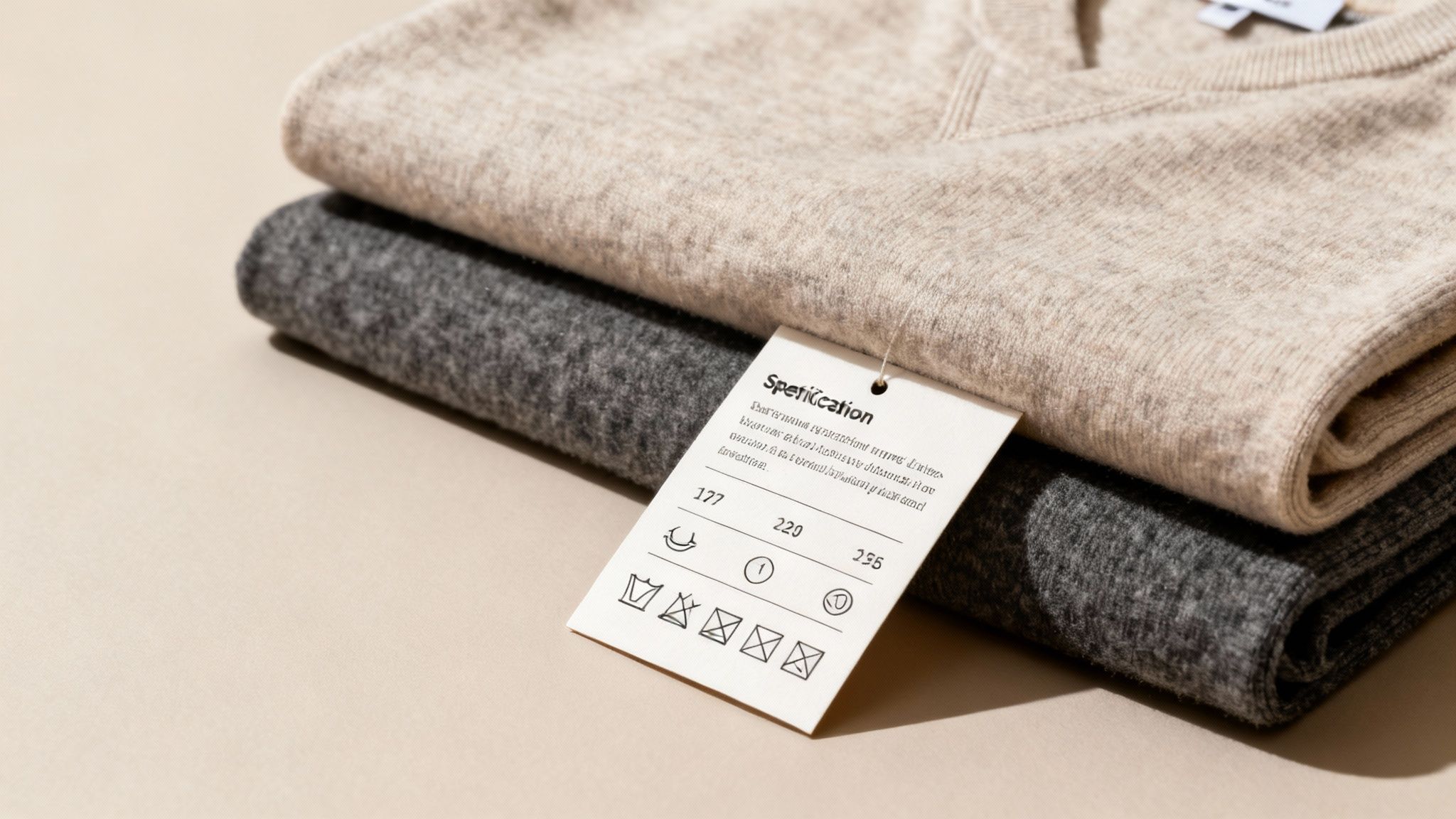
Successfully fighting these disputes requires you to prove that what the customer received aligns perfectly with what they were promised on your product page. This letter serves as a guided tour of that evidence for the bank's review team.
Key Components and Strategy
A winning INAD rebuttal focuses on precision and proof. Your response must directly compare the customer’s claim to the factual information you provided before the purchase.
- Direct Claim Reference: Begin by stating the customer’s specific complaint (e.g., "The customer claimed the item's material was not 100% cotton").
- Product Description Evidence: Provide screenshots of the product page from the time of purchase, highlighting the exact descriptions, specifications, materials, or dimensions.
- Photographic Proof: Include high-resolution product photos from multiple angles that clearly show the item's features, color, and condition, matching the online listing.
- Supporting Documentation: List any relevant evidence, such as quality certifications, ingredient lists, user manuals, or links to the live product page for the reviewer's reference.
Strategic Insight: The strength of this rebuttal lies in its "show, don't tell" approach. Instead of simply stating the claim is false, you provide irrefutable, side-by-side proof that your product was described accurately. Your rebuttal letter should act as a bridge, connecting each piece of evidence to the original product listing.
By proactively documenting product details and presenting them clearly, you shift the dispute from a subjective argument about quality into an objective review of facts. This method is highly effective in proving you fulfilled your end of the transaction and protecting your revenue from invalid claims.
7 Rebuttal Sample Letters Compared
Putting It All Together: From Manual Letters to Automated Wins
We’ve walked through seven different scenarios, each with its own rebuttal sample letter designed to give you a solid foundation for fighting chargebacks. From proving a delivery was completed to demonstrating a transaction was legitimate, the core principles remain the same: clarity, compelling evidence, and a professional tone are your greatest assets.
Think of each template not as a rigid script, but as a strategic starting point. The real power comes from customization. Every dispute has a unique story, and your rebuttal needs to tell that story effectively. By tailoring the language, attaching the right documents, and presenting your case logically, you transform a generic template into a powerful, revenue-protecting tool.
Your Core Takeaways for Winning More Disputes
Mastering the art of the rebuttal letter is a game-changer for any e-commerce business. Here are the most critical lessons to carry forward:
- Evidence is everything. A claim without proof is just an opinion. Always back up every point with concrete evidence, whether it's a delivery confirmation, AVS/CVV match, or a screenshot of your refund policy. Your evidence checklist is your most important pre-flight check.
- Clarity trumps complexity. The person reviewing your case is likely looking at dozens of disputes a day. Make their job easy. Use clear subject lines, concise paragraphs, and a logical flow. A well-organized, easy-to-read rebuttal is more likely to be understood and won.
- Tone matters. Maintain a professional, fact-based tone, even when you feel frustrated. Avoid emotional language and stick to the objective facts of the transaction. This builds credibility and shows you are a serious, well-run business.
The ultimate goal is to make it impossible for the bank to ignore the facts. A strong rebuttal sample letter provides the structure, but your meticulous preparation and compelling evidence are what will secure the win. Protecting your hard-earned revenue isn't just about fighting a single chargeback; it's about building a repeatable process that shields your business from future losses and sends a clear message that you are prepared to defend every legitimate sale.
Ready to stop chasing paperwork and start winning more chargebacks? While these templates are a fantastic starting point, ChargePay uses AI to automate the entire process, generating the perfect evidence-backed rebuttal letter for you in seconds. See how much time and revenue you can recover by visiting ChargePay and letting our technology handle the fight.


.svg)



.svg)


.svg)
.svg)
.svg)