


Ever wonder what it means to take your online store truly global? At its core, cross-border e-commerce is just that: selling your products online to customers in another country. It's like taking your local digital shop and throwing open the doors to the entire world, letting anyone, anywhere, click "buy."
This isn't just a big-brand game anymore. For businesses of all sizes, it's a powerful way to grow beyond the audience you already know.
Why Your Business Should Look Beyond Its Borders

Imagine if your local retail store could suddenly serve customers on another continent. That’s the real magic of cross-border e-commerce. Instead of being boxed in by your city or country, the internet hands your brand a global storefront that’s open 24/7.
A few key trends are making this possible. Widespread internet access and the smartphone in everyone's pocket mean more people are shopping online than ever before. At the same time, shoppers are actively hunting for unique products they can't find down the street, creating a massive opening for brands with something special to offer.
Cross Border E-commerce at a Glance
The numbers behind this global shift are staggering. Take a look at the data to see just how big the opportunity is for merchants ready to think bigger.
Data sourced from a Coherent Market Insights report.
These aren't just abstract figures; they represent real people actively looking to buy from brands like yours. Tapping into that demand is more accessible than ever for merchants on platforms like Shopify and PayPal.
This growth translates into real, tangible benefits for your business:
- A Bigger Pond: You instantly multiply your potential audience, reaching millions of new shoppers who might fall in love with what you sell.
- More Revenue Streams: New markets mean new sales. Tapping into international demand can give your revenue a serious boost and make you less dependent on your home market.
- Build Your Brand Rep: Selling globally builds your brand's reputation and credibility. It signals that you're a serious player in your industry.
By venturing into cross-border e-commerce, you're not just selling products; you're building a global brand. It’s about creating a business that is resilient, diverse, and ready for whatever comes next.
Getting Started with a Global Mindset
Making the leap into international sales does require a shift in thinking. Suddenly, you're dealing with different currencies, languages, shipping rules, and customer expectations. It can feel overwhelming, but it doesn't have to be.
The key is to start small. Dip your toes in by targeting one or two new countries where you already see some website traffic, or where you know there’s a clear demand for your products.
Successfully managing the new complexities, especially around payments, is crucial. For instance, understanding how a payment orchestration platform can simplify the headache of handling multiple currencies and payment methods is a great first step. The goal is to make the buying experience feel just as local and seamless for a customer in Tokyo as it does for one in Toronto.
Navigating Your Biggest Global Expansion Hurdles
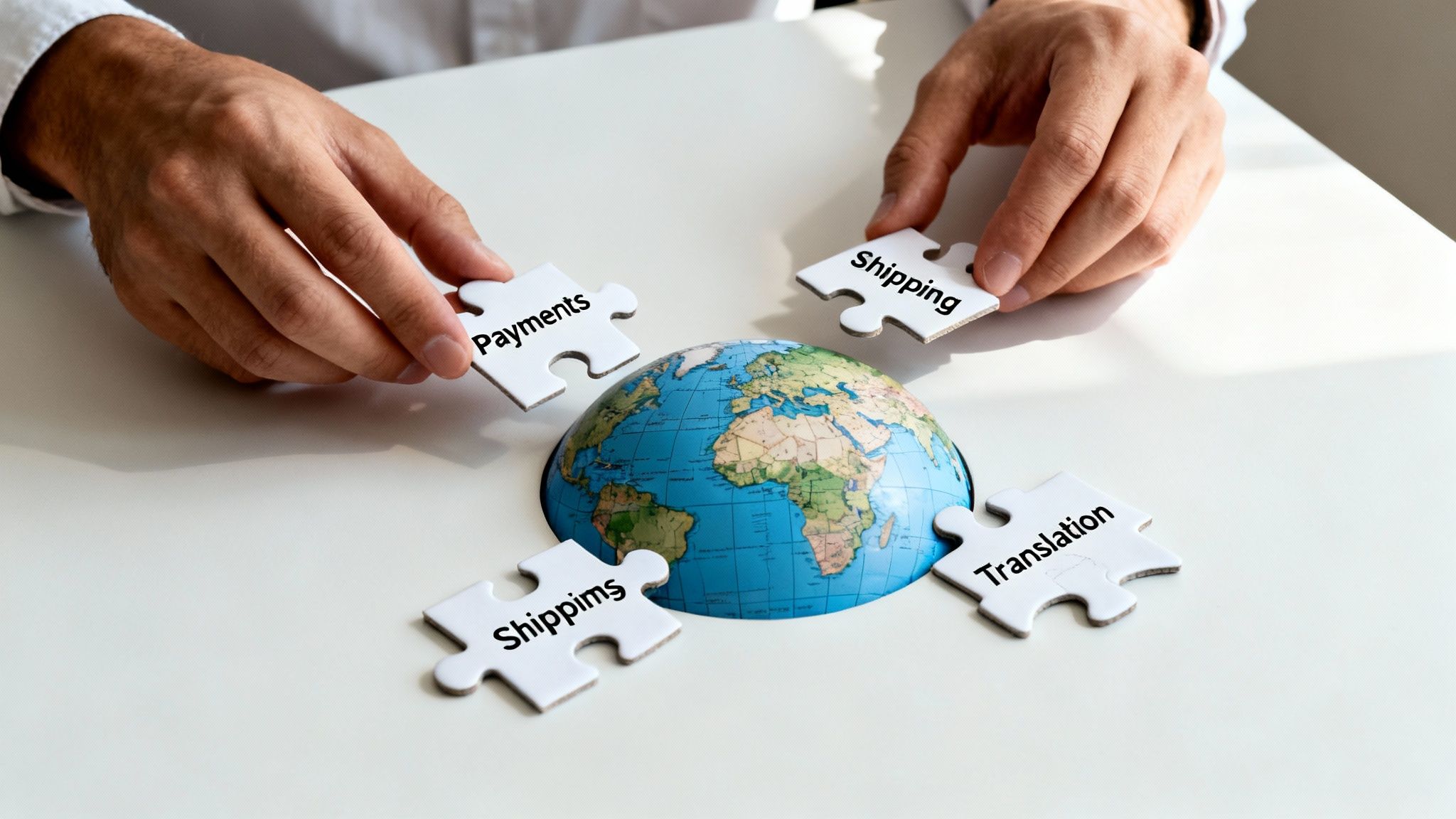
Selling your products to a global audience is an exciting next step, but it’s like leveling up in a game. The rewards are bigger, but the challenges are definitely more complex. Stepping into cross border e-commerce means you’ll run into a whole new set of puzzles that your domestic business never had to solve.
Thinking about these hurdles ahead of time is the difference between a smooth launch and a frustrating one. Let's break down the most common obstacles you'll face and give you a clear picture of what to expect.
The Puzzle of Global Payments and Currencies
At home, payments are simple. Abroad, they're a different story. Your international customers expect to pay in ways that are familiar and comfortable to them, using their own currency.
If a customer in Japan sees prices only in US dollars, they might hesitate or leave your site entirely. Even worse, a surprise currency conversion fee on their credit card statement can lead to confusion and even chargebacks. For a successful cross border e-commerce strategy, offering local payment methods and pricing is non-negotiable.
Here’s what you need to have on your radar:
- Local Payment Methods: Credit cards are king in North America, but in Germany, bank transfers are common. In the Netherlands, many shoppers prefer iDEAL. You need to offer these local options to make them feel at home.
- Currency Conversion: Display prices in the local currency. This builds trust and removes the mental math for your customers, which can seriously reduce cart abandonment.
- Fraud Risks: International transactions can carry a higher risk of fraud. You'll need solid systems to screen orders without accidentally blocking legitimate customers. You can learn more by exploring effective e-commerce fraud prevention tactics.
Decoding Customs Duties and Taxes
This is often the most intimidating part of cross border e-commerce. Every country has its own rulebook for import taxes (duties) and sales taxes (like VAT). Getting this wrong can lead to delayed shipments, angry customers, and even fines.
Imagine your customer in France getting a notice that their package is being held at customs until they pay an unexpected €40 fee. That's a terrible customer experience that almost guarantees they won't shop with you again.
The key to managing duties and taxes is transparency. Customers hate surprises, especially when it costs them money. Calculating and communicating these costs upfront is essential for building trust with your international buyers.
You have two main paths for handling these fees:
- Delivery Duty Unpaid (DDU): The customer is on the hook for paying any import duties and taxes when the package arrives. This is simpler for you, but it can create a nasty surprise for the buyer.
- Delivery Duty Paid (DDP): You calculate and collect all duties and taxes right at checkout. This gives the customer a clear, all-inclusive price and a much smoother delivery process.
While DDP requires more setup, modern e-commerce platforms and apps can automate these calculations, making it the clear winner for creating a great customer experience.
Shipping Logistics and International Returns
Getting a product to someone in your own country is one thing; shipping it across an ocean is another beast entirely. International shipping involves more paperwork, longer transit times, and higher costs.
You need a clear strategy for both sending products out and handling them if they come back. A complicated or expensive return process can be a major deal-breaker for international shoppers. In fact, research shows that a simple returns policy can dramatically increase conversion rates in new markets.
Think about these key areas:
- Carrier Choices: Compare services from global carriers like DHL, FedEx, and UPS to find the right balance of speed and cost for different regions.
- Tracking and Communication: Provide clear, proactive tracking updates. A customer is much more patient and understanding if they know where their package is.
- Simplified Returns: Look into services that offer local return addresses in your key markets. This makes it cheaper and easier for customers to send items back, removing a huge point of friction.
By planning for these challenges, you can turn potential problems into opportunities to build a reliable and trustworthy global brand.
Proven Strategies for a Successful International Launch
Taking your brand global is a huge step, but it’s not as simple as flipping a switch and hoping for the best. A successful international launch is built on a solid foundation of smart research, the right tech, and a genuine effort to connect with new customers on their own turf. If you skip this groundwork, you risk burning through time and money on markets that just aren't the right fit.
Your first move isn't about logistics or shipping—it's about listening to the data you already have. Your website analytics are a goldmine, often pointing directly to where international interest is already bubbling up. This data-first approach lets you prioritize markets with proven demand, making your first global steps far more likely to stick.
Smart Market Research Finds Your Best Opportunities
Before you spend a single dollar on international marketing, you need to know where to aim. Guesswork isn't a strategy. Instead, your goal is to pinpoint the countries that show the most promise for your specific products.
Start by digging into:
- Existing Website Traffic: Which countries are already visiting your store? This is your lowest-hanging fruit.
- Social Media Followers: Where are your international followers located? Their engagement is a clear signal of interest.
- Marketplace Data: If you sell on platforms like Amazon or eBay, what does your international sales data tell you?
Once you have a shortlist, go a level deeper. Look for countries with a growing middle class, high internet usage, and a cultural appetite for products like yours. This initial research stops you from pouring resources into a market where there’s simply no audience for what you sell.
A classic mistake is assuming a bestseller in one country will automatically be a hit somewhere else. Real success comes from validating demand before you commit, making sure your expansion is driven by evidence, not just ambition.
Choosing the Right Tools and Platform
Think of your e-commerce platform as mission control for your global ambitions. You need a system that can juggle the complexities of cross border e-commerce without turning into a logistical nightmare. It’s no surprise that platforms like Shopify are so popular—they have built-in tools designed specifically to make international selling simpler.
Look for a platform that can easily handle:
- Multiple Currencies: Showing prices in the local currency is non-negotiable. One study found that this simple change can significantly improve e-commerce conversion rates.
- International Taxes and Duties: The ability to calculate and collect these fees at checkout (known as DDP, or Delivered Duty Paid) creates a transparent, surprise-free experience for your customers.
- Localized Storefronts: Tools like Shopify Markets are game-changers, letting you create tailored shopping experiences with different languages, domains, and even product catalogs for each country.
For businesses looking to build efficient global financial structures, understanding strategies like how to open an offshore company and bank account can also be a key piece of the puzzle. These setups can streamline how you manage taxes and finances across different regions.
Develop a Localization Strategy That Resonates
True localization is so much more than just translating your text. It's about adapting your entire brand experience so it feels completely native to each market. This means getting a handle on cultural nuances, local customs, and what shoppers in that country actually expect. A one-size-fits-all approach is guaranteed to fall flat.
Your localization checklist should cover these key areas:
- Language and Tone: Work with native speakers to translate your website, product descriptions, and marketing. You need to nail not just the words, but the tone and style that feel natural to local communication.
- Product Pages: Adapt your imagery and descriptions. Promoting a winter coat in Australia during their summer just won’t work.
- Marketing and Promotions: Line up your campaigns with local holidays and shopping events. A Black Friday sale might do well in Canada, but it won't have the same impact in Japan, where other events are more important.
- Customer Support: This is huge. Offer support in the local language and during their business hours. It builds incredible trust and shows you’re truly committed to serving your new customers.
How to Succeed in the North American Market
For international brands with big ambitions, North America is the holy grail of cross border e-commerce. It's a massive market where consumers have serious spending power, online shopping is second nature, and the logistics are dialed in. But breaking in and actually succeeding here isn't as simple as just flipping a switch and making your products available.
You have to get inside the head of the North American shopper. While they’re hungry for unique products from around the globe, they’ve also been completely spoiled by domestic giants like Amazon. Fast shipping, one-click checkouts, and no-questions-asked returns aren't just perks—they're the bare minimum. If you can't meet these expectations, you're out of the game before you even start.
Understanding the North American Shopper
The average online shopper in the U.S. and Canada is savvy, impatient, and values convenience above all else. A clunky checkout, a surprise shipping fee, or a return policy that reads like a legal document will send them running to a competitor in a heartbeat. They expect a buttery-smooth experience from the moment they land on your site to the moment they unbox their order.
This is especially true when it's time to pay. Credit cards are still king, but you absolutely have to offer the digital wallets they use every day. A streamlined PayPal checkout, for instance, can be the difference between a sale and an abandoned cart. The less friction, the better.
To really connect with them, you need to nail these three things:
- Speed is Everything: Two-day shipping isn't a luxury; it's the standard. Look into regional warehousing or fulfillment partners to get your products into customers' hands faster.
- Transparency is Trust: Nobody likes surprises at checkout. Be completely upfront about all costs, including shipping and any potential taxes. Hidden fees are the quickest way to kill a sale and lose a customer forever.
- Effortless Returns: A complicated return process is a huge red flag for shoppers. Make it simple, spell it out clearly, and ensure it's as painless as possible.
Navigating the Market's Unique Challenges
While the prize is huge, the path is full of hurdles. One of the biggest headaches is figuring out the tangled web of state and provincial sales taxes. In the U.S., tax rates don't just vary by state—they can change from city to city, and even county to county. It's a compliance nightmare if you're not prepared.
The sheer size and momentum of the market can also be intimidating. North America is the undisputed leader in cross-border e-commerce, driven by massive disposable income and incredibly advanced delivery networks. The market is on track to rocket from USD 551.23 billion in 2025 to over USD 2 trillion by 2034. You can see the full breakdown of the cross-border e-commerce market on Precedenceresearch.com.
Before you jump in, it's crucial to understand that what works in your home market might not fly in North America. The expectations and logistical realities can be worlds apart from what you're used to in Europe or Asia.
Key Differences Selling in North America vs Other Regions
This table just scratches the surface, but the key takeaway is clear: a one-size-fits-all approach won't work. You have to adapt your strategy specifically for the North American playground.
Winning in North America means acting like a local brand, even if you're an ocean away. This involves localizing your marketing, offering customer support in their time zone, and making every interaction feel familiar and trustworthy.
Ultimately, cracking this market comes down to meeting incredibly high expectations. The brands that invest in creating a fast, transparent, and genuinely convenient customer experience are the ones that will earn the loyalty—and the dollars—of these valuable shoppers.
How to Stop Chargebacks from Bleeding Your Global Profits
So, you’re expanding your e-commerce store into new countries. Fantastic news! But as you start seeing those international orders roll in, a sneaky new risk is creeping into your business, one that can quietly drain your profits: chargebacks.
International sales, by their very nature, are a breeding ground for disputes. It's just a fact of the game. Shipping takes longer, which makes customers antsy. Unfamiliar currencies on a credit card statement cause confusion. And let's be honest, cross-border transactions are a much bigger target for fraudsters.
These aren't just minor annoyances. Every single dispute pulls cash directly from your account, chips away at your reputation with payment processors like Stripe and PayPal, and forces you to waste hours on mind-numbing paperwork. If you let them pile up, a high chargeback rate can torpedo the profitability of your entire global adventure.
This flow chart breaks down the essential steps for breaking into a new market, like North America. It’s all about nailing the research, localization, and shipping from the get-go.
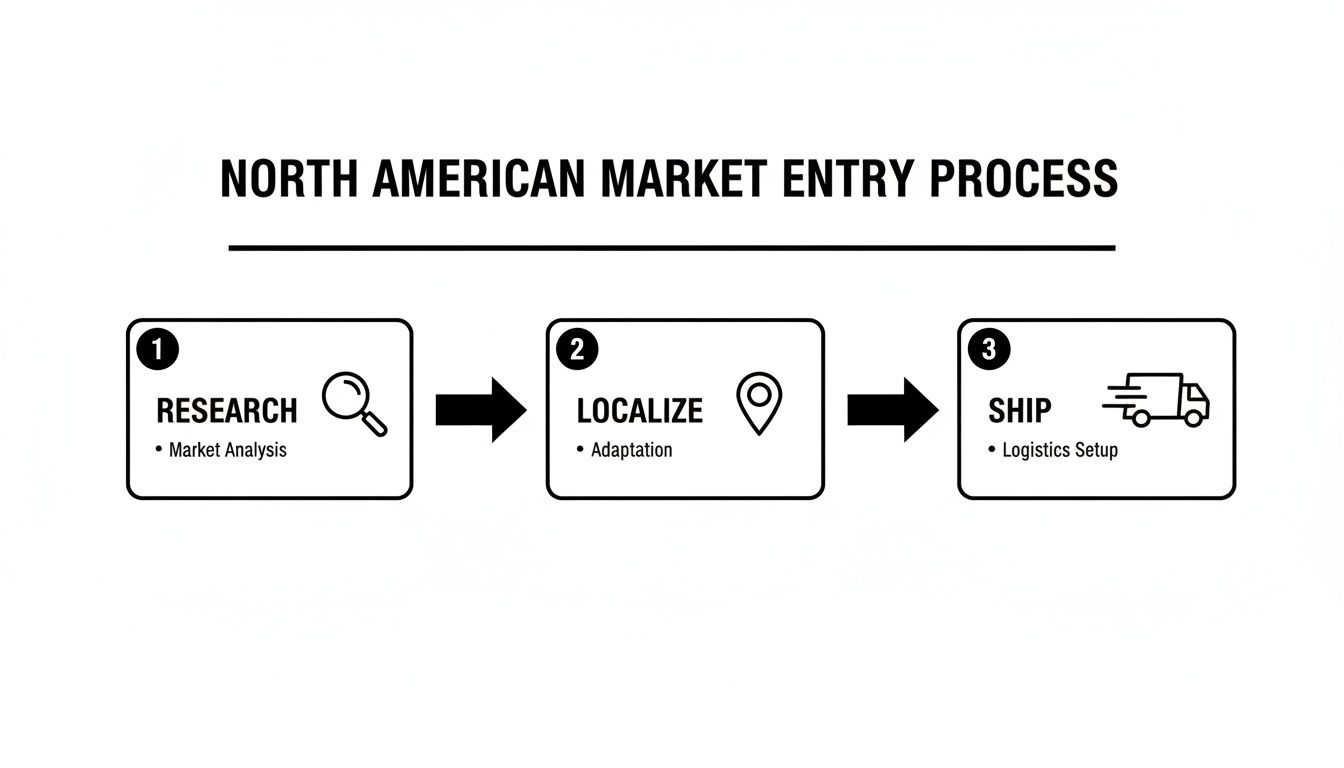
Get these fundamentals right, and you'll create a smoother customer experience, which naturally cuts down on the friction that leads to disputes in the first place.
Why International Sales Are a Chargeback Magnet
When you sell across borders, the reasons for disputes don't just add up—they multiply. We're not just talking about a customer who’s unhappy with a t-shirt. A huge chunk of international chargebacks come from problems baked into the very nature of cross border e-commerce.
Here are the usual suspects:
- Shipping Delays: That package taking three long weeks to get from your warehouse to a customer halfway around the world? That’s a classic trigger for a "product not received" dispute, even if it's still chugging along in transit.
- Unrecognized Transactions: The customer checks their statement and sees a weird-looking charge from "XYZ COMMERCE INT'L" in a different currency. Their first thought? Fraud.
- Friendly Fraud: A legitimate customer gets their item but claims they never did to score a free product. They know it's a lot harder for you to fight a dispute from another country.
- True Criminal Fraud: This is the big one. Scammers love using stolen credit cards from one country to ship products to another, creating a tangled mess that’s tough to unravel.
To keep your global profits safe, you absolutely need a solid game plan for ecommerce fraud prevention, especially when you're juggling different international payment methods.
A high chargeback ratio doesn't just cost you the sale. It slaps you with hefty, non-refundable fees from your payment processor. If that ratio climbs too high, you could get branded as "high-risk," leading to frozen funds or even losing your ability to process payments entirely.
The Modern Way to Fight Back with Automation
Trying to fight chargebacks manually is a losing game, especially as your international sales grow. The whole process is painfully slow, demands piles of evidence you have to dig up, and requires an expertise you probably don't have time to develop.
This is where automation completely changes the equation.
Instead of drowning in paperwork, you can use AI-powered tools that plug directly into your payment gateways—think Shopify Payments, Stripe, and PayPal—and manage the entire fight for you. These systems are built to understand and handle the unique headaches of cross-border chargebacks.
Picture this:
- A chargeback gets filed on one of your international Shopify orders.
- Instead of a frantic alert landing in your inbox, an automated system like ChargePay instantly grabs the case.
- The AI gets to work, analyzing the transaction details, customer history, and shipping data in a split second.
- It then automatically builds a professional, evidence-packed response perfectly formatted for that specific chargeback reason code and the bank's rules.
- The response is submitted on your behalf, often before you even knew there was a problem.
This hands-off approach is a total game-changer. It turns chargeback management from a soul-crushing, expensive chore into an automated engine that claws back your revenue. You get to focus on growing your global brand while the AI stands guard, protecting your bottom line. You can learn more about how it all works in our complete guide to automated chargeback management.
By switching to an automated solution, you’re not just recovering money you would have lost. You’re keeping your chargeback ratio low, which keeps your payment processors happy and ensures your expansion into cross border e-commerce is built to last.
Your Cross Border E-commerce Questions Answered
Stepping into the world of cross border e-commerce can feel like exploring a new map. It's exciting, but you're bound to have questions. This is where we tackle the most common ones head-on, giving you clear, direct advice to help you move forward with confidence.
Think of this as your go-to guide for those "what if" and "how do I" moments that always pop up when you're planning a global expansion. We’ve gathered the top questions and are serving up practical answers to demystify the whole process.
Which Countries Should I Sell To First?
Deciding on your first international market shouldn't be a shot in the dark. The best strategy is to follow the data you already have, not just a hunch about where your products might be a hit.
Your website's analytics are your best friend here. Dive in and see which countries are already sending traffic to your store. This is a massive clue—it’s a clear sign of existing interest and represents your lowest-hanging fruit. Often, the easiest places to start are markets where customers speak your language, like Canada or the UK for a US-based seller. This simplifies everything from marketing copy to customer support emails.
Beyond language, look for countries with similar economic conditions and buying habits. Before you pull the trigger, do a quick sanity check on shipping costs and regulations for your top contenders.
The smartest approach is to start small and focused. Master one or two new markets first. This lets you learn the ropes of cross border e-commerce without the overwhelm of trying to be everywhere at once.
How Do I Handle International Taxes and Duties?
This is probably one of the biggest sources of anxiety for merchants going global, but it’s totally manageable with the right approach. These fees, often called duties or tariffs, are simply taxes a country charges on imported goods.
You have two main ways to handle them:
- Delivered Duty Unpaid (DDU): With this method, the customer is on the hook for paying any taxes and duties when the package arrives in their country. It’s simpler for you upfront, but it often creates a terrible customer experience. Nobody likes getting a surprise bill just to receive a product they thought they'd already paid for.
- Delivered Duty Paid (DDP): Here, you calculate and collect all duties and taxes right at checkout. Your customer sees a single, all-in price. They know exactly what they're paying, and there are no nasty surprises when the delivery driver shows up.
While DDP requires a bit more setup, it is overwhelmingly the better choice for building customer trust and slashing cart abandonment. Thankfully, modern e-commerce platforms like Shopify have tools and apps that can automate these complex calculations, making the DDP method much easier to pull off.
Why Are Chargebacks More Common with International Orders?
It’s an unfortunate reality, but yes, chargebacks tend to tick up with international sales. This isn't random; it's because of a few specific factors that are unique to cross border e-commerce.
Longer shipping times are a primary culprit. A customer on the other side of the world might wait weeks for their order. If they get impatient or worried, they might fire off a "product not received" dispute, even if the package is still chugging along just fine.
Another big one is transaction recognition. When a customer sees an unfamiliar company name on their credit card statement—especially one from another country—their first instinct might be to assume it’s fraud and report it. Confusion over currency conversion can also lead to disputes if the final charge doesn't quite match what they thought they were paying.
Finally, international orders are simply a bigger target for criminals using stolen credit cards. This is precisely why having an automated, intelligent chargeback management system becomes so crucial. It helps you fight these often-nuanced disputes without having to become a global logistics and fraud expert yourself.
What Is the Best Way to Manage Global Shipping and Returns?
Your shipping and returns policy can make or break your international success. For shoppers abroad, a clear, fair, and easy-to-understand policy is a massive factor in their decision to click "buy."
When it comes to shipping, flexibility is key. Offer your customers a couple of options, like an affordable standard shipping and a faster (but pricier) express option. Be completely transparent about the estimated delivery times and costs for each. No guesswork.
Returns are even more critical. A difficult or expensive return process is one of the biggest fears for international customers and a major reason they'll leave their cart full.
Here are a few tips to build a great international returns policy:
- Set up a local return address: Partner with a service that provides local return hubs in your key markets. This makes it much cheaper and simpler for customers to send items back.
- Be clear about costs: State plainly on your website who is responsible for paying return shipping costs. Is it you, or is it them?
- Offer a reasonable return window: Remember to account for those longer shipping times when you define the return period for international orders.
A customer-friendly approach to shipping and returns isn't just a cost center; it's a powerful tool for building trust and encouraging repeat business from your global audience.
Protecting your profits is just as important as making sales. Don't let confusing international chargebacks eat away at your revenue. ChargePay uses AI to automatically fight and win disputes for you on Shopify, PayPal, and Stripe, recovering up to 80% of your lost revenue without you lifting a finger. Learn how you can automate your chargeback defense and grow globally with confidence.


.svg)




.svg)


.svg)
.svg)
.svg)