

A debit card chargeback is really just a forced refund, but one that’s kicked off by your customer’s bank, not by you. Unlike a standard refund where you’re in the driver’s seat, this process starts the moment a cardholder disputes a transaction with their bank. The funds are pulled straight from your merchant account, often before you even get a chance to tell your side of a story.
So, What Are Debit Card Chargebacks Anyway?
Think of it this way: a chargeback is the bank stepping in to reverse a payment on behalf of its customer. This usually happens when a shopper sees a charge they don’t recognize, claims they never got what they paid for, or feels the product was a far cry from what was advertised. Instead of calling you for a refund, they go right to their bank, triggering a formal dispute that—by default—favors the cardholder.
This safety net exists for both debit and credit cards, but there's an important distinction. A debit card chargeback reverses money taken directly from a customer's checking account. A credit card chargeback, on the other hand, deals with a line of credit. For you, the merchant, the result is the same: the money from the sale is gone, at least for now.
Let's quickly clear up the difference between a chargeback and a refund you'd issue yourself. They might seem similar, but they operate in completely different worlds and have very different consequences for your business.
Debit Card Chargeback vs Merchant Refund
As you can see, a simple refund is a far better outcome. It's a customer service interaction, whereas a chargeback is a formal, costly, and potentially damaging dispute.
The Key Players in a Chargeback Dispute
To get a handle on this process, you need to know who's involved. Every debit card chargeback is a conversation between a few key parties, each playing a specific part:
- The Cardholder: This is your customer, the one who is disputing the charge.
- The Issuing Bank: The cardholder's bank. They’re the ones who issue the chargeback and give their customer a provisional credit.
- The Acquiring Bank: This is your bank or payment processor. They receive the chargeback notice and debit the disputed funds from your merchant account.
- The Merchant: That’s you! The business owner who now has to decide whether to accept the loss or fight to prove the transaction was legitimate.
Getting these roles straight is the first step. The whole system is a complex back-and-forth between these players, all governed by the rules of card networks like Visa and Mastercard. For a deeper look at the mechanics, you can learn more about what a chargeback is in banking and how all the pieces fit together.
A chargeback is not just a refund; it's a financial penalty. On top of losing the sale revenue and the merchandise, merchants are hit with non-refundable chargeback fees ranging from $20 to $100 per dispute, regardless of who wins.
And this isn't a small problem—it's growing fast. Global chargeback volumes are expected to climb to a staggering 337 million cases by 2025, a huge leap from 265 million in 2022. This trend puts more pressure on merchants than ever, especially as online shopping continues to boom. This makes getting a solid grip on debit card chargebacks an absolute must for protecting your hard-earned revenue.
The Chargeback Journey from Dispute to Decision
The debit card chargeback process can feel like a maze, especially when your revenue is on the line. But once you understand the map, it becomes much less intimidating. Every dispute follows a predictable path, with strict rules and deadlines set by card networks like Visa and Mastercard.
Think of it as a formal chain of communication between banks. It all starts the moment your customer disputes a transaction with their bank. From there, a series of steps kicks off, each with its own timeline you absolutely cannot miss.
Stage One: The Customer Dispute
The journey begins when a cardholder calls their bank—the issuing bank—to question a charge. They might claim the transaction was fraud, they never received the item, or the product wasn't what they expected. The bank reviews their claim and, more often than not, sides with its customer by default.
At this point, the bank issues a provisional credit to the cardholder's account. The money is essentially handed back to them immediately while the bank starts the official process of getting it back from you.
Stage Two: The Notification Arrives
Next, the issuing bank pushes the dispute through the card network over to your bank or payment processor, known as the acquiring bank. This is when things get real for you. Your acquiring bank pulls the disputed amount right out of your merchant account and tacks on a separate, non-refundable chargeback fee for the trouble.
You’ll then get a formal notification about the debit card chargeback. This is your official heads-up that a dispute has been filed and the clock has started ticking.
You typically have a window of about 20-45 days to respond to a chargeback, depending on the card network and the reason code. Miss this deadline, and it's an automatic loss—no exceptions.
This is your make-or-break moment. You have to decide whether to accept the loss or fight back. Fighting back is a formal process called representment, where you submit compelling evidence to prove the original transaction was legit.
The chart below shows just how much the financial impact of chargebacks is growing, which is exactly why getting a handle on this process is so important.
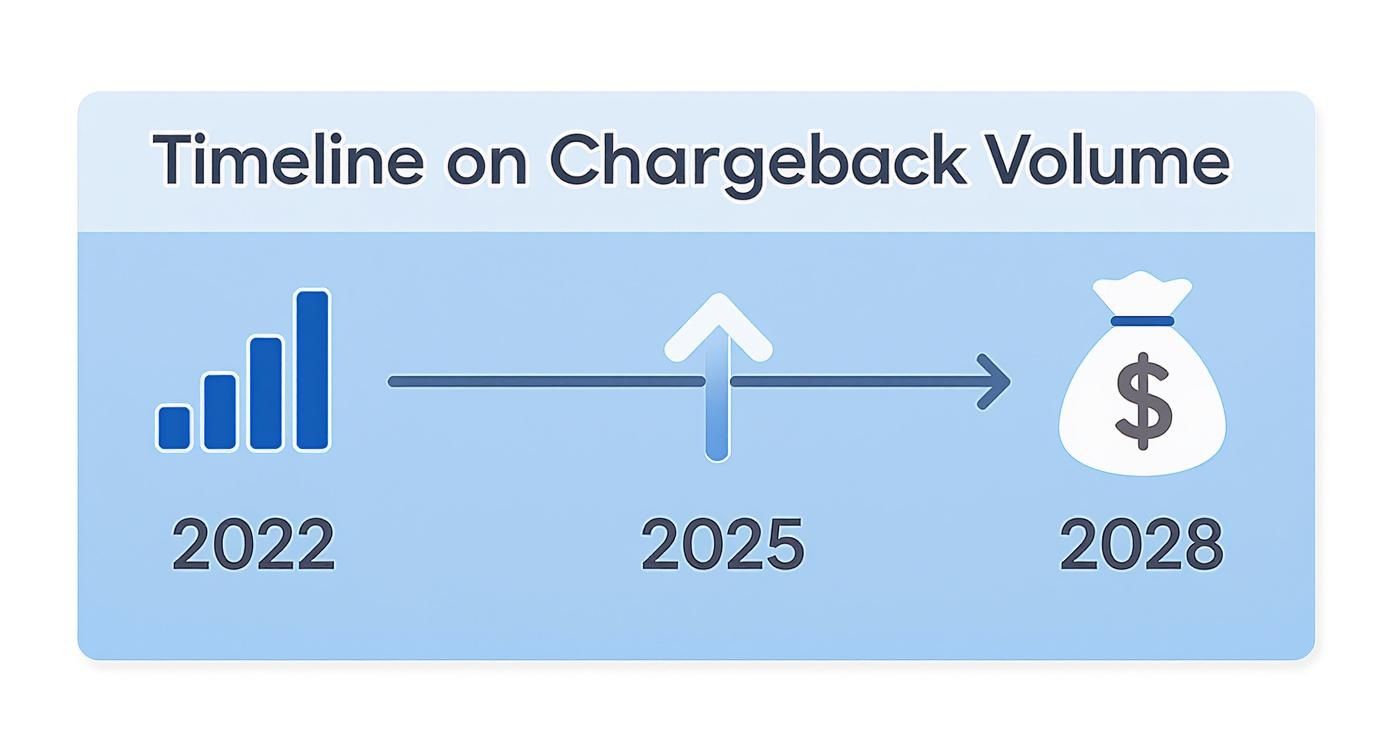
This trend makes it crystal clear: the cost and number of disputes are climbing, making a solid game plan more critical than ever.
Stage Three: The Final Decision
If you decide to fight with a representment case, you’ll need to gather your proof—things like shipping confirmations, delivery photos, and customer emails—and send it all to your acquiring bank. They’ll pass it along to the issuing bank for the final review. The issuing bank acts as the judge and jury, weighing your evidence against the customer’s claim.
There are only two ways this can end:
- You Win: If your evidence is solid, the issuing bank reverses the chargeback. The money is returned to your account (though you’re still out the chargeback fee).
- You Lose: If the bank sides with their cardholder, that provisional credit they received becomes permanent. The money is gone for good unless you want to escalate to arbitration, which is an expensive and complicated next step.
Understanding each stage of the card dispute process is the key to navigating it successfully. Knowing the deadlines and exactly what's needed at each step gives you the best possible shot at protecting your revenue.
Common Chargeback Reasons and How to Fight Them
If you want to have any chance of winning a debit card chargeback, you first have to know why it happened. Banks don’t just use vague descriptions; every dispute gets tagged with a specific reason code. Think of these codes as the bank’s official shorthand for what the customer is complaining about.
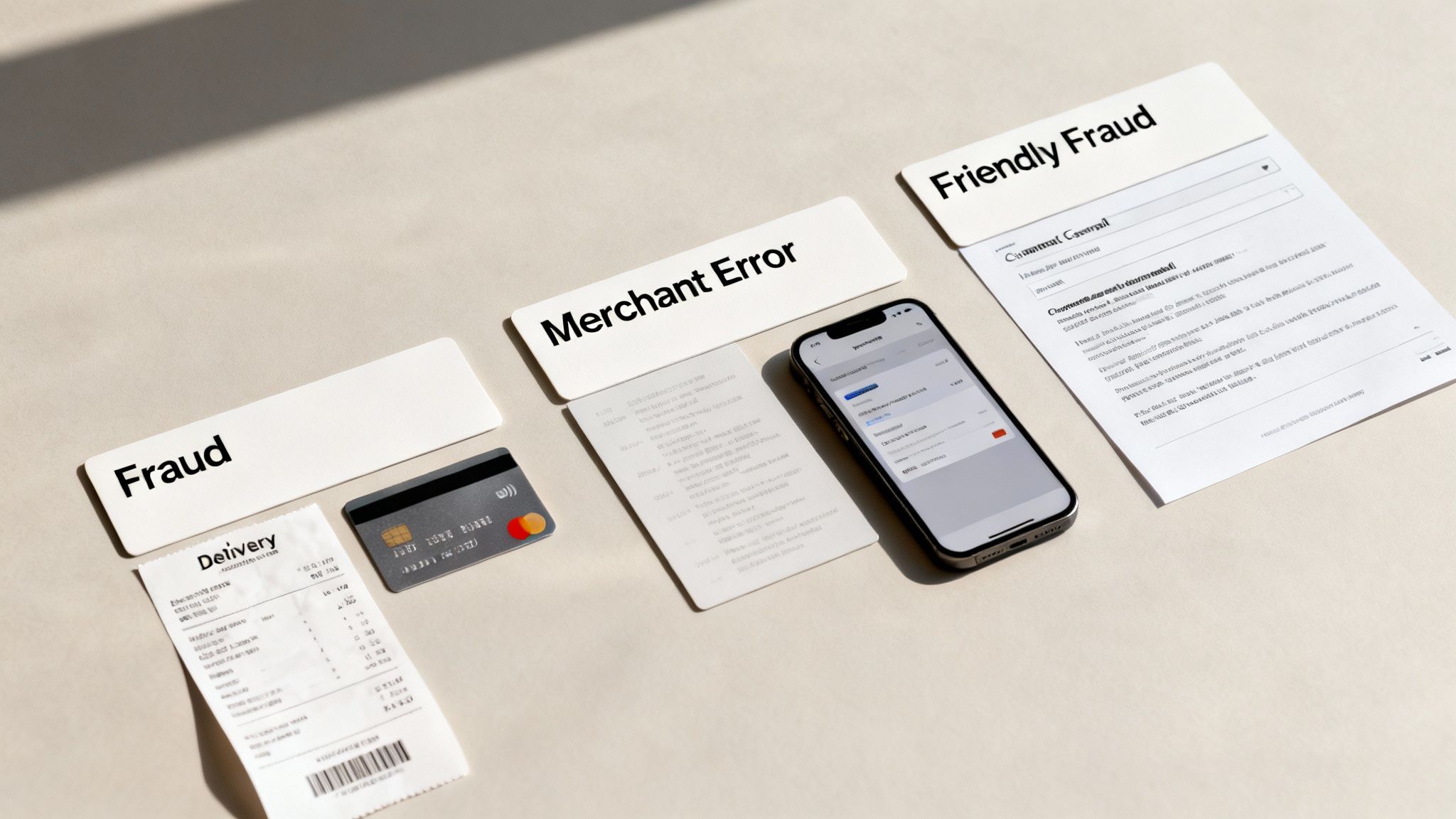
While there are dozens of these codes, they almost always boil down to one of three main buckets: true fraud, merchant error, or friendly fraud. Each one demands a completely different battle plan and a unique set of evidence to win.
True Fraud Chargebacks
This one’s the most straightforward. True fraud is exactly what it sounds like: a criminal gets ahold of a stolen debit card and uses it to buy something from your store without the real cardholder knowing. When the actual card owner spots the charge, they report it, and a chargeback gets filed.
Honestly, fighting these is incredibly tough. You and the cardholder are both victims of the same crime. Unless you have absolute, rock-solid proof that the legitimate cardholder was involved in the transaction, it’s usually better to take the loss. Focus your energy on beefing up your fraud prevention tools to stop it from happening again.
One of the few times you might win is if you can prove you used top-tier security protocols like 3D Secure authentication. This can shift the liability from you back to the issuing bank, but it's a high bar to clear.
Merchant Error Chargebacks
This category is all about mistakes made on your end. The good news is that these are often the most preventable chargebacks. The bad news? They can be a glaring sign that something in your operations is broken and needs to be fixed.
Common merchant errors include things like:
- Accidental Double Billing: Hitting the customer with two charges for a single purchase.
- Incorrect Amount Charged: A simple typo or miscalculation at checkout.
- Unclear Billing Descriptor: Using a business name on bank statements that your customers don’t recognize.
- Failure to Cancel a Subscription: Billing someone after they’ve already asked to cancel a recurring service.
- Shipping to the Wrong Address: A mix-up that leads straight to a "product not received" claim.
To fight these, your evidence needs to be a direct counterpunch to whatever error is being claimed. For a double billing dispute, you need transaction logs showing only one charge went through. If they say the amount was wrong, you need a copy of the receipt or order confirmation showing they agreed to the price.
Friendly Fraud Chargebacks
This is easily the most infuriating and fastest-growing type of dispute. Friendly fraud happens when a real customer makes a purchase, gets their product, and then disputes the charge anyway. Sometimes it's intentional—they’re just trying to get something for free. Other times, it's an honest mistake, like forgetting about the purchase or not recognizing your store name on their statement.
Because the customer is using their own valid card, your standard fraud detection tools won't flag the transaction. This is where your evidence gathering becomes mission-critical. You have to prove not just that a purchase was made, but that the legitimate cardholder made it and received what they paid for.
Chargeback Reason Codes and Required Evidence
To help you get organized, here's a look at some of the most common friendly fraud scenarios and the specific types of compelling evidence you’ll need to shut them down.
Building a strong case against any debit card chargeback comes down to being methodical. By understanding the reason code and arming yourself with specific, compelling evidence, you can turn a potential loss into a successfully defended sale.
Building a Winning Representment Case
Getting hit with a debit card chargeback can feel like a punch to the gut, but it's not the end of the story. Think of it as the opening argument in a case where you have every right to present your side. This formal process, called representment, is your opportunity to challenge the dispute and prove the transaction was perfectly valid.
A strong representment case is built on clarity, evidence, and professionalism. This isn't the time for an emotional appeal or a long, complicated story. Instead, you need to present a clean, logical argument that directly refutes the customer’s claim, making it easy for the bank to rule in your favor.
The Foundation: Your Rebuttal Letter
The centerpiece of your entire representment package is the rebuttal letter. This isn't just a simple note; it's a concise, professional summary of your entire case. Your goal is to make the bank investigator's job as easy as possible. They review hundreds of these cases, so a letter that is clear, factual, and straight to the point will immediately stand out.
Your letter should always:
- State the Purpose Clearly: Kick things off by stating you're disputing the chargeback and provide all the key transaction details right up front.
- Address the Reason Code: Directly tackle the customer’s specific claim (like "Product Not Received") and explain exactly why it's incorrect.
- Summarize Your Evidence: Briefly list the key pieces of proof you’re including, like the delivery confirmation or AVS match data.
Whatever you do, avoid getting personal or emotional. Stick to the facts and maintain a professional tone throughout. For some hands-on guidance and templates, check out our detailed post with an example of a rebuttal letter that you can adapt for your own use.
Assembling Your Compelling Evidence
Your rebuttal letter sets the stage, but your evidence is what actually wins the case. Just saying a charge is valid isn’t enough—you have to prove it with documentation. The real key here is to provide evidence that directly and specifically contradicts the customer’s reason for the chargeback.
Think like a detective building a case file. Each piece of evidence should add another layer of proof, creating an undeniable picture of a legitimate transaction conducted by the actual cardholder.
Organize all your proof logically right behind your rebuttal letter, and only include what's relevant. If the claim is "Product Not Received," a screenshot of your return policy is just noise. What you need is concrete proof of delivery.
Best Practices for Submitting Your Case
Once your letter and evidence are ready, the final step is submitting everything correctly through your payment processor’s portal. Every processor (like Stripe, PayPal, or your own bank) has its own interface and deadlines, so knowing their specific rules is critical.
Here are a few best practices to always keep in mind:
- Meet the Deadline: This is completely non-negotiable. Submitting your case even one day late almost always results in an automatic loss.
- Organize Your Documents: Combine all your evidence into a single, clearly labeled PDF file. This keeps documents from getting lost and makes the review process much smoother for the bank.
- Keep It Relevant: Don't bury the reviewer in unnecessary paperwork. Only include evidence that directly addresses the reason for the debit card chargeback.
- Confirm Submission: After you upload everything, make sure you get a confirmation that it was received. Take a screenshot if you can, just to be safe.
By following these steps, you can turn representment from a confusing chore into a strategic process. A well-crafted case doesn't just give you a fighting chance to win back your money—it also shows the banks that you're a diligent merchant who takes disputes seriously.
Proactive Strategies to Prevent Chargebacks
Winning a representment case feels good, but you know what’s even better? Preventing a debit card chargeback from ever happening in the first place. A proactive approach saves you money, time, and the sheer headache of dealing with disputes. It all comes down to building a transparent, trustworthy experience for your customers from the moment they land on your site until long after their package arrives.
The best part? Many of the most effective prevention strategies are surprisingly simple. You don't need a massive budget to make a real dent in your chargeback numbers. It really just starts with clear communication and a bit of operational housekeeping.

Nail the Basics of Communication
One of the most common reasons for a chargeback is plain old confusion. A customer scans their bank statement, sees a charge from a name they don't recognize, and immediately assumes it’s fraud. This is an easy fix.
Your merchant descriptor is the text that appears on your customer's statement. Make sure it clearly identifies your store. Instead of a vague corporate name like "ACME Holdings LLC," use your public-facing brand name, like "ACME Gadget Store." A recognizable name stops "I don't recognize this charge" disputes dead in their tracks.
Equally important is what happens after the purchase. Send detailed order and shipping confirmation emails immediately. These messages act as a digital receipt and reassure customers their order is being processed, which helps head off premature "product not received" claims.
Provide Exceptional Customer Service
Think of your customer service team as your first line of defense against chargebacks. When a customer has a problem—whether their package is late or they’re unhappy with a product—their first instinct should be to contact you, not their bank. Make it incredibly easy for them to do just that.
A study found that 55% of customers are willing to pay more for a guaranteed good experience. Excellent, accessible support isn't just a cost center; it's a direct investment in customer loyalty and chargeback prevention.
To make your support a chargeback-fighting machine, you should:
- Be Accessible: Display your contact information (phone number, email, and live chat) prominently on your website. Don't make them hunt for it.
- Be Responsive: Aim to reply to all inquiries within 24 hours. A quick, empathetic response can defuse frustration and solve a problem before it ever has a chance to escalate into a formal dispute.
- Have a Clear Policy: Make your return and refund policies easy to find and even easier to understand. A transparent policy builds trust and gives customers a clear path to a resolution without needing to call their bank.
Beyond clear policies, stopping chargebacks before they start means making sure customer expectations are met. This begins with creating effective product descriptions that leave no room for misinterpretation.
Implement Smart Fraud Prevention Tools
While stellar communication handles a lot of the friendly fraud issues, you still need strong technical defenses against actual fraud. Two of the most essential tools here are the Address Verification System (AVS) and Card Verification Value (CVV) checks.
AVS checks the billing address entered by the customer against the one on file with their bank. A mismatch is a major red flag for fraud. Similarly, requiring the three- or four-digit CVV code from the back of the card proves the customer physically possesses it, making it much harder for thieves with stolen card numbers to succeed.
Implementing these checks is a standard feature on most payment gateways. It’s one of the most powerful, low-effort ways to filter out bogus transactions before they can turn into chargebacks.
These fundamental strategies work together to create a secure and transparent environment for your customers. By focusing on prevention, you can stop fighting fires and start building a more resilient, profitable company.
How Automation Can Help You Win More Disputes
As your business scales, fighting every debit card chargeback by hand starts to feel impossible. It's a massive drain on your time and resources. Responding to just one dispute can burn hours you don't have, digging through records and writing rebuttals. This is exactly where modern tools can give you a serious edge, turning a painful, reactive chore into a streamlined, efficient process.
Think of it this way: automation and AI-powered solutions are like hiring a specialist who handles the most tedious parts of the dispute process for you. This isn't just a fantasy. This software connects directly to your sales and shipping platforms. The moment a chargeback hits, it instantly pulls together all the critical evidence—customer details, order history, shipping confirmations, and even data from your fraud filters.
But this technology does more than just gather files. It actually analyzes the information, knowing precisely what kind of proof is needed for each specific reason code. This ensures you’re submitting your strongest, most compelling case every single time.
Let AI Build Your Case
The real magic kicks in when AI starts crafting your rebuttal. Instead of you blocking out time to write a professional response, the software generates a perfectly structured, data-driven letter tailored to that specific dispute. It knows how to highlight the key evidence that shuts down the customer’s claim and presents it in a way that bank investigators can quickly understand and approve.
Here’s a quick look at how this automated workflow plays out:
- Chargeback Alert: A new dispute is flagged in your payment processor.
- Automatic Evidence Gathering: The AI instantly collects all relevant transaction and customer data from your connected systems.
- Intelligent Response Generation: A compelling rebuttal letter, specific to the chargeback reason code, is written in seconds.
- One-Click Submission: The complete evidence package is neatly bundled and ready for you to review and submit.
This screenshot gives you a peek at how a chargeback automation platform organizes key dispute data for quick action.
By bringing all the information together and automating the response, these tools completely remove the manual labor and guesswork from fighting debit card chargebacks.
An AI-powered system doesn't just work faster; it works smarter. By learning from the outcomes of thousands of similar cases across its network, it continuously refines its strategy to boost your win rate over time.
Integrating Automation into Your Workflow
This kind of powerful automation isn't just for massive corporations anymore. If you're a merchant on platforms like Shopify, Stripe, or PayPal, integrating an AI solution is often as simple as installing an app. These tools plug right into your existing setup and run quietly in the background, protecting your revenue around the clock.
The core benefit here is a massive boost in efficiency. It's not unlike what's happened in other fields that handle complex documentation. For a deeper look at how this technology transforms preparing detailed responses, you can see the parallels in resources on legal document automation. By automating the grunt work of evidence collection and response writing, you can get countless hours back and significantly increase your odds of winning.
To see what this could look like for your business, check out our complete guide to automated chargeback management using AI.
Frequently Asked Questions About Chargebacks
Running into chargebacks can feel like navigating a maze. To help you find your way, we've tackled some of the most common questions merchants have about these tricky disputes.
Is It Harder to Win a Debit Card Chargeback?
Not really. The playbook is almost identical to credit card disputes. You'll need the same kind of evidence to make your case.
While the money is pulled directly from a customer's bank account—which sometimes makes banks look a little closer—your odds of winning still come down to one thing: the quality of your proof.
What Is Friendly Fraud and How Do I Fight It?
Friendly fraud is a real headache. It’s when a customer disputes a charge for a purchase they genuinely made. It might be a simple case of forgetting the transaction, a bout of buyer's remorse, or someone trying to get a freebie.
You fight it by proving, without a doubt, that the cardholder was the one who clicked "buy." Your best weapons include:
- AVS and CVV match data
- Proof of delivery to their confirmed address
- IP logs showing access for digital goods
- Any emails or chat logs from customer service
How Many Chargebacks Are Too Many for My Business?
Card networks like Visa and Mastercard keep a close watch on your chargeback-to-transaction ratio. If that number starts creeping over 0.9% to 1%, you’re entering the danger zone.
This is a red flag that can land you in a high-risk monitoring program. That means higher processing fees, painful penalties, and in a worst-case scenario, losing your merchant account entirely. It’s exactly why being proactive about prevention is non-negotiable for your business’s health.
Getting a handle on these key points takes the mystery out of the chargeback process. When you know what you’re up against and how to respond, you're in a much better position to protect your revenue and keep your business on solid ground.
Stop losing money to confusing chargebacks. ChargePay uses AI to automatically fight and win disputes for you, recovering up to 80% of your lost revenue. See how much you can reclaim at https://www.chargepay.ai.


.svg)



.svg)


.svg)
.svg)
.svg)