

A Discover card chargeback can be a pretty jarring experience. It's not just a simple refund; it's a forced reversal of a payment started by a cardholder who disputes a transaction with their bank. If you don't handle these correctly, you're looking at lost revenue, extra fees, and even potential trouble for your merchant account. Getting a handle on how this all works is your first line of defense.
What Happens When You Get a Discover Chargeback
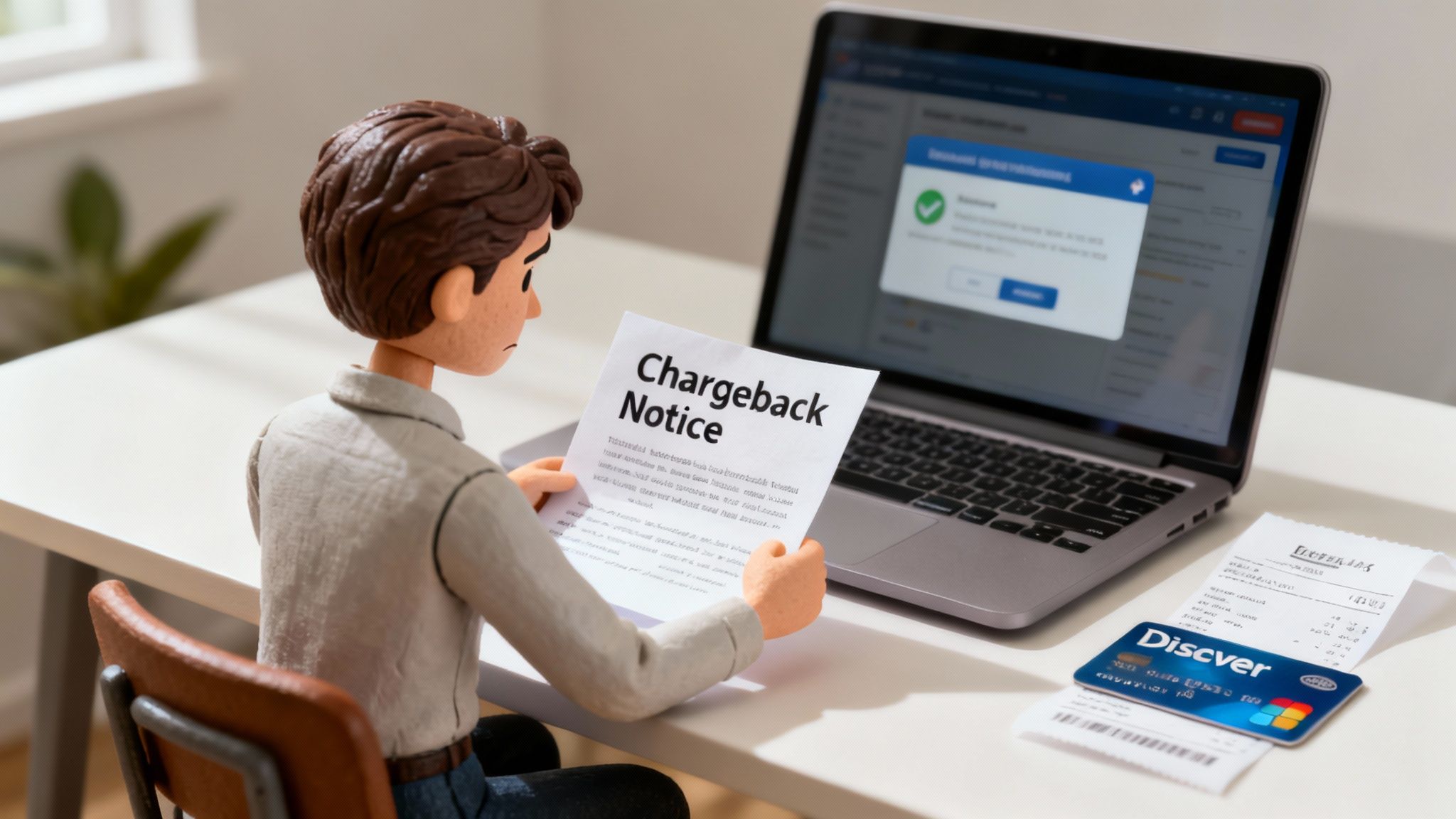
You know that feeling. The "Dispute Notification" email lands in your inbox, and your stomach drops a little. A customer has filed a chargeback on a Discover transaction, and just like that, the funds from that sale are frozen. It’s a frustrating moment for any business owner, but it's not the end of the story.
At its core, a chargeback is a consumer protection tool. It gives cardholders a way to fight back against charges they think are fraudulent or incorrect. The problem is, this system can be misused—often leading to "friendly fraud," where a legitimate customer disputes a perfectly valid charge. For you, the merchant, a Discover card chargeback means the money is immediately pulled from your account and held until the dispute is settled.
The Key Players Involved
It helps to know who you're dealing with because it’s not just between you and the customer. Several parties are involved:
- The Cardholder: This is your customer, the one who initiated the dispute.
- The Issuing Bank: This is the cardholder's bank—the one that issued them the Discover card. They take the customer's claim and kick off the official chargeback process.
- The Acquiring Bank: This is your bank or payment processor (think Stripe or PayPal). They're the ones who handle your card transactions.
- Discover Network: As the card network, Discover sets the rules of the game and acts as the messenger between the issuing and acquiring banks.
- You, the Merchant: That's you, now tasked with proving the original transaction was legit.
This whole process might seem overly complicated, but it's there to create a standardized review process. Still, a Discover chargeback can throw a real wrench in your business's financial health, hitting your cash flow directly. To soften that blow, it's smart to have some advanced cash flow management strategies in your back pocket.
Mapping the Dispute Lifecycle
The journey of a Discover chargeback follows a specific, predictable path. It all begins the moment your customer calls their bank to question a charge. If the issuing bank thinks the claim has merit, they assign it a reason code and shoot the dispute over to your acquiring bank.
Key Takeaway: The second you get that notification, a timer starts. Discover gives you a tight window—usually about 20 days—to respond with solid, compelling evidence. If you miss that deadline, you automatically lose. No questions asked.
Your payment processor will then alert you, giving you the details of the claim. This is your cue to build your case. You'll need to submit a "representment" package, which is just a fancy term for all the evidence you can gather to prove the transaction was valid. Our guide on how to dispute a charge with Discover dives deeper into the nitty-gritty of this critical step. Once you submit your evidence, Discover reviews everything and makes the final call.
Cracking the Code on Discover Chargebacks
When a Discover chargeback lands in your inbox, the first thing you'll spot is a reason code. Don't let it intimidate you. Think of it as a quick note from the card network explaining why your customer is disputing the charge.
Understanding this code is your first, most critical step. It’s the key to figuring out what happened and how you can fight back with the right evidence. Instead of getting bogged down in technical terms, let's break down what these codes mean in real-world situations you probably see all the time.
Fraud and Authorization Codes
This group of codes is all about transactions the cardholder claims they never made. The customer is essentially saying, "That wasn't me," or "I never approved that." This is where you'll find both genuine fraud and its frustrating cousin, friendly fraud.
A classic example is reason code RM (Cardholder Denies Making Transaction). Picture this: you run an online clothing store, and a customer files a chargeback with this code for a jacket they bought last month. They're claiming they never even visited your website. Now, it's on you to prove they did.
To shut down an RM claim, you need to connect the dots between the cardholder and the purchase with solid proof:
- AVS and CVV Results: Show that the address verification and security code they entered matched what the bank has on file.
- IP Address Logs: Prove the order originated from a location consistent with their billing address.
- Customer Communications: Did they email your support team? Did they create an account on your site? Every piece of contact helps build your case.
Codes for Product and Service Issues
The other big bucket of disputes isn't about who made the purchase, but about what they received. Here, the customer admits to buying from you but claims there was a problem with the product or service itself.
For example, reason code RG (Services Not Rendered or Merchandise Not Received) is a constant headache for e-commerce merchants. A customer orders a product, you ship it out, but they turn around and file a chargeback saying it never showed up. This could be anything from a legitimate shipping mishap to a package stolen off their porch—or just a flat-out fraudulent claim.
My Two Cents: For RG disputes, proof of delivery is your silver bullet. A tracking number that just says "delivered" might not cut it anymore. Delivery confirmation with a signature, or even a photo of the package on the customer's doorstep, is often the knockout punch that wins you the case.
Then there's code RN (Merchandise/Services Not as Described). This one pops up when what the customer thought they were getting doesn't match what they actually got. Maybe they claim the product was defective, the wrong color, or just not what your website promised. For a deeper dive into all the reasons customers might file disputes, check out our guide on the common reasons for a chargeback.
When you're fighting an RN dispute, your evidence needs to scream clarity and transparency:
- Product Descriptions and Photos: Show that your website gave an accurate and honest representation of the item.
- Return Policy: Prove your policy was clearly displayed during checkout and that the customer didn't follow the proper steps.
- Customer Service Logs: Pull any emails or chat transcripts where you offered a solution. This shows you acted in good faith to resolve the issue.
Common Discover Chargeback Reason Codes Explained
To help you get started, I've put together a quick-reference table that translates the most common Discover codes you'll encounter into plain English, with examples you've likely seen before.
Getting a handle on these codes is the first step in turning a frustrating Discover chargeback into a winnable dispute. They give you a clear roadmap, showing you exactly what kind of evidence you need to gather to protect your business and your bottom line.
How to Build and Submit Your Winning Response
Getting a Discover chargeback notification can be incredibly frustrating. It's easy to want to just write it off as a cost of doing business, but don't give up your money that easily. With a methodical approach and the right evidence, you have a real shot at winning the dispute and getting your revenue back.
This is your game plan for building a compelling case from the ground up.
First Moves: Analyze and Strategize
Before you start pulling reports and screenshots, take a breath. The first move is a quick but critical analysis: Is this a fight you can actually win? Sometimes, the smartest move is to accept the loss and move on. A quick cost-benefit analysis will tell you if the fight is worth your time.
Ask yourself these key questions:
- What's the disputed amount? If it’s a tiny amount, like $5, the time and effort you’ll spend fighting it will likely cost you more than the chargeback itself.
- What evidence do you have on hand? Be honest with yourself. If you know you're missing a key piece of proof, like delivery confirmation for an "item not received" claim, your chances of winning plummet.
- What does the reason code tell you? The reason code is the story behind the dispute. A "friendly fraud" claim (RM) needs a completely different set of evidence than a "not as described" claim (RN). Your entire response has to be tailored to refuting the cardholder's specific complaint.
This initial reality check helps you focus your energy where it actually counts. If you decide to move forward, you're committing to building a rock-solid case, and that case is built on a foundation of compelling evidence.
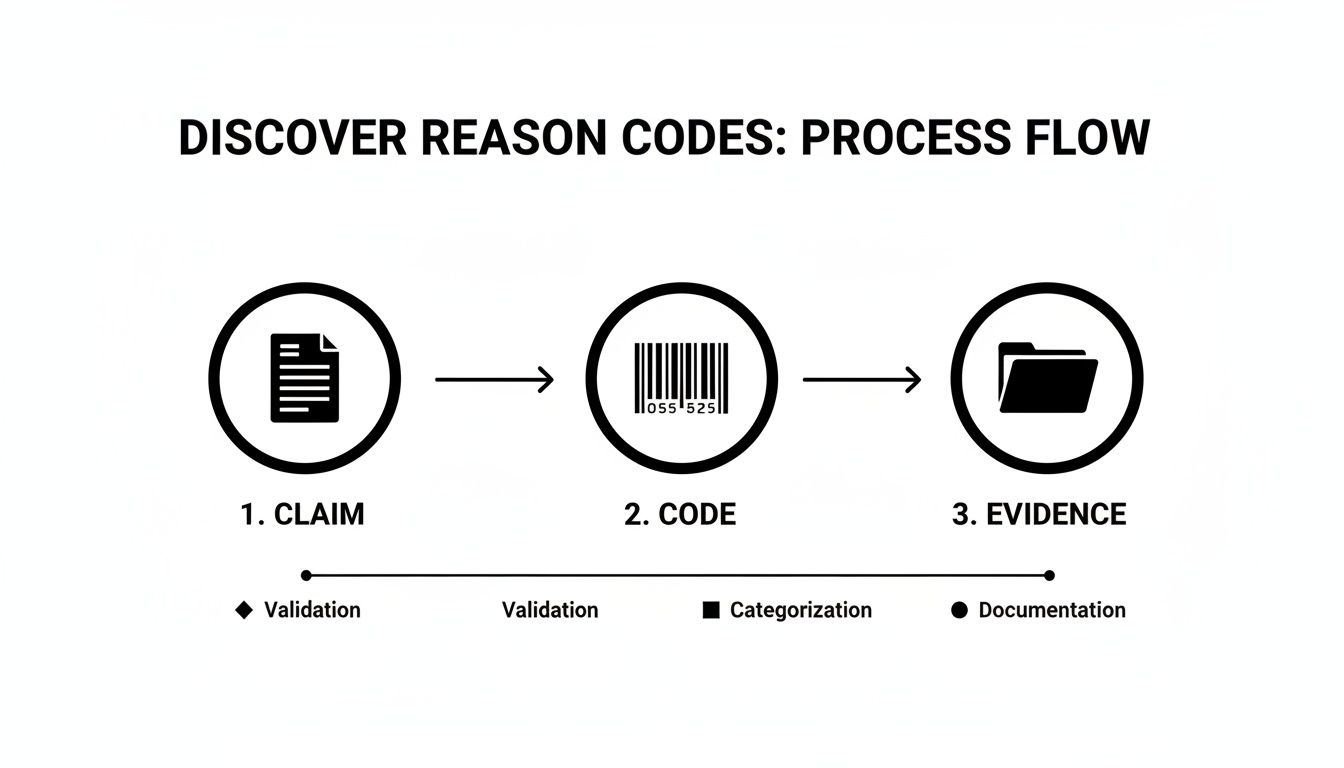
This flow shows exactly why you need to match your evidence directly to the reason code. It's the only way to disrupt the dispute process in your favor.
Digging for Digital Gold: Your Evidence Trail
Your e-commerce platform is a treasure trove of evidence just waiting to be uncovered. It doesn't matter if you're on Shopify, Stripe, PayPal, or something else—the data you need to win is already there. You just have to know where to look.
Think like a detective. Your mission is to piece together a complete picture of the transaction that leaves no room for doubt. For example, if you're on Shopify, you can go straight to the order details page. You'll find the customer's IP address, AVS/CVV match results, and a complete timeline of the order from the moment it was placed to the second it was fulfilled.
Here's a checklist of what to grab:
- Order Details: Transaction date, time, amount, and an itemized list of what they bought. This establishes the basic facts.
- Customer Information: You'll need their name, billing and shipping addresses, email, and phone number.
- Fraud Analysis Data: Most platforms have built-in fraud tools that show AVS (Address Verification System) and CVV results. A "match" here is incredibly powerful proof.
- Shipping and Tracking Info: For any claim about non-receipt, the tracking number, shipping date, and delivery confirmation are non-negotiable. If you have a photo of the package on the customer's doorstep, even better.
Pro Tip: Don't just dump a bunch of raw data on the dispute analyst. Organize your evidence with clear labels. Use screenshots and highlight the most important information. You want to make it as easy as possible for them to see your side of the story in 60 seconds or less.
Crafting a Powerful Rebuttal Letter
While evidence is the backbone of your case, the rebuttal letter is its voice. This is your chance to connect the dots and tell a clear, concise story. A well-written letter can absolutely be the difference-maker.
Keep it professional. Avoid emotional language or long, rambling explanations. The person reviewing your case looks at dozens of these a day, so stick to the facts and make their job easy.
A winning rebuttal letter always has a clear structure:
- The Opener: Get straight to the point. State the chargeback case number, transaction date, and amount right at the top.
- Your Argument: In one or two sentences, explain exactly why the chargeback is invalid. For example: "We are disputing this chargeback because we have provided proof of delivery to the cardholder's verified address."
- The Evidence: This is the core of your letter. List each piece of evidence you're submitting and briefly explain what it proves. For instance, "Attached is the AVS match confirmation, which proves the cardholder provided the correct billing address for the credit card used."
- The Closer: End with a firm, professional statement reiterating that the charge was valid and formally requesting that the chargeback be reversed.
Trying to write these from scratch for every dispute is a huge time-sink. To speed things up and make sure you hit all the key points, it helps to start with a proven structure. For a great starting point, check out this helpful rebuttal letter template that you can customize for your specific Discover card chargeback.
By following this playbook—analyze first, then gather targeted evidence, and finish with a sharp rebuttal—you stop being a victim of chargebacks and start defending your revenue. It takes some effort, but every dispute you win puts money directly back into your business.
Your Evidence Checklist for a Stronger Case
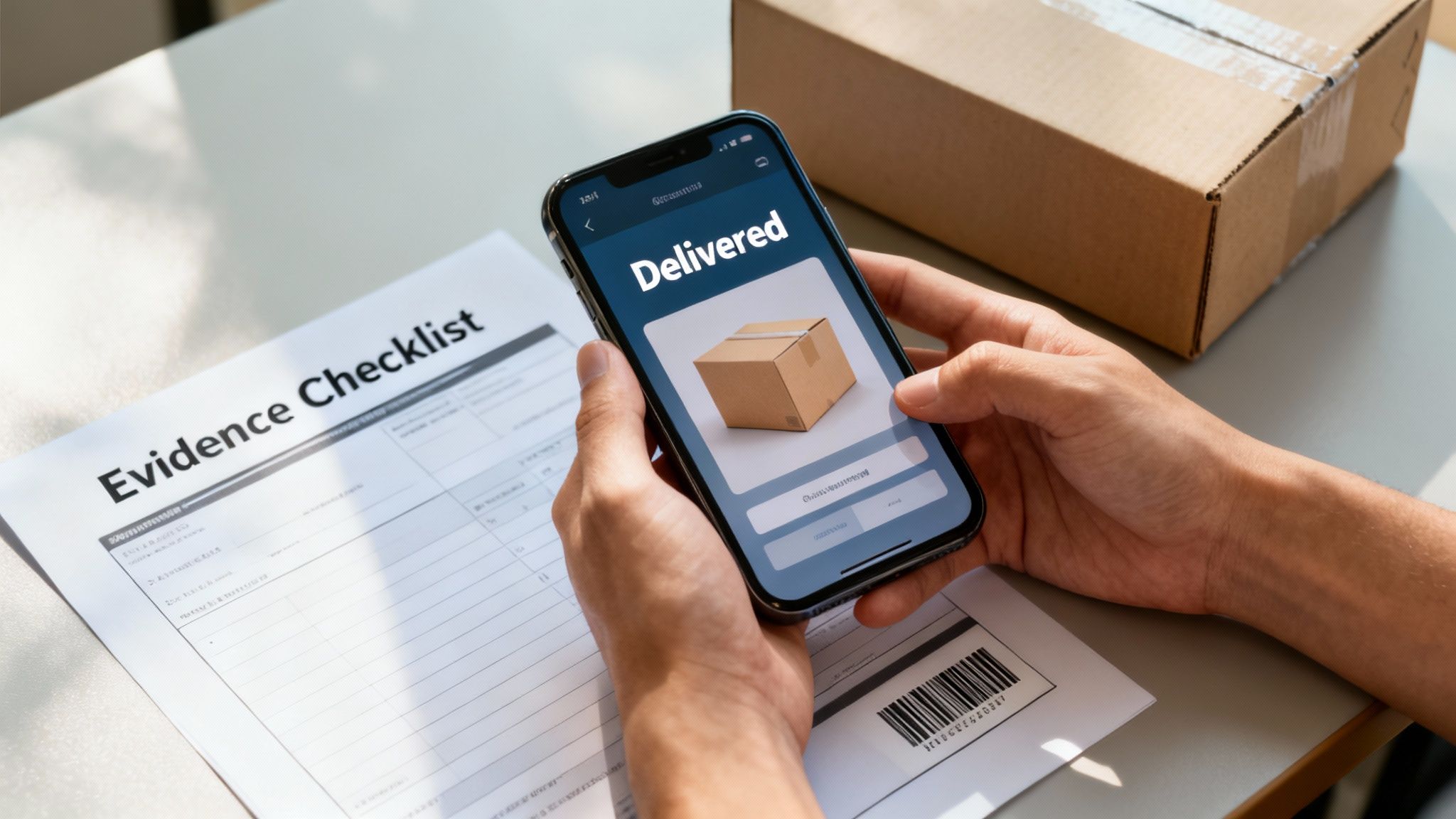
Winning a Discover card chargeback isn’t about who tells the better story; it's about who has the better proof. A gut feeling that a customer is committing friendly fraud won't get you very far with the bank. What you need is a clean, undeniable package of evidence that leaves no room for doubt.
Think of it like you're a detective building a case file. Every bit of information you gather strengthens your position and systematically dismantles the cardholder's claim. To make it easier, let's break down the essential evidence you should be collecting for the most common disputes you'll face.
For "Product Not Received" Claims
This is one of the biggest headaches for any e-commerce merchant. You ship an order, the tracking updates, and then bam—a chargeback claiming the package never showed up. For these disputes, your evidence needs to draw a clear, unbroken line from your warehouse straight to their doorstep.
Your go-to evidence pile should include:
- Proof of Delivery: This is your MVP. A tracking number that just says "Delivered" is a good start, but it's often not enough on its own. Confirmation with a signature or a photo of the package at the correct address is your strongest possible defense.
- Shipping Confirmation Emails: Always include a screenshot of the email you sent the customer with their tracking details. It proves you were proactive and kept them in the loop.
- Address Verification: Show that the shipping address the customer entered at checkout perfectly matches the address on the final delivery confirmation.
A common mistake I see merchants make is just uploading the tracking number and calling it a day. I've seen too many winnable cases lost because they didn't have that one last piece of visual proof. A delivery photo can single-handedly shut down a "not received" claim.
For "Fraud or Not Authorized" Claims
When a customer claims they never authorized the purchase, your job is to prove they were the one behind the keyboard. You need to connect that specific cardholder to that specific order using all the digital footprints left behind.
Here’s what you'll want to dig up:
- AVS and CVV Results: This is non-negotiable. Showing a match for the Address Verification System (AVS) and the Card Verification Value (CVV) is powerful evidence against fraud claims.
- IP Address Logs: Document the IP address used to place the order and, if you can, its geographic location. If that IP address traces back to the cardholder’s billing city, your case gets a lot stronger.
- Customer Communication: Did the customer email your support team before or after the purchase? Any chat logs, support tickets, or emails using the same information from the order can tie them directly to the transaction.
- Previous Order History: If this isn't their first rodeo and they have a history of successful, undisputed purchases with you, be sure to include that. It establishes a relationship and makes a sudden fraud claim look pretty suspicious.
It's also worth noting that Discover chargebacks can punch above their weight. While they may have a smaller transaction volume than Visa or Mastercard, their dispute risk can be surprisingly high. One study found Discover’s chargeback-to-transaction ratio was more than double the average for the other two major networks. That means merchants face over 2x the dispute risk per transaction. You can discover more insights about these chargeback rate findings here. This makes gathering rock-solid evidence even more critical.
For "Not as Described" Claims
These disputes can feel personal, but they're just as evidence-based as any other. The customer is saying what they got isn't what you promised. Your job is to prove your product listing was accurate and your policies were crystal clear.
- Product Page Evidence: Grab screenshots of the product page as it looked when the customer bought it. Highlight the product description, specs, and images that directly refute their claim.
- Clear Policies: Show proof that your return and refund policies were clearly visible and accessible before and during the checkout process.
- Customer Interaction: If the customer contacted you to complain, include those communication logs. Show that you were responsive and tried to resolve the issue based on your stated policies.
Trying to pull all this together for every single dispute can be a massive time sink. Our guide on chargeback representment dives deeper into strategies for organizing this evidence effectively. By having a clear checklist ready to go, you can act fast and with confidence, turning a potential loss into a recovered sale.
Proactive Strategies to Prevent Future Chargebacks
Fighting a Discover card chargeback is playing defense. And while a good defense is essential, the real victory comes from stopping disputes before they even have a chance to start.
Building a proactive strategy is far less expensive and time-consuming than reacting to claims after the fact. It means shifting your focus from just winning disputes to making them rare in the first place. Often, the best tactics are simple, common-sense tweaks to your operations that can make a huge difference to your bottom line.
Fortify Your Checkout Process
Think of your checkout page as the front door to your business. This is your first and best chance to spot and stop suspicious transactions before they ever become a problem.
A few basic security checks here are incredibly effective. At a minimum, make sure you're always using:
- AVS (Address Verification System): This tool instantly checks if the billing address entered by the customer matches what the card issuer has on file.
- CVV (Card Verification Value): Requiring that three- or four-digit security code proves the customer physically has the card. It's a simple but powerful deterrent.
Implementing robust ecommerce fraud prevention strategies is a must for any online merchant. These tools are standard features on most payment gateways like Stripe or Shopify, and just making sure they're switched on is a massive step toward reducing fraudulent chargebacks.
Communication Is Your Best Weapon
It’s amazing how many chargebacks start as a simple misunderstanding that a quick conversation could have solved. When customers can't easily get in touch with you, their next call is to their bank.
Your goal should be to make yourself the easiest, most obvious point of contact. A customer shouldn't have to file a dispute because they couldn't find your return policy or phone number. Make your customer service visible, accessible, and responsive.
Key Takeaway: A huge chunk of chargebacks, especially those labeled "friendly fraud," are just the result of poor communication. A customer might not recognize your business name on their statement, or maybe they forgot about a recurring subscription. A prompt, helpful email can solve these issues 9 times out of 10 before they ever escalate into a formal Discover card chargeback.
Set Crystal Clear Expectations
Ambiguity is the enemy of a low chargeback rate. When customers know exactly what they’re getting, when they’re getting it, and how to return it, there are far fewer reasons for them to be unhappy. Transparency is your best friend here—it builds trust and heads off problems at the pass.
Take a hard look at a few key areas of your business:
- Product Descriptions: Are they detailed and honest? Use high-quality photos from multiple angles and list all the important specs. What you advertise must be what you deliver.
- Shipping Policies: Be upfront about shipping times, costs, and the carriers you use. As soon as an order ships, get that tracking information into your customer's hands.
- Return and Refund Policies: This needs to be easy to find and even easier to understand. Ditch the confusing legal jargon and spell out the steps in plain English.
At the end of the day, effective chargeback prevention isn’t a one-time fix; it’s an ongoing effort that touches every part of your business. By securing your checkout, being radically transparent, and making customer service a priority, you can dramatically cut down on the number of disputes you have to deal with.
Got Questions About Discover Disputes? We’ve Got Answers.
Even with the best preparation, you’re going to run into some confusing situations with Discover chargebacks. It just comes with the territory. Here are some no-nonsense answers to the questions we hear all the time from merchants just like you.
How Long Do I Have to Respond to a Discover Chargeback?
Discover is pretty strict with its deadlines, so you don’t have much time to waste. As a rule of thumb, you have about 20 days from the day the dispute is initiated to pull together your evidence and submit your response.
But—and this is a big but—that timeline can shift depending on your payment processor. The most important thing you can do is check the specific deadline listed right there in your chargeback notification. If you miss that window, it’s an automatic loss. Treat every single dispute with urgency.
Can I Appeal a Lost Discover Chargeback Decision?
You can, but it’s a whole different ballgame. If Discover denies your initial representment, your next step is arbitration. Think of it as a second chance to plead your case, hopefully with some new, compelling evidence you’ve dug up.
Just know that arbitration isn't free. If you lose the appeal, you'll be on the hook for more fees. Because of this, you should only really consider it when you have an iron-clad case and the disputed amount is high enough to justify the cost and the risk.
My Advice: Before you even think about arbitration, take a hard, objective look at your case. If the evidence you sent the first time wasn't enough, you better be damn sure that any new info you have is a game-changer. Otherwise, you’re just throwing good money after bad.
What Is Friendly Fraud and How Do I Fight It?
Ah, friendly fraud. It's easily one of the most frustrating things a merchant deals with. This is when a real customer buys something from you, receives it, and then files a chargeback claiming they never authorized the purchase or the item never showed up.
Fighting this effectively comes down to one thing: proving a direct link between the cardholder and the transaction. You need to build a digital paper trail so clear and convincing that it's impossible to ignore.
Focus on evidence that ties them to both the purchase and the delivery. Your best weapons are:
- AVS and CVV matches to prove they had the physical card details.
- IP address logs and device information showing the order came from their usual location or a known device.
- Email correspondence and any customer service chats you have on record.
- Proof of delivery to their verified address, especially with photos or a signature confirmation.
The more dots you can connect, the weaker their claim becomes.
What Is the Difference Between a Chargeback and a Refund?
This is a distinction every merchant needs to understand cold. A refund is a simple, direct agreement between you and your customer. They ask for their money back, you agree, and you return it. The matter is settled between the two of you.
A chargeback, however, is a forced reversal kicked off by the customer’s bank. It completely bypasses you and yanks the funds right out of your account. Chargebacks are so much worse because they come with extra fees, hurt your dispute ratio, and can eventually put your entire merchant account at risk.
Fighting every Discover card chargeback by hand is a massive drain on your time and money. ChargePay uses AI to handle the entire dispute process for you, building powerful, evidence-backed responses in real time. Stop losing revenue to friendly fraud and let us help you win back up to 80% of your disputed funds, completely hands-free. Learn more at ChargePay.ai.


.svg)



.svg)


.svg)
.svg)
.svg)