

A PayPal refund scam is a nasty trick where a buyer uses PayPal's own system to get their money back on a legitimate purchase, leaving you without your product and the payment. It's a classic case of having your cake and eating it too, except you're the one who baked the cake and paid for the ingredients.
These schemes are designed to take advantage of buyer protection policies, and they hit sellers hard. For every dollar you lose to the initial fraud, you can end up losing nearly four times that amount in related costs.
A Quick Look at Common PayPal Scams
Before we dive deeper, let's get a quick overview of the most common scams you'll likely run into. Each one starts differently but ends the same: with you out of pocket.
This table covers the basics, but the real damage goes much deeper than just the initial transaction.
The True Cost of a PayPal Refund Scam
It always starts with that one dreaded notification—a new dispute. But a fraudulent refund claim costs so much more than a single sale. When a scammer files a dispute, it creates ripples that spread across your entire business, messing with your finances, your operations, and even your account’s good standing with PayPal.
The most obvious hit is the product itself and the revenue you thought you'd made. That stings. But the financial bleeding doesn't stop there. You're also out the shipping and packaging costs you paid to send the item in the first place—money you'll never get back.
And if that dispute escalates to a chargeback? Buckle up. You'll get slapped with an additional, non-refundable dispute fee from PayPal, which can be as high as $20 per incident.
Beyond the Initial Financial Hit
These direct costs are just the opening act. The real long-term danger is the cumulative effect of multiple chargebacks. A high chargeback ratio signals to payment processors that you're a risky business to work with. Before you know it, your account could be under review, your funds frozen, or in a worst-case scenario, shut down completely.
This is where the operational drain kicks in. Fighting each claim is a time-suck. You have to dig up evidence, craft responses, and babysit the case in PayPal’s Resolution Center. That's time you could have spent finding new customers or improving your products.
Understanding how these hidden costs pile up is the first step to protecting yourself. You can learn more about how a chargeback hurts businesses in our detailed guide.
Think of each scam as a small debt that quietly accrues interest. It’s not just the principal amount you lose; it’s the fees, the wasted time, and the potential long-term damage to your business's financial health that truly add up.
Ultimately, these schemes do more than just steal from you. They force you to be reactive, pulling your focus away from your customers and your growth. Staying one step ahead of these tactics isn't just good practice—it's essential for survival.
Spotting the Most Common Refund Scams
To protect your business, you have to know what you’re up against. PayPal refund scams aren't elaborate heists run by criminal masterminds; they're usually simple, deceptive plays that manipulate trust and take advantage of loopholes in the system. Once you understand the fraudster's playbook, you can spot the warning signs before a transaction goes sideways.
These schemes are designed to work well in a busy e-commerce world where sellers are focused on shipping quickly and keeping customers happy. It's a huge problem across the board—consumers lost more than $12.5 billion to fraud in a single year, which was a 25% jump from the year before.
The "Item Not Received" Claim
This is one of the oldest tricks in the book, and it's brutally effective. A buyer makes a purchase, you ship it out, and a few days later, they file a dispute claiming the package never arrived. They’re betting on the fact that you might not have ironclad proof of delivery, turning the situation into your word against theirs.
A popular twist on this involves the buyer providing an incorrect or incomplete shipping address. They might try to intercept the package themselves or just let it get lost in transit, only to file a claim later saying it's your fault.
Red flags to watch for:
- Sudden Address Change: The buyer asks you to ship to a different address after they've already paid. This is a massive red flag because it instantly voids your PayPal Seller Protection.
- Unusual Urgency: They push you to ship the item immediately, often late at night or over a weekend. They’re hoping you'll rush through the process and skip your usual verification steps.
- High-Value Orders: Scammers love to target expensive items. Why? The potential payoff from a single successful claim is just that much bigger.
The "Significantly Not as Described" Ploy
This scam is a bit more brazen. In this scenario, the buyer actually gets your product but immediately opens a dispute. They'll claim it’s damaged, a fake, or something completely different from what they ordered. The most infamous version of this is the "empty box" scam, where they swear you shipped them a package with nothing inside.
To make matters worse, they might even return a different, broken item to you to "prove" their case. You're left with a piece of junk, no product, and no payment. This type of scam is particularly frustrating because it's a direct attack on your product's quality and your business's integrity.
A key takeaway here is that a buyer's claim doesn't have to be true to cause you problems. The burden of proof often falls on you, the seller, to prove that you sent the correct item in good condition.
The Overpayment Scam
This scheme feels different right from the start because the scammer sends you more money than the item actually costs. They’ll quickly follow up with a story—"Oops, I accidentally typed the wrong amount!"—and ask you to refund the difference through PayPal, a bank transfer, or some other method.
Here's the catch: the initial payment was made with a stolen credit card or from a hacked account. As soon as the legitimate account holder reports the fraud, PayPal will reverse the entire original transaction from your account. You're now out the "refund" you sent, your product, and the original payment.
Since many refund scams begin with a deceptive email or message, it's crucial to understand how to identify phishing emails to protect your business from the get-go.
Friendly Fraud: The Blurry Line
Finally, we have friendly fraud. This is when a legitimate customer disputes a valid charge. It could be due to a simple case of buyer's remorse, they might have forgotten they made the purchase, or in some cases, they're just trying to get the item for free.
While it isn't always malicious, the outcome for you is the same: you're stuck dealing with a chargeback. Distinguishing between an honest mistake and intentional fraud is one of the biggest headaches for online merchants. You can check out our in-depth guide on how to handle friendly fraud to learn more.
How PayPal Seller Protection Works For You
When you're dealing with potential scams, it's easy to feel like you're on your own. But you aren’t fighting scammers alone. PayPal has some serious systems in place to protect merchants, and understanding how to make them work for you is your best defense.
The first line of defense is PayPal’s own fraud detection system. Think of it as an incredibly smart security guard watching every single transaction that comes through your store. It’s not just looking for one or two red flags; it’s analyzing a massive amount of information in the blink of an eye.
In fact, PayPal's AI fraud systems analyze over 500 data points for each transaction. They look at everything from purchase history and device information to the customer's location to generate a real-time risk score. This is powerful stuff, and it helps keep fraud losses impressively low across the platform. You can find more details on these powerful fraud prevention statistics at Chargebacks911.com.
Demystifying Seller Protection
Beyond the automated fraud detection, there's a more direct safety net you can use: PayPal Seller Protection. This program acts a lot like an insurance policy for your online sales. If a transaction goes sideways because of a covered issue, PayPal will step in and absorb the loss, letting you keep the payment.
But it’s not a magic wand that covers every single problem. Seller Protection is designed to shield you from two specific types of claims:
- Unauthorized Transaction: This is when a buyer claims their account was hacked and they never actually made the purchase.
- Item Not Received (INR): The classic claim where a buyer insists the product never showed up at their door.
It's just as important to know what isn't covered. Most "Significantly Not as Described" (SNAD) claims—like the infamous empty box scam—are not eligible for Seller Protection. For those, you'll have to rely on having solid evidence to win the dispute on your own. You can explore our guide that answers the question, "Does PayPal protect against scams?" to get a deeper understanding of these nuances.
How to Qualify for Coverage
Getting covered by Seller Protection isn't automatic; you have to follow the rules to the letter. Think of it like an insurance claim—if you don't meet the policy requirements, your claim is going to be denied.
The single most important rule is to only ship to the address listed on the PayPal "Transaction Details" page. Shipping anywhere else, even if the buyer begs you to, instantly voids your protection.
To make sure you're covered, you need to meet these core requirements for every single sale:
- Ship to the Confirmed Address: Always, always use the shipping address provided by PayPal on the transaction details page. No exceptions.
- Provide Proof of Shipment: You absolutely need a valid tracking number from a major carrier that proves the item was sent.
- Provide Proof of Delivery: For any item over $750, you must have a signature confirmation of delivery. This is completely non-negotiable.
- Respond Promptly: You have to respond to any PayPal dispute or claim within the given timeframe, which is usually 10 days.
By following these steps on every transaction, you ensure that PayPal's safety net is there for you when you need it most.
Your Step-by-Step Guide to Winning a Dispute
Getting that dispute notification can feel like a punch to the gut. It's stressful, it's frustrating, and it's tempting to fire back an angry response. But the absolute worst thing you can do is react emotionally. A calm, methodical approach backed by solid proof is your best weapon against bogus claims.
Think of this as your battle plan. When a buyer files a dispute, PayPal's Resolution Center becomes the stage. Your only job is to present a clear, fact-based case that leaves zero room for doubt. Panic leads to mistakes; preparation leads to wins.
Step 1: Assemble Your Evidence Immediately
The moment a dispute is opened, the clock starts ticking. You usually have about 10 days to respond, so there’s no time to waste. Don't put it off. Start gathering every single piece of information related to that transaction right away.
Here’s your evidence checklist:
- Proof of Shipment: This is the bedrock of your case. You need a valid tracking number from a real carrier showing the item was sent to the buyer's address listed on the PayPal transaction details page. No exceptions.
- Proof of Delivery: For an "Item Not Received" claim, this is your silver bullet. A screenshot from the carrier’s website showing the "Delivered" status is non-negotiable. For any item over $750, you absolutely must have signature confirmation.
- All Communications: Pull together every email, direct message, or platform chat you had with the customer. These conversations can often expose a scammer's real intentions or directly contradict their claims.
- Product and Packaging Photos: If you have pictures of the item before you shipped it, include them. This is your best defense against "Significantly Not as Described" claims because it shows the item's true condition.
This whole process is about staying compliant with PayPal's Seller Protection policy.
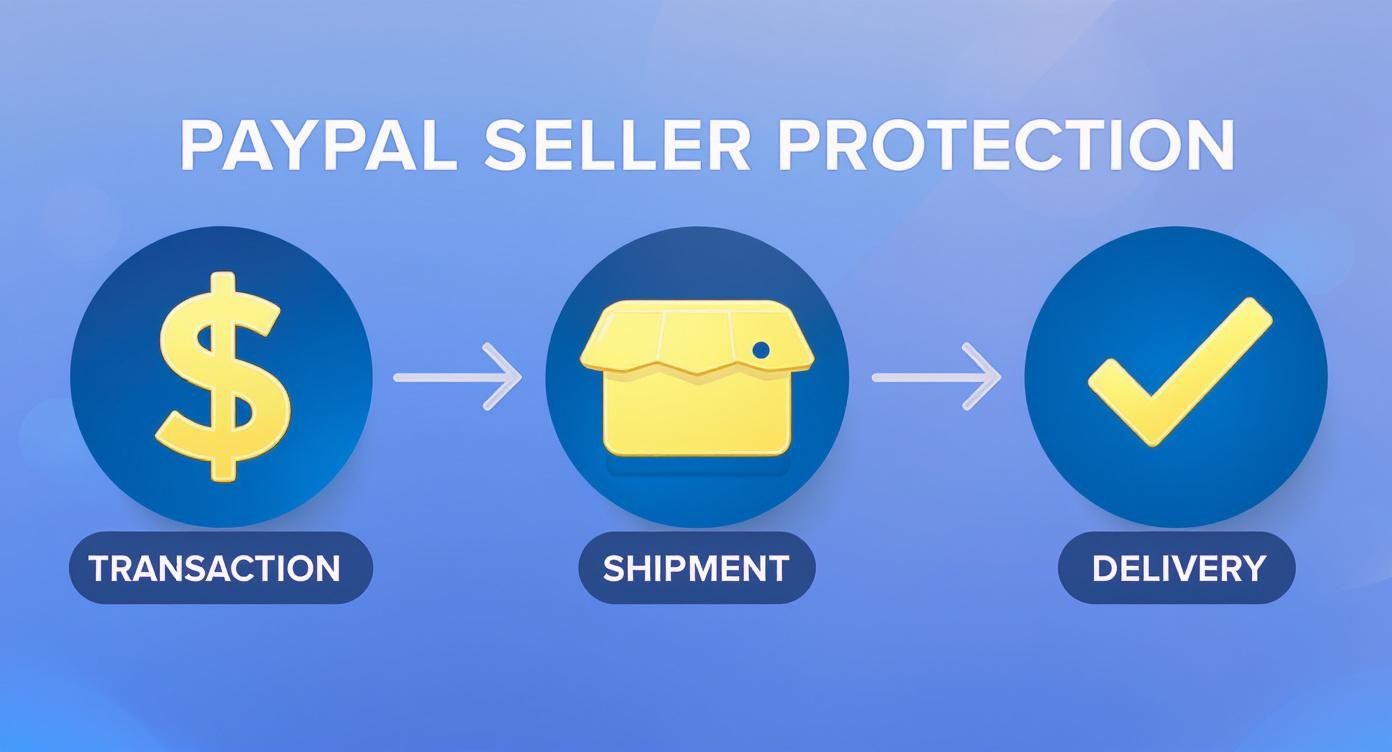
Making this your standard workflow for every single order—confirming the transaction, shipping to the right address, and verifying delivery—is how you build an airtight defense.
Step 2: Craft a Professional Response
With all your proof in hand, it's time to write your response in the Resolution Center. The goal here is to be professional, concise, and objective. Stick to the facts. Don't get emotional or accusatory. Remember, you're not arguing with the buyer; you're presenting your case to a PayPal investigator.
Structure your response simply:
- Start with the basic facts: what was ordered, when it was paid for, and the date it was shipped.
- Directly address the buyer’s specific claim. If they say they never got it, state that the tracking information confirms it was delivered on a specific date.
- Upload your evidence. Attach each file with a clear, descriptive name like "Proof_of_Delivery_Tracking123.png" so the investigator knows exactly what they're looking at.
Keep it simple. A brief, factual summary backed by strong evidence is way more powerful than a long, angry letter. Let your documentation do all the talking.
Step 3: Submit and Wait for a Decision
Once you hit submit, the case is in PayPal's hands. They’ll review the evidence from both you and the buyer before making a final call. This can take a little while, so you’ll need to be patient.
For a more detailed walkthrough of the entire process, you can learn more about how to dispute a PayPal transaction in our comprehensive guide.
Just remember, a well-organized and timely response dramatically boosts your chances of winning against a PayPal refund scam. By treating every dispute with a consistent, evidence-based approach, you can protect your revenue and your business's reputation.
Proactive Ways to Prevent Scams Entirely
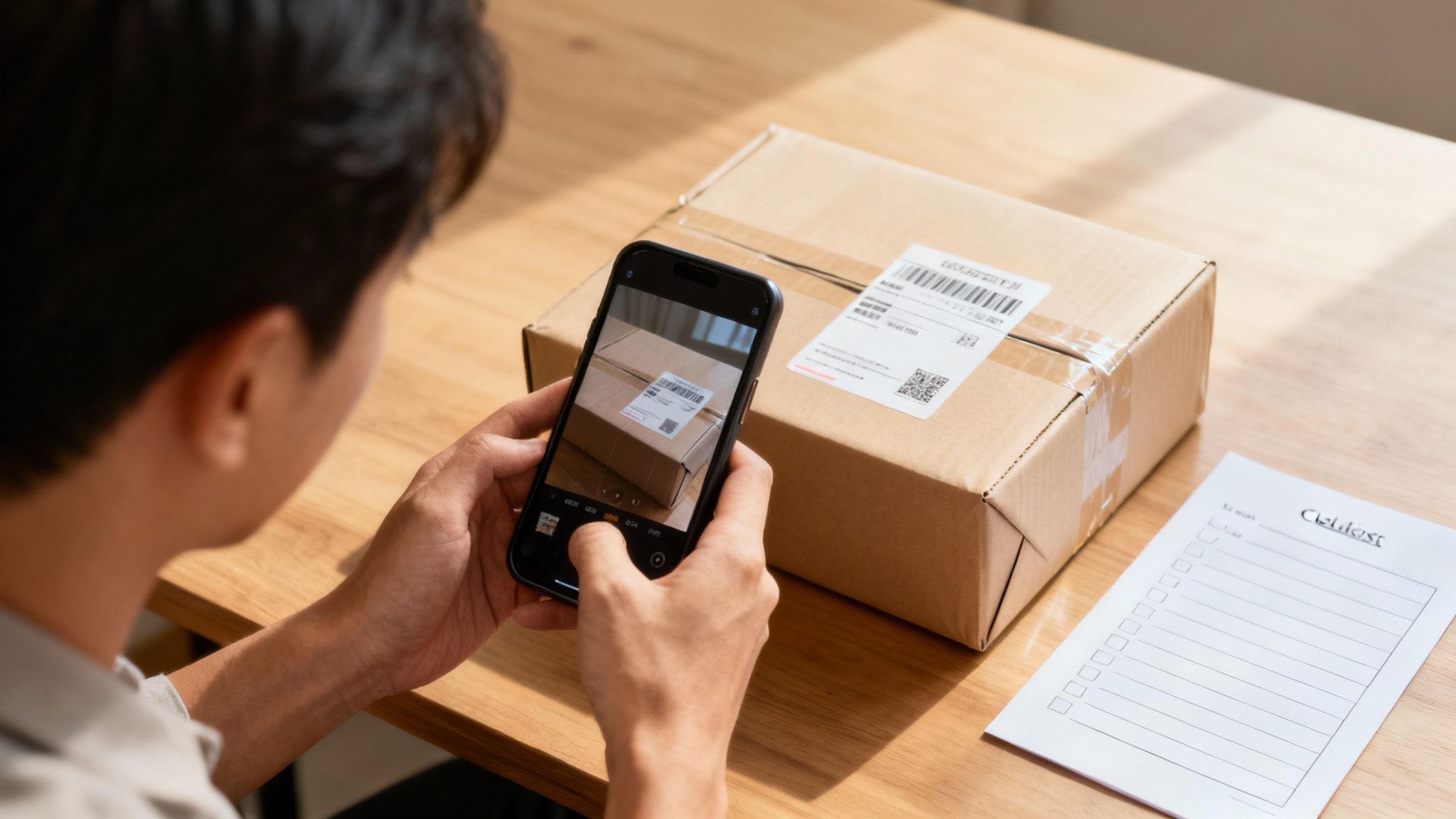
Knowing how to fight a dispute is one thing, but avoiding it altogether is the real win. A good proactive defense makes your store a much harder target for anyone trying to pull a PayPal refund scam. It's all about building simple, repeatable habits that create a shield around your business.
This doesn’t mean you need a huge budget or complicated new tools. It’s about being meticulous. You want to build a rock-solid trail of evidence for every single order you ship out the door. Think of it as creating an open-and-shut case in your favor before a problem even has a chance to start.
Fortify Your Shipping and Packing Process
Your single most powerful weapon against "Item Not Received" claims is trackable shipping. This isn't just a suggestion; it's a non-negotiable part of qualifying for PayPal's Seller Protection. Never, ever send an item without a tracking number from a reputable carrier.
To really lock things down, get into the habit of documenting your packing process.
- Take Photos: Before you seal the box, snap a quick picture of the item sitting next to the shipping label. This creates a clear visual record showing the correct product was packed for the right customer.
- Consider Video for High-Value Items: For your more expensive products, a short video of you packing the item can be irrefutable proof against bogus "empty box" or "wrong item" claims.
Your goal is to leave zero room for doubt. When a potential scammer sees you document everything, they’re far more likely to give up and move on to an easier target—someone who doesn't keep such detailed records.
Establish Clear and Firm Policies
Your store's policies are your first line of defense. A vague or nonexistent return policy is basically an open invitation for scammers to see what they can get away with. Make sure your return, refund, and shipping policies are crystal clear, easy to find, and written in simple language anyone can understand.
This kind of clarity does two things: it manages legitimate customer expectations and it deters fraudsters who are actively looking for loopholes to exploit. It shows you're a professional who knows the rules of the game.
For a bigger picture of how platforms protect their users, you can explore modern trust and safety strategies, which are built on similar principles of transparency and security.
Leverage PayPal's Built-In Tools
While you handle the physical side of shipping, PayPal is working in the background to secure the transaction itself. PayPal’s fraud detection models analyze billions of transactions to spot new scam tactics as they emerge. For high-risk payments, this system can automatically add extra verification steps or even decline the payment outright, giving you a powerful, built-in layer of protection.
Ultimately, weaving these habits into your daily operations is what makes the difference. For more ideas on how to safeguard your online store, check out our guide on e-commerce fraud prevention best practices. By being diligent and thorough, you can stop most PayPal refund scams before they even start.
Navigating the murky waters of a potential PayPal refund scam can feel overwhelming. To help you find your footing, I’ve put together some clear, direct answers to the most common questions I see merchants wrestling with. Think of this as your quick-reference guide for handling these tricky situations with confidence.
What Should I Do If I Suspect a Buyer Is a Scammer?
If your gut tells you something is off before you’ve shipped the item, listen to it. Do not send the package. The smartest move is to cancel the order, issue a full refund right away through PayPal, and keep a record of all your messages with the buyer. This stops a potential loss before it even starts.
What if you start feeling uneasy after the item is already on its way? It's time to build your defense. Immediately gather every piece of evidence you have: the tracking number, proof of shipment from the carrier, photos of the packaged item, and screenshots of every single message you've exchanged. You want this file ready to go the moment a dispute lands.
It’s also a good idea to report the user directly to PayPal via the Resolution Center. This not only strengthens your case but also flags their account for review, which helps protect other sellers from becoming their next target.
Can I Get My Money Back After a Refund Scam?
Yes, it’s absolutely possible to get your money back, but it's never a guarantee. Your success depends entirely on two things: your eligibility for PayPal Seller Protection and the quality of the evidence you can provide. It's a game of proof, and the merchant with the most organized, compelling documentation almost always wins.
For an "Item Not Received" claim, just providing a valid tracking number that shows delivery to the buyer's official PayPal address is usually enough. If tracking confirms it arrived, you’re very likely to be covered. "Significantly Not as Described" claims are a much tougher battle, but not an impossible one. Solid proof, like a video of you packing the correct item in its original condition, can make all the difference.
Your response time is critical. A fast, detailed, and professional reply supported by undeniable evidence dramatically increases your odds of winning the case and getting your funds back.
How Does PayPal Seller Protection Really Work?
Think of Seller Protection as a specialized insurance policy for your sales. It’s a safety net designed to shield you from specific kinds of payment reversals, but you have to follow the rules exactly to qualify for a payout.
To be eligible, you must ship to the address listed on the PayPal "Transaction Details" page—no exceptions. You also have to provide valid proof of shipment or delivery from a recognized carrier. The program is built to cover two very specific situations:
- Unauthorized Transaction: This is when a purchase was made from a hacked or stolen account without the owner's permission.
- Item Not Received: This covers claims where the buyer insists the package simply never showed up.
Crucially, Seller Protection generally does not cover "Significantly Not as Described" claims. If you've checked all the boxes for a covered issue, PayPal will absorb the financial loss, and the original payment stays in your account.
What Is the Difference Between a Dispute and a Chargeback?
While they sound similar, a dispute and a chargeback are two completely different beasts.
A dispute is started by the buyer directly within PayPal's ecosystem, through their Resolution Center. This process opens a direct line of communication between you and the buyer, giving you a chance to sort things out yourselves. If you can’t reach an agreement, the buyer can escalate the dispute to a claim, and that’s when PayPal steps in to act as the judge and make a final call.
A chargeback is way more serious. This is what happens when a buyer bypasses PayPal entirely and goes straight to their credit card company or bank to forcibly reverse the payment. PayPal has no control over the final outcome; the decision rests solely with the card issuer. These are tougher to fight, almost always come with a non-refundable fee, and can do more damage to your merchant accounts.
Fighting PayPal refund scams and chargebacks by hand is a massive drain on your time and resources. ChargePay uses AI to automate the entire dispute process, crafting winning responses backed by solid evidence to recover your lost revenue for you. Stop losing money to fraudulent claims and let automation protect your bottom line. Learn how ChargePay can boost your win rate today.


.svg)



.svg)


.svg)
.svg)
.svg)