

Most Shopify merchants think fulfillment is about speed, shipping cost, and keeping customers happy. That's part of it. The part that gets ignored is what happens when a customer says the box never arrived, the wrong item showed up, or the charge on their card wasn't authorized.
That problem lands in disputes, not operations.
ChargePay has handled 100K+ disputes, recovered $2.8M+, and posted a 92.4% win rate. The pattern behind a lot of those cases is simple. A merchant fulfilled the order, but they didn't preserve enough proof to defend it later. In ecommerce, a weak pick-pack-ship process doesn't just create support tickets. It creates chargebacks.
Your Shopify Fulfillment Is Your First Chargeback Defense
A bad fulfillment process usually doesn't fail all at once. It fails in small places. Inventory is off by a few units. A picker grabs a similar SKU. A label gets printed for the wrong order. Tracking updates late. The package shows delivered, but there's no clean record of what was packed or where handoff happened.
Then the dispute arrives.
In 2023, Shopify stores processed an average of 199 million orders per month across an estimated 4.82 million websites worldwide, according to Red Stag Fulfillment's Shopify statistics roundup. At that volume, even small fulfillment mistakes create a lot of lost revenue.
What losing a preventable dispute looks like
A common example is a product-not-received claim. The merchant has a tracking number, but the evidence package is thin. There is no packing photo, no internal note showing which warehouse shipped it, no confirmation that the correct SKU was scanned into the box, and no documented exception handling if the shipment stalled.
That case is harder to win than merchants expect.
Practical rule: If you can't prove what you packed, when you packed it, where you handed it off, and what the customer saw afterward, you're relying on luck.
This is why I treat order fulfillment shopify workflows as part of revenue protection. The warehouse team and the chargeback team are working on the same problem, whether they realize it or not.
Fulfillment errors become financial losses fast
Three operational mistakes tend to show up again and again in disputes:
- Late shipment against customer expectations: The order wasn't sent when the storefront implied it would be.
- Wrong or incomplete item in the box: The customer claims the merchant sent something else, or only part of the order.
- Weak delivery proof: Tracking exists, but the record around the shipment is too messy to support representment.
If you want a broader view of the payment side, this guide on chargeback prevention for ecommerce merchants is worth reading alongside your ops playbook.
A fulfillment workflow should do two jobs at once. It should move orders out the door efficiently, and it should create a clean evidence trail before anything goes wrong.
Configuring Your Shopify Fulfillment Foundation for Accuracy
A dispute often starts with a bad setup decision made weeks earlier. The order looked fine in Shopify, but stock was assigned to the wrong location, the confirmation email set the wrong expectation, and the warehouse had to improvise. Improvisation is expensive because it breaks the evidence trail.
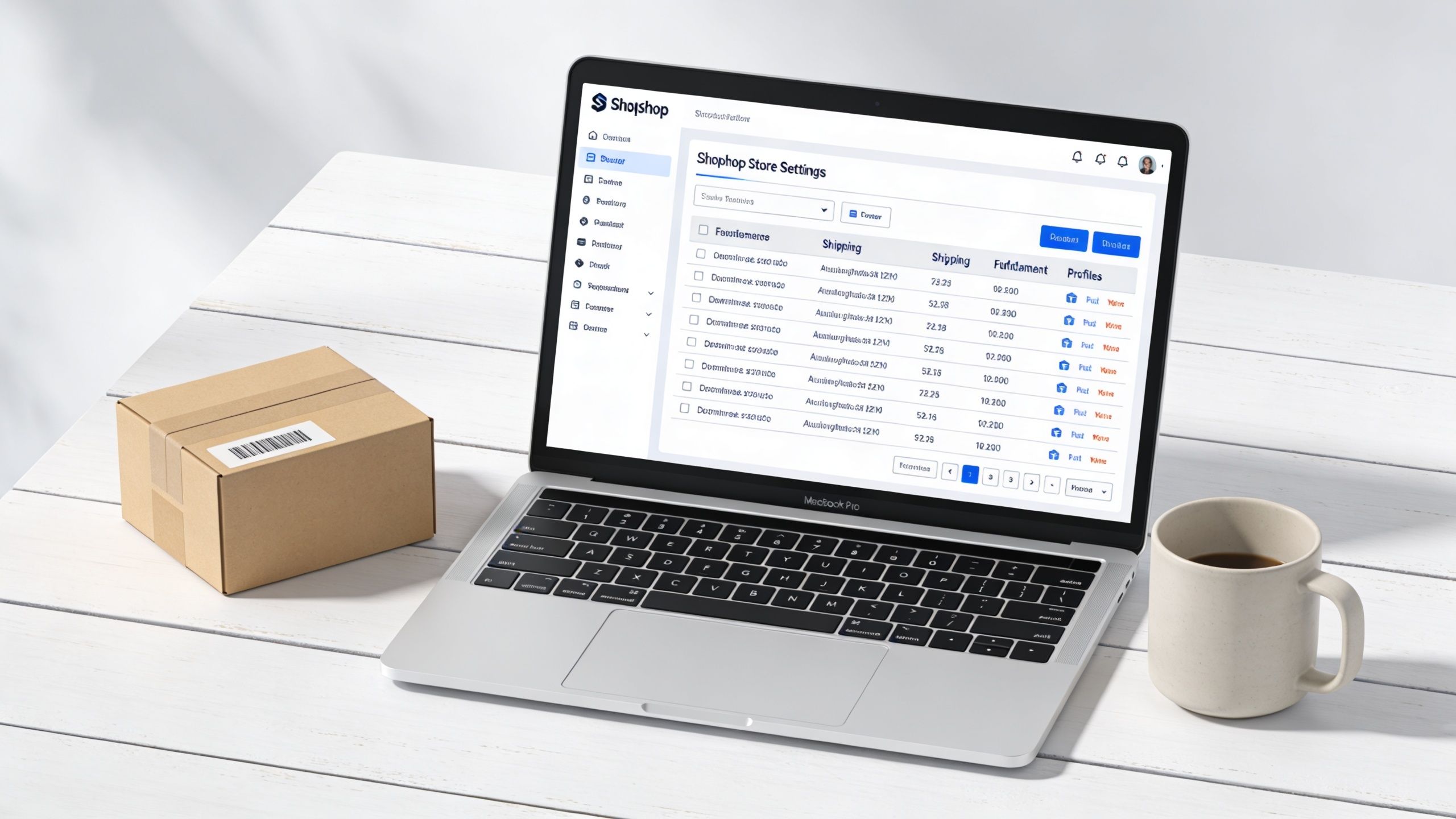
If fulfillment is part of chargeback prevention, the admin has to reflect physical reality. Shopify should show where stock sits, who can ship it, and what the customer was told at checkout and right after purchase.
Set locations like they reflect real inventory
Locations are not just a logistics setting. They determine whether Shopify routes demand to a place that can fulfill the order on time and whether your team can later explain what happened.
Use the actual ship-from points in your operation:
- Primary warehouse: The main pick, pack, and handoff location.
- Overflow site: A real backup site with staff and stock, not a placeholder.
- Retail store with fulfillable stock: Only if store staff are trained and equipped to ship online orders.
- 3PL facility: Its own location in Shopify, with its own inventory and workflow rules.
A generic catch-all location causes two problems fast. Customers buy stock that is not available at the shipping point, and your records become harder to defend because the order history does not match the physical path of the shipment.
Merchants expanding internationally run into this early. If you need to setup local Australian address for fulfillment, treat that address as an operational control point, not just a market entry checkbox.
Assign inventory counts where the product actually sits
Inventory accuracy has to exist at the shelf, bin, and location level. A total stock count is not enough if only part of that stock can ship today.
That gap creates predictable dispute risk. The order gets delayed while inventory is transferred, partially fulfilled, or manually reviewed. From the customer's side, the result is simple. They paid for an item your operation was not ready to send.
A tighter setup usually includes four rules:
- Map each SKU to the location that physically holds it.
- Track unavailable units separately from saleable units.
- Audit bundles and kits so component stock stays aligned.
- Remove locations from online fulfillment if staff cannot meet your stated handling times.
I have seen stores lose avoidable disputes because the merchant had stock in the business, just not in the location Shopify used to promise fulfillment.
Build confirmation habits that reduce later disputes
Order confirmation is part of fulfillment control. It locks in the customer-facing version of the order before anyone prints a label or makes an exception.
The confirmation record should match what the warehouse will ship:
- Product details: Correct item name, variant, quantity, and shipping address.
- Fulfillment timing: Handling and delivery expectations your operation can meet consistently.
- Review triggers: Flags for address mismatch, duplicate orders, and other orders that need manual review before release.
A documented order confirmation workflow for Shopify stores helps because it reduces ambiguity early and creates cleaner records if the customer later claims the order details were different.
Use Shopify reporting to catch fulfillment drift early
Fulfillment problems usually show up as trend changes before they become support tickets or chargebacks. Review the fulfillment and shipping metrics in Shopify regularly, especially time to fulfill, delayed orders, split shipments, and exceptions that require manual intervention. Shopify outlines its available analytics and reporting tools in the Shopify analytics and reports documentation.
Use those reports as an operating check, not just a performance dashboard. If one location starts taking longer to fulfill, if partial shipments increase, or if a carrier handoff pattern changes, fix it while the evidence is still clean and the customer experience is still recoverable.
Choosing the Right Fulfillment Method for Your Store
The right fulfillment model isn't just about cost. It's about control. More specifically, control over stock, packaging, tracking quality, and evidence when something goes wrong.
A lot of advice around order fulfillment shopify compares speed and convenience. That's incomplete. You also need to ask who can prove what happened after payment.

Where scale changes the answer
The optimal fulfillment method changes with order volume. One Shopify-focused guide recommends wave picking at 500+ orders/day to align labor with carrier cutoffs, and notes that self-fulfilled stores often see fulfillment labor costs around $3 to $8 per order before shipping, as explained in this Shopify order fulfillment guide.
That matters because methods that feel manageable at low volume break fast under pressure. A founder packing orders one by one has excellent evidence control. The same process at higher volume creates missed scans, labeling mistakes, and late handoff.
Fulfillment model comparison by chargeback risk
| Model | Control over Evidence | Scalability | Common Chargeback Risk |
|---|---|---|---|
| Self-fulfillment | High. You control picking, packing, photos, labels, and handoff records. | Moderate. Gets harder as volume rises. | Internal errors such as wrong SKU, late dispatch, weak process consistency. |
| Dropshipping | Low. Supplier controls most shipment proof. | High. Easy to expand catalog without handling stock. | Evidence gap when customer disputes delivery quality, shipment contents, or timing. |
| 3PL | Medium. Strong if your contract requires data sharing and scan discipline. | High. Built for larger operational loads. | Missing handoff records, split-shipment confusion, unclear responsibility. |
Self-fulfillment, dropshipping, and 3PLs in practice
Self-fulfillment gives you the cleanest chain of custody. You can require barcode scans, packing photos, and final checks before the parcel leaves. If you're selling high-risk products or handling frequent "item not received" complaints, that control matters.
Dropshipping is where many merchants lose visibility. The supplier may ship on time, but if they don't share usable tracking events, packed-item proof, or exception notes, you're exposed. If you run a dropship-heavy catalog, this practical roundup of dropshipping tools for Shopify merchants can help on the workflow side, but you still need suppliers that will provide dispute-grade records.
3PLs can solve volume problems, but they don't automatically solve evidence problems. You need service terms that define what they'll retain and how quickly they'll deliver it when a case opens.
If a partner touches your order, your agreement should state what proof they keep, how long they keep it, and how fast they send it back to you.
The evidence question most merchants ask too late
When merchants expand into new markets, they often focus on freight cost and delivery time first. That's fair. But if you're routing stock into another region, especially with outsourced warehousing, your fulfillment plan should also define who owns documentation.
For brands moving inventory into Australia, this guide on how to setup local Australian address for fulfillment is a useful operational reference because local fulfillment decisions affect both delivery speed and proof retention.
The simple test is this. If a customer files a dispute tomorrow, can you pull the order timeline, packing record, label data, tracking scans, and delivery proof without chasing three vendors across email threads? If not, the model needs work.
Automating Workflows and Setting Up Shipping
A customer places an order at 4:42 p.m. The warehouse cutoff is 5:00. If that order routes to the wrong location, gets a label for the wrong service, or sits in a manual review queue with no owner, the failure starts before the box ever moves. A week later, it shows up as a delivery complaint, a refund demand, or a chargeback.
Automation reduces those preventable failures. More importantly, it creates a cleaner order record. That record matters when you need to show what happened, when it happened, and whether your team followed the process you set.

Route orders by rules, not memory
Routing should happen the same way every time for the same order conditions. If staff have to remember which warehouse handles a fragile SKU, which orders need review, or which service level fits a destination, mistakes are predictable.
Set routing rules around a small set of conditions your team can audit:
- Location priority: send orders to the preferred location with available stock.
- SKU handling: route oversized, fragile, hazmat, or restricted items to the warehouse equipped to ship them correctly.
- Risk tags: hold orders with AVS mismatches, manual fraud flags, or unusual basket patterns before they reach packing.
- Service mapping: match carrier and service level to package type, destination, and promised delivery window.
Good automation does two jobs at once. It speeds up handoff, and it gives you a timestamped chain of decisions that is easier to defend later.
If you want a practical overview of where automation helps and where it just adds another layer of software, the SupportGPT e-commerce automation guide is a useful reference.
Shipping settings set the promise you may have to defend
Chargebacks tied to shipping often start at checkout. The customer sees a delivery promise. Your warehouse sees pick time, backlog, carrier constraints, and cutoff times. If those two versions of reality do not match, the dispute risk goes up.
Select shipping settings that reflect how your operation performs:
- Carrier-calculated rates fit stores with wide variation in box size, weight, or destination.
- Flat rates work when your packaging and transit assumptions stay consistent.
- Free shipping works if margins support it and the delivery window is stated plainly.
The trade-off is simple. Aggressive promises can lift conversion, but they also create more "item not received" and "service not as described" claims when fulfillment slips. Conservative promises may cost some orders, yet they usually produce fewer post-purchase fights.
Tracking needs to be immediate and usable
Tracking should post back to the Shopify order as soon as the label is created. That gives support, ops, and finance one shared record instead of three conflicting ones.
But label creation alone does not prove fulfillment. For dispute work, the stronger record is a sequence: label created, carrier accepted, in-transit scans, delivered status, and any delivery confirmation available for that shipment type. Merchants dealing with recurring INR claims should study common shipping-related chargebacks in ecommerce and tighten the points where tracking records usually break down.
I also recommend a simple exception rule. If a shipment has no carrier acceptance scan within your expected handoff window, flag it for review before the customer asks where it is. That one rule catches a surprising number of bad labels, missed pickups, and staging errors.
Later in the workflow, training matters as much as software. This walkthrough is a useful primer for teams that need to standardize fulfillment tasks across staff and shifts:
Building a Dispute-Proof Fulfillment Workflow
Most fulfillment advice stops once the box gets a label. That's exactly where chargeback prevention should get stricter.
Shopify's guidance around perfect order fulfillment stresses correct documentation and visibility, and that's the key gap in most warehouse setups, as noted in Shopify's perfect order fulfillment article. Shipping an order isn't enough. You need records that still make sense weeks later, when a cardholder claims the shipment failed.

What a dispute-proof packing station includes
A reliable station doesn't need to be fancy. It needs to be consistent.
I want these things present and used every day:
Barcode or SKU verification at pick Don't rely on visual matching for similar variants. Scan the item that goes into the order.
Packing slip tied to the order record
The paper itself isn't magical. The value is that it connects the package contents to a timestamped internal workflow.Photo or short video for higher-risk shipments
This is especially useful for expensive items, multi-item orders, and products that attract "box was empty" or "wrong item" claims.Address check before label print
Catch apartment omissions, transposed house numbers, and obvious formatting issues before the parcel leaves.Handoff confirmation
Save the scan, manifest, pickup note, or whatever confirms the carrier took possession.
The warehouse should produce evidence by default. If staff have to remember special steps only when an order "feels risky," records get patchy fast.
Match each artifact to the dispute it helps defeat
Not every piece of fulfillment evidence solves the same problem. That's why merchants should stop storing documents in random folders with no logic behind them.
Here's the practical mapping:
- Tracking number and carrier scans help with "product not received" claims.
- Packing photo or video helps when the customer says the box was empty or the wrong product was shipped.
- Address verification notes help when the dispute turns into an argument about a bad delivery destination.
- Order timeline with internal status changes helps show that the merchant acted promptly and consistently.
- Return reason coding and inspection notes help when a buyer claims damage or mismatch after delivery.
Build one evidence folder per order
The simplest system usually wins. Store evidence by order number, and keep the same naming convention every time.
A useful structure might include:
- Order summary export
- Packed-item image or clip
- Shipping label file
- Tracking history snapshot
- Delivery confirmation
- Customer communication log
- Exception notes if anything unusual happened
For merchants dealing with first-party misuse, this matters even more. Some disputes aren't fulfillment failures at all. They're attempts to get a refund through the bank after valid delivery, which is why teams should understand the patterns behind friendly fraud in ecommerce.
Split shipments and outsourced fulfillment need extra controls
Evidence usually gets messy at this stage. One order ships in two boxes. Another item comes from a 3PL. A preorder item leaves later. The customer sees one order number, but your systems show several movement events.
When that happens, keep the evidence at both levels. Store the master order record and each package-level record underneath it. If one parcel is delayed and another is delivered, you need to show that clearly. Otherwise, a partial fulfillment issue turns into a full-order dispute.
Clean evidence beats dramatic explanations. If the record is easy to follow, representment gets easier.
Monitoring KPIs and Handling Returns to Win Disputes
Strong fulfillment teams don't watch one metric. They watch a stack.
A Shopify-focused operations guide recommends tracking perfect order percentage, order accuracy, fill rate, cycle time, and return rate by reason code, with practical targets such as order accuracy at 99%+ and on-time delivery at 95%+, as outlined in this Shopify fulfillment KPI guide. Those aren't abstract warehouse numbers. They're early warnings for future disputes.
The KPI signals that matter most
Use your dashboard to find patterns before customers escalate:
- Order accuracy: If this slips, expect more "wrong item received" complaints.
- Fill rate: If inventory shortages increase, cancellations and delay-related friction usually follow.
- Cycle time: Slow internal processing often shows up before support tickets mention shipping delays.
- Return reason code: "Wrong item" points to picking issues. "Damaged item" usually points to packing defects.
That last one matters a lot. Merchants who lump all returns into one bucket miss the operational cause, then keep feeding the same chargeback trigger.
Returns should de-escalate complaints, not inflame them
A clear return process can stop a complaint from becoming a bank dispute. Customers calm down when they know what to do, when to expect a response, and how the item will be inspected. Confusion pushes them toward filing with the issuer instead.
Even with clean operations, some disputes will still happen. That's where one tool can take the evidence your team already collected and turn it into representment. ChargePay is a Shopify app that handles chargeback workflows, builds evidence packages, and submits dispute responses. For merchants that want a safety net after the warehouse has done its job, that's the operational handoff that matters.
If you're losing revenue to fulfillment-related disputes, install ChargePay from the Shopify App Store. It has a Built for Shopify badge and a 4.9-star rating, and it helps Shopify merchants turn order records, tracking data, and fulfillment evidence into dispute responses without manual case-by-case work.


.svg)



.svg)


.svg)
.svg)
.svg)