

Let's cut through the jargon. You've probably heard the term SecureCode. It's simply Mastercard's brand name for 3D Secure—that extra security check you see during online checkouts. It’s a quick, simple step designed to confirm it's the actual cardholder making the purchase, not some fraudster who got hold of their card details.
So, What Is This Security Layer, Really?
Think of SecureCode as a digital handshake between your customer's bank and your store. Before the payment goes through, the bank briefly steps in and asks the customer for something only they should know. It's a powerful way to authenticate the purchase and protect everyone involved.
This isn't just about old-school passwords anymore. Modern versions are much smoother. The bank might ping a one-time code to the customer's phone or ask for a quick fingerprint scan through their mobile banking app. The goal is to verify the buyer's identity with as little friction as possible.
Why This Is a Big Deal for Merchants
For you, this is more than just a security feature; it’s a crucial tool for your business. When a transaction is authenticated with SecureCode, you’re not just stopping fraud in its tracks. You're also shielding your business from the painful costs of chargebacks.
Here’s exactly how it helps your bottom line:
- Stops Fraudulent Transactions: It catches unauthorized purchases right at the source, long before they can become a problem.
- Slashes Chargeback Costs: Fewer fraudulent sales directly translate to fewer chargebacks, saving you a ton on lost revenue and those frustrating penalty fees.
- Shifts Financial Liability: This is the big one. For certain types of fraud, using SecureCode can shift the financial responsibility for the chargeback away from you and onto the card-issuing bank.
In short, SecureCode is your first line of defense against the most common types of online payment fraud. It creates a clear, verifiable record that the legitimate cardholder approved the transaction. This makes it incredibly tough for criminals to get away with phony purchases and for customers to falsely claim a purchase was unauthorized—a level of protection that’s invaluable for any e-commerce business.
How Does 3D Secure Authentication Actually Work?
So, what really happens behind the scenes when a customer with a SecureCode-enabled card hits "buy now" on your site? It’s basically a quick, automated conversation between your payment gateway, the card network (like Mastercard), and the customer's own bank. The best part? It all happens in a matter of seconds, without you or the customer skipping a beat.
This visual breaks down the simple, secure flow from the moment of purchase to the final approval.
The key takeaway here is that the customer’s bank handles the actual verification. This means you never have to touch or store any sensitive authentication data, which is a huge win for security.
The Checkout Journey in Four Quick Steps
The entire process is built to be fast and smooth, keeping the customer experience on track while adding a serious layer of protection. It usually unfolds like this:
- Card Details Entered: Your customer finds something they love, heads to checkout, and enters their card details, just like they always do.
- Enrollment Check: In an instant, your payment system pings the card network to check if the card is enrolled in a 3D Secure program like Mastercard SecureCode.
- Identity Verification: If the transaction needs an extra check, a secure window pops up. This isn't from you—it's hosted directly by the customer's bank. They'll be asked to quickly verify who they are, usually with a one-time code sent to their phone, a fingerprint, or even facial recognition.
- Confirmation and Approval: Once the bank confirms it’s the real cardholder, it sends an approval message back through the network to your store, and the purchase is complete. Simple as that.
This extra verification step is a game-changer for fighting what's known as friendly fraud. This is when a legitimate customer disputes a charge they actually made, and it's responsible for a staggering 45% of all chargebacks. With merchants on platforms like Shopify only winning about 45% of their disputes on average, 3D Secure gives you undeniable proof that the real cardholder approved the purchase.
As a merchant, the most important thing to remember is that you're never responsible for handling the sensitive authentication data. That secure conversation happens directly between the payment systems and the issuing bank, which is what makes the whole thing so safe for everyone involved.
By adding this step, you build a powerful defense against claims of unauthorized transactions. For a deeper dive into the mechanics, check out our complete guide on 3D Secure authentication.
Understanding the Fraud Liability Shift
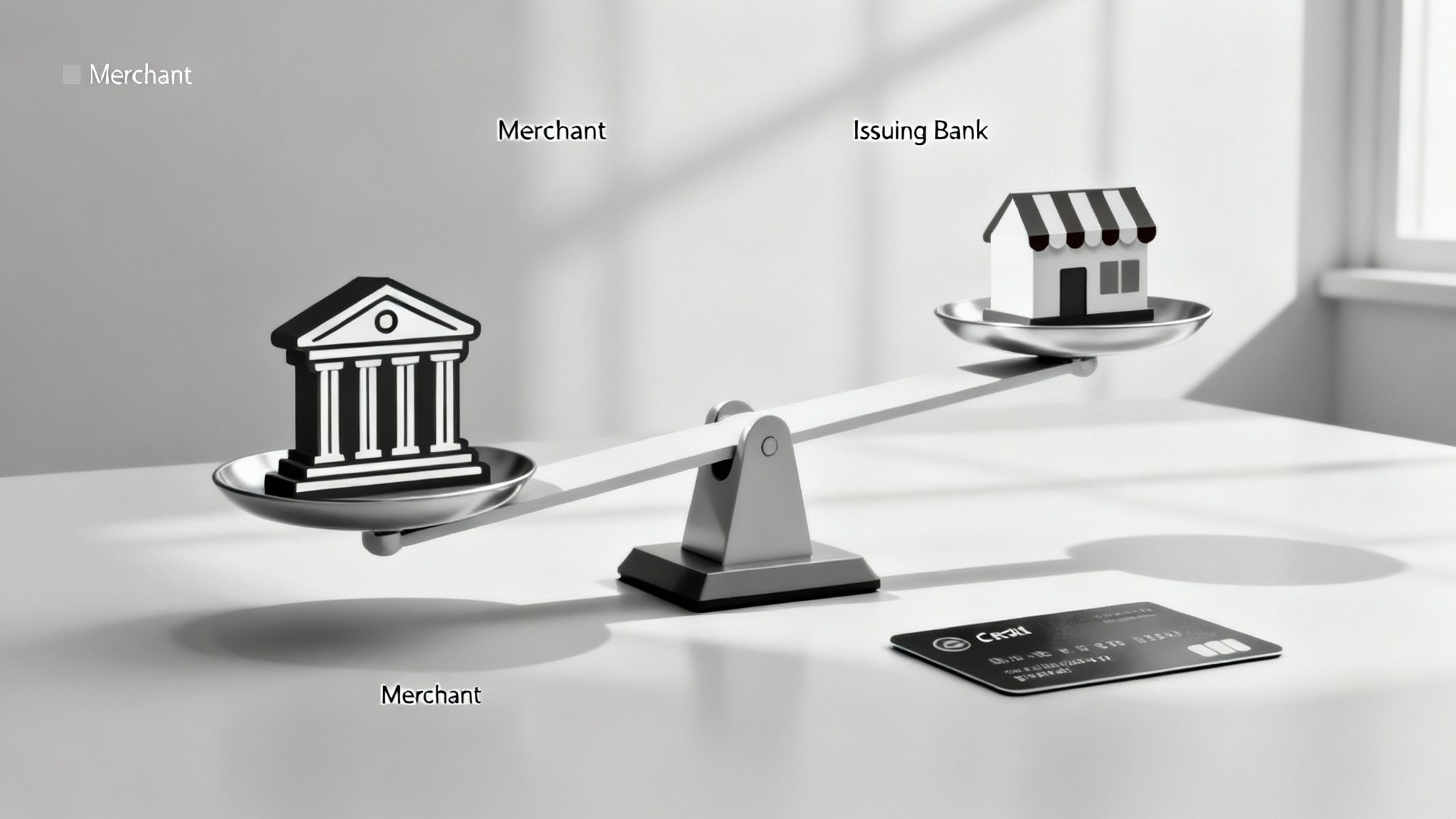
For any e-commerce merchant, this is where things get really interesting. We’re talking about the liability shift, and it’s probably the single biggest reason to care about SecureCode. Think of it as a built-in insurance policy for certain types of fraud, and it completely changes who's on the hook when a fraudulent transaction happens.
Without this layer of security, the process is painfully familiar. A customer claims a purchase was fraudulent, and you, the merchant, are almost always left holding the bag. You're hit with a chargeback, which means you lose the sale, the product, and you get slapped with a fee. It’s a costly triple-whammy.
But when a transaction is successfully authenticated with SecureCode, the game changes entirely.
How the Responsibility Changes
The financial liability for fraud claims related to "unauthorized transactions" literally shifts from your shoulders to the bank that issued the credit card. It’s a simple but powerful idea.
By running the 3D Secure check and confirming the customer's identity, the issuing bank is essentially giving the transaction its stamp of approval. They are the ones who verified the buyer was the legitimate cardholder, so they accept the risk that comes with that approval.
This shift is a massive win for your bottom line, protecting you from one of the most common and expensive types of online fraud. It won't stop every kind of chargeback—disputes over product quality are a different story—but it builds a powerful defense against fraudulent "card-not-present" claims. If you want to dive deeper into the different roles banks play, check out our guide on the difference between an acquirer vs issuer.
The core idea is simple: When the cardholder's bank validates the transaction through SecureCode, they also take on the liability for that specific type of fraud. This protects your business from losses that would otherwise come straight out of your pocket.
To see just how critical this is, let's break down who typically pays for fraudulent chargebacks with and without this protection. The difference is night and day.
Fraud Liability Before and After 3D Secure
The table below clearly shows who is responsible for the financial loss from a fraudulent transaction. It's a stark comparison that shows exactly why implementing a 3D Secure protocol like SecureCode is no longer just a "nice-to-have" for online stores—it's essential.
As you can see, successfully authenticating a payment with SecureCode moves the financial risk away from your business. This protection is a fundamental tool for safeguarding your revenue in the world of e-commerce.
How SecureCode Cuts Down on Chargebacks and Safeguards Your Revenue
Let's connect the dots between that extra authentication step and your bank account. By making sure it's the actual cardholder making the purchase, SecureCode makes it incredibly tough for a customer to later claim, "I never authorized this transaction."
This directly tackles one of the biggest headaches for online merchants: friendly fraud.
Now, this isn't a silver bullet. SecureCode won't stop chargebacks for legitimate issues like a product never showing up. But it knocks out a massive category of fraud-based disputes right at the source. Fewer chargebacks mean you keep more of your money, dodge hefty penalty fees, and stay in the good graces of your payment processor.
Think of SecureCode as a digital bouncer for your checkout. It weeds out the troublemakers so you can focus on serving your real customers and growing your business, not fighting fires you didn't start.
The Snowballing Cost of Chargebacks
The need for this kind of protection is growing bigger by the day. Global chargeback volumes are on track to jump from 261 million in 2025 to a staggering 324 million by 2028—that's a 24% spike.
For U.S. ecommerce merchants, the real cost is brutal. It's estimated that for every $1 lost to a chargeback, the total damage is closer to $4.61 once you factor in fees, operational costs, and lost inventory.
Putting a system like SecureCode in place is your first, best line of defense against this rising problem. For more ways to protect your business, check out our complete guide on chargeback prevention.
Beyond foundational security like SecureCode, smart businesses are also starting to implement AI in ecommerce brands to get even better at spotting fraud. This strategy pairs proven authentication with intelligent automation, building an even stronger wall around your revenue.
Putting SecureCode to Work on Your E-commerce Store
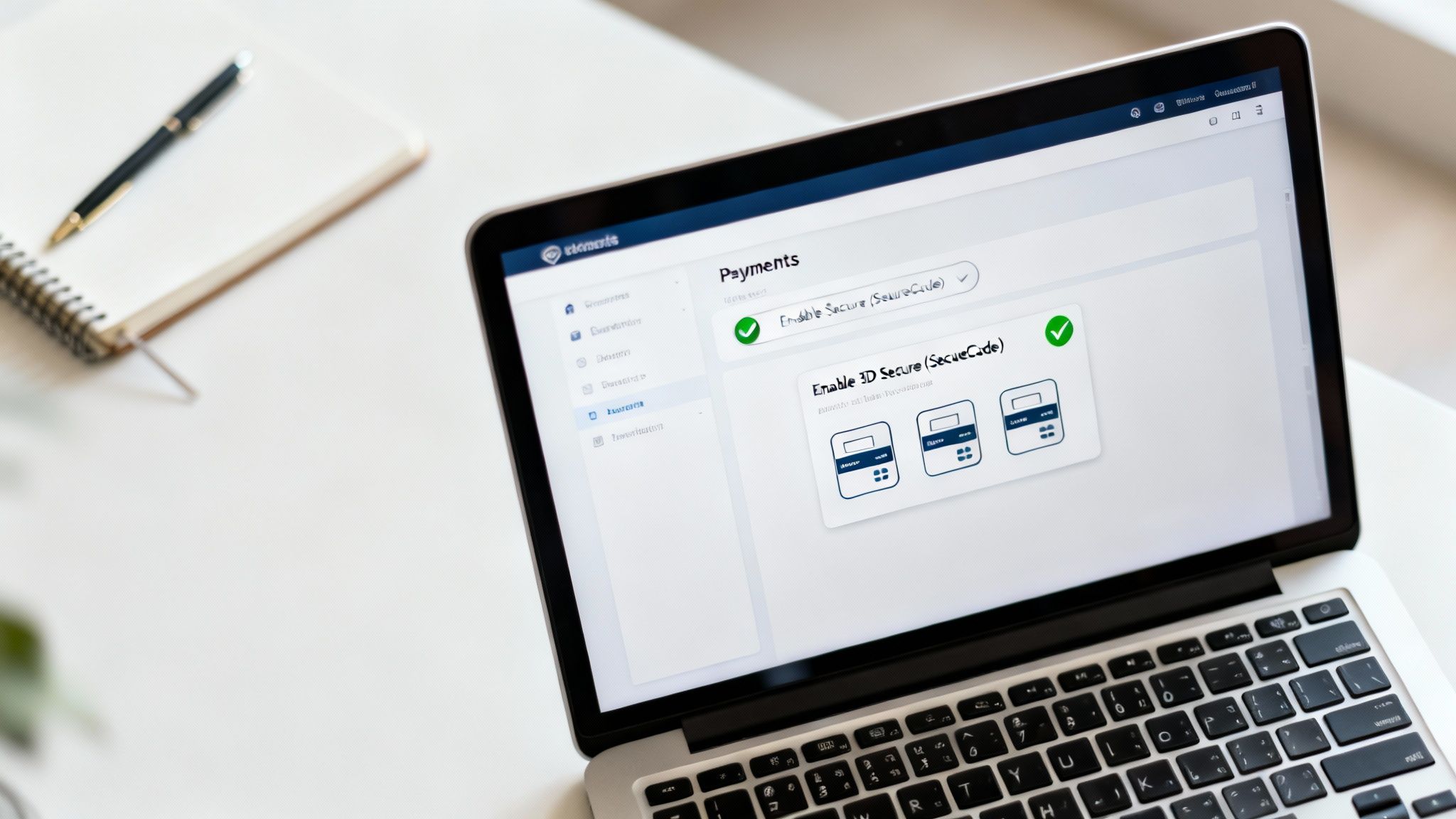
Ready to add this layer of protection to your checkout? The good news is you probably won’t need to call a developer. For most merchants, enabling SecureCode is surprisingly straightforward.
If you’re using platforms like Shopify or payment gateways like Stripe and PayPal, turning on 3D Secure is often just a setting you can toggle on in your payments dashboard. It's designed to be a simple, one-click activation.
The first step is to check with your payment provider. You’ll want to confirm they support the modern version, known as 3D Secure 2.0. This newer protocol is much smarter, using behind-the-scenes risk analysis to create a frictionless experience for most customers while still challenging suspicious transactions.
How to Get Started
Implementing this security measure is typically a quick process. Here's a simple checklist to follow:
- Log into your payment provider’s dashboard (e.g., Stripe, Shopify Payments, PayPal).
- Navigate to the fraud prevention or security settings section.
- Look for an option related to "3D Secure" or "Card Authentication" and enable it.
- Confirm the changes are live by running a quick test on your own checkout process.
As you integrate new security features, it’s worth noting that efficient compliance process automation can help manage regulatory requirements without slowing down your operations.
SecureCode Isn’t a Silver Bullet
While SecureCode is a powerful tool for preventing specific types of fraud, it's just one piece of a much larger puzzle. It’s fantastic for stopping unauthorized transaction claims, but it won't stop chargebacks related to fulfillment issues, damaged goods, or product quality disputes.
For the other types of chargebacks that inevitably get through, having an automated recovery solution in place is essential. This ensures you’re protecting your revenue from every possible angle, not just the fraudulent ones.
A complete strategy combines proactive prevention with efficient recovery. If you're managing multiple payment gateways, you might find our article on using a payment orchestration platform helpful for simplifying your entire setup. This creates a robust defense that keeps your business and your customers safe.
Answering Your Questions About SecureCode
It's smart to ask questions before adding any new feature to your checkout. We get it. Most merchants have the same couple of worries about SecureCode, so let's tackle them head-on.
The biggest concern is always about checkout friction. Will adding an extra step cause customers to give up and abandon their carts?
Will 3D Secure Hurt My Conversion Rates?
This used to be a real problem with the first version of the technology. It was clunky and definitely cost merchants sales. But the modern 3D Secure 2.0 is a completely different animal.
Today's system is much smarter. It uses risk analysis behind the scenes to create a "frictionless flow" for most legitimate customers. That means your average, trustworthy buyer won't even see a security challenge. Only the transactions that look genuinely high-risk are asked for that extra verification step, so the impact on conversions is tiny for most stores.
In short, modern SecureCode only adds a hurdle when it's actually needed. It’s designed to balance strong security with a smooth customer experience, protecting you without scaring away good customers.
Is SecureCode the Same Thing as 3D Secure?
Yes, they're basically the same thing. 3D Secure is the name of the security protocol itself. The different credit card companies just put their own brand names on it so it looks familiar to their cardholders.
It’s just marketing. Here’s how it breaks down:
- Mastercard SecureCode is what Mastercard calls it.
- Visa Secure is Visa's version.
- American Express SafeKey is how Amex brands it.
They all run on the exact same core technology to prove a shopper is who they say they are, protecting you from fraud. You can find more answers to common questions on our frequently asked questions page.
What Kind of Protection Does It Really Offer?
So, does SecureCode mean you'll automatically win every fraud chargeback? Not exactly, but it does something incredibly valuable: it shifts the liability.
When a purchase is authenticated with SecureCode, the liability for certain fraud-related chargebacks—like the common "unauthorized transaction"—shifts from you to the bank that issued the card. This means if that kind of claim is filed, the bank takes the loss, not you. It won't protect you from disputes like "product not as described," but it's a powerful shield against a huge chunk of payment fraud.
Even with the best prevention, some chargebacks are bound to slip through. ChargePay uses AI to automate the entire dispute process, recovering lost revenue from all types of chargebacks without any manual work on your end. Learn how we can protect your bottom line.


.svg)



.svg)


.svg)
.svg)
.svg)