

A fraud filter app for Shopify is like hiring a seasoned doorman for your online store—it inspects every order, flags anything that feels off, and keeps scammers at bay. Think of it as your revenue’s guardian, cutting down on costly chargebacks before they ever hit your bottom line.
Your Store’s First Line Of Defense Against Fraud
Running a Shopify store is exhilarating—but as sales climb, so does your exposure to fraud. Every new order carries a tiny risk, and those risks add up fast.
That’s where a dedicated fraud filter app steps in. While Shopify’s built-in analysis is useful—like a simple deadbolt—a specialized app feels more like a full security system complete with cameras, sensors, and alarms.
Why You Need More Than Basic Protection
Basic risk indicators only scratch the surface. A powerful fraud filter app dives into hundreds of data points in real time, looking for patterns that a simple lock would miss. For example:
- Billing and shipping addresses that don’t align across borders
- A flood of orders all coming from the same IP address
- Odd purchasing habits that stray from a customer’s usual behavior
Global e-commerce fraud is no small problem. Losses from online scams are projected to reach $91 billion by 2028, with chargebacks accounting for a huge slice of that figure. For solid ecommerce growth strategies, you need more than marketing—your security has to keep pace. You can read the full report on Shopify fraud prevention solutions to grasp just how big the challenge is.
Guarding Against Hidden Threats
Not all fraud is blatant. “Friendly fraud,” where a genuine buyer disputes a charge, can slip under the radar and trigger an automatic chargeback. A smart fraud filter spots these patterns early, giving you a fighting chance.
By automating this first layer of defense, you shield your revenue and free yourself up to focus on growth. For a deeper look at how this works, check out our deep dive into Shopify fraud prevention.
From Manual Rules to Smart AI Protection
Not too long ago, fighting e-commerce fraud was a grinding, manual chore. Store owners had to play digital detective, constantly creating and updating a massive list of "if-then" rules just to block suspicious-looking orders. This static, rule-based approach was the only game in town for a long time.
This method was basically like setting up a simple tripwire. If an order from a specific country or using a certain type of email address came through, the wire would trip, and the order got flagged. While it was better than nothing, this system had two huge flaws: it was rigid, and fraudsters learned how to step right over it.
The Problem with Static Rules
A static rulebook just can't keep up with fraudsters who change their tactics on a daily basis. Even worse, these inflexible rules often end up punishing legitimate customers. An innocent buyer traveling abroad might get blocked just because their IP address doesn't match their billing country, leading to a lost sale and a seriously frustrated customer. This is what we call a false positive, and it's a massive headache for any growing store.
The limits of this old-school method became painfully clear for many merchants. When Shopify shut down its legacy Fraud Filter tool, it revealed just how dependent stores were on these manual rules. As one merchant explained, they could only migrate three of their 1,945 rules to the new system, leaving 1,942 to manage by hand. Another merchant with 20,000 rules spread across three stores called the whole transition "impossible."
The Shift to Intelligent Systems
This is where a modern fraud filter app Shopify completely changes the game. Instead of relying on a fixed set of rules, today's best apps use artificial intelligence and machine learning. Think of it as the difference between a basic calculator and a supercomputer that actually learns and adapts on its own.
A calculator can only do what you program it to. But a learning supercomputer analyzes massive amounts of data, recognizes new patterns, and gets smarter with every single transaction it sees.
Modern fraud detection isn't about following a static checklist anymore. It’s about understanding context, behavior, and intent in real time. AI can connect thousands of subtle data points that a human—or a simple rule—would completely miss.
This intelligent approach means the system can spot a sophisticated fraud attempt that follows all the old "rules" but still shows suspicious behavior. It learns what "normal" looks like for your specific store and flags anything that deviates, dramatically cutting down on both missed fraud and those frustrating false positives.
To get a better sense of the advantages of this shift, you can explore the top benefits of using artificial intelligence and how it’s reshaping e-commerce. This evolution is why smart, automated protection is now the standard for serious online security. You can also learn more about how AI technology helps catch chargeback fraud in our other article.
How Modern Fraud Filter Apps Actually Work
Modern fraud filter apps are nothing like a simple security checklist. Think of them more like a team of high-tech investigators, analyzing hundreds of signals in the blink of an eye to build a complete risk profile for every single transaction. It’s a huge leap from the old days of clunky, manual rule-based systems to today's intelligent, AI-driven protection.
This flowchart shows just how far we've come, moving from static manual rules to the dynamic, AI-powered defenses businesses rely on today.
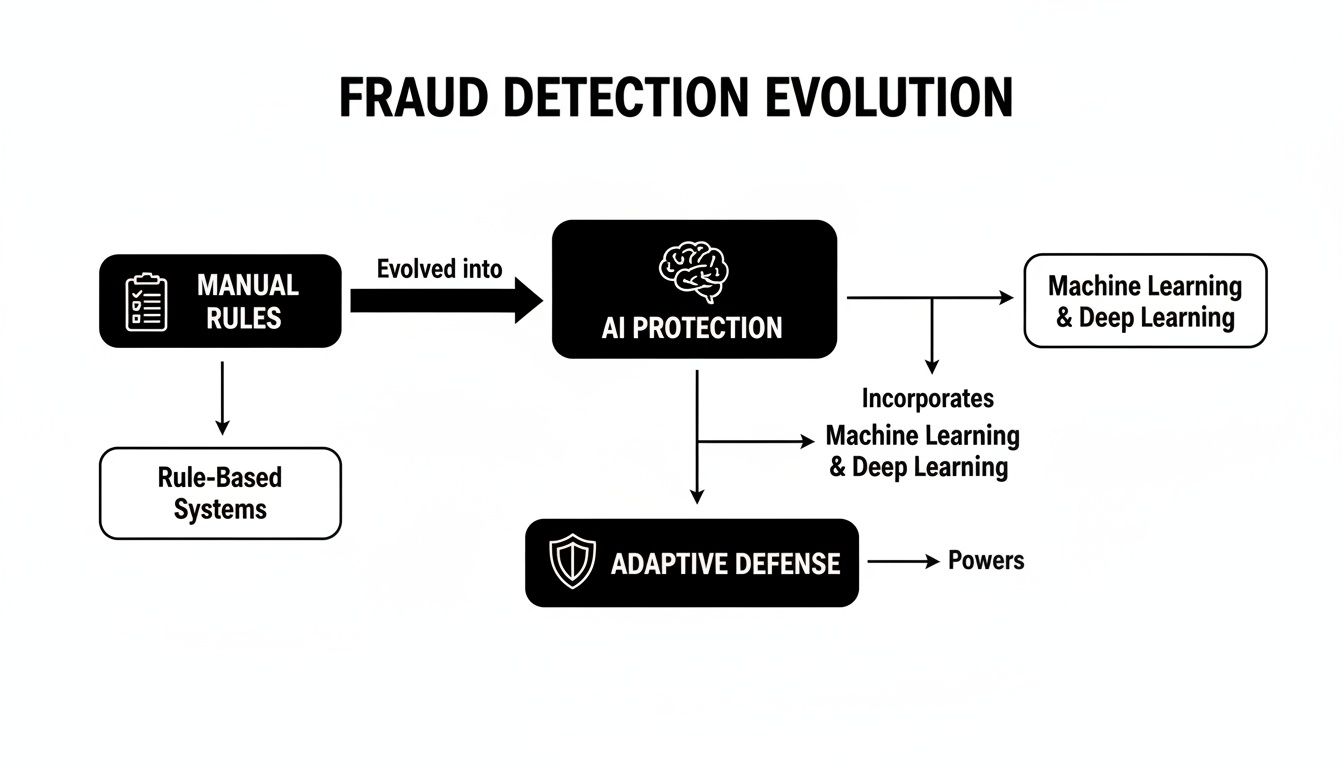
The biggest shift? Security is no longer just reactive. With AI in the driver's seat, protection has become proactive, with systems learning and adapting to new threats as they emerge.
The Power of Risk Scoring
At the heart of any modern fraud app is risk scoring. It’s a lot like a credit score, but for an e-commerce order. The app crunches dozens of data points, feeds them into a smart algorithm, and then spits out a simple, actionable score.
A low score gives you the green light—the order is probably safe. But a high score? That’s a massive red flag screaming "fraud alert!"
This score isn't based on just one piece of information. It’s the combined weight of many different factors all working together. This is a core feature in most modern transaction monitoring solutions designed to catch problems before they turn into costly chargebacks.
Key Signals Under the Microscope
A powerful fraud filter app for Shopify digs deep into a huge variety of signals to calculate its risk score. These aren't just guesses; they're data-backed indicators that fraudsters almost always leave behind.
Here’s a look at the most common data points these apps analyze to figure out if an order is legitimate or not.
Key Fraud Detection Signals Explained
By connecting all these dots, the app pieces together a comprehensive picture. It isn't just about one suspicious signal, but how multiple signals combine to reveal a clear pattern of high-risk behavior.
Choosing the Right Fraud Filter App for Your Store
With so many options popping up on the Shopify App Store, picking the right fraud filter app can feel a little overwhelming. It’s easy to just sort by price, but the cheapest app isn’t always the best for protecting your actual bottom line.
A truly great app should feel like a natural extension of your store, not another complicated tool you have to wrestle with every day.
Think of it like hiring a security guard for your business. Do you want the one who just stands at the door looking bored? Or do you want the one who knows your regulars by name, spots trouble from a mile away, and gives you a clear heads-up when something’s off? The right choice really comes down to your store's specific needs, your risk level, and how hands-on you want to be.
Key Factors to Consider Before You Install
When you start comparing apps, try to look past the shiny feature lists. Instead, think about how each one would actually fit into your daily workflow. A super powerful tool that’s a pain to use is often less effective than a simpler one that just works. The goal here is to find something that saves you time and stress, not adds to it.
Here’s a practical checklist to guide your decision:
- Automation vs. Manual Review: Are you looking for a "set it and forget it" system that automatically declines risky orders? Or would you rather have an app that flags them for you to look over yourself? Fully automated systems are a lifesaver for high-volume stores, but manual review gives you final say over those borderline cases.
- Transparent Pricing: Look for straightforward pricing models. Some apps charge a flat monthly fee, while others take a percentage of sales or charge per transaction in exchange for a chargeback guarantee. Be wary of apps with confusing tiers or hidden costs that could bite you when your order volume spikes.
The best fraud filter app for Shopify is one that operates on a massive data network. An app that has analyzed millions of transactions from thousands of stores has a huge advantage—it can recognize emerging fraud patterns much faster than an app working with a smaller dataset.
Support and Scalability Matter
Don't overlook the value of good customer support. When you’re dealing with a potential fraud attack or just have a question about a weirdly flagged order, you need fast, helpful answers. It's always a good idea to check an app’s reviews to see what other merchants are saying about their support team. A responsive team is a huge sign of a reliable partner.
Finally, think about where your business is headed. Will the app you choose today be able to handle a massive surge in sales during Black Friday next year? A scalable solution grows with your business, ensuring your protection stays solid as you expand. Choosing the right fraud filter app Shopify offers isn’t just about stopping fraud today—it’s about securing your store’s future.
Handling Chargebacks That Still Slip Through

This picture perfectly shows the two-part defense every merchant needs: a solid fraud filter up front, backed by a smart chargeback management process for what comes after.
Look, even the most sophisticated fraud filter app isn't a magic wand. No matter how intelligent its algorithm, some shady orders are going to slip through the cracks. This is especially true for the trickiest kind of all: friendly fraud. And for store owners, it's become a massive headache.
Friendly fraud has absolutely exploded, quickly becoming the number one reason for chargebacks on Shopify. It shot from the fifth-ranked method in 2019 straight to the top spot by 2021. Fast forward to this year, and 72% of merchants say they've seen a spike in these kinds of disputes.
Each one hits your Shopify account with a $15 fee—win or lose. But the real damage is much worse. Every dollar you lose in a dispute actually costs your business $4.61 once you add up the lost merchandise, shipping, and other operational hits. If you want the full, unfiltered picture, check out these staggering Shopify chargeback statistics.
Prevention vs. Management: The Two Sides of Security
This is where you have to understand a crucial difference: fraud prevention and chargeback management are two totally separate jobs. And they require two different tools.
Fraud Prevention (Your Bouncer): Think of a fraud filter app Shopify as your store’s bouncer. Its only job is to stand at the front door and stop suspicious characters from ever getting inside. It analyzes every order before it's processed, aiming to block trouble from the get-go.
Chargeback Management (Your Legal Team): A chargeback management tool, on the other hand, is like your automated legal team. It jumps into action after a chargeback has already been filed on an approved order. Its job is to fight that dispute and get your money back.
Just having a fraud filter is like hiring a great bouncer but having no security cameras or legal support inside your venue. When a problem inevitably happens, you're left scrambling to deal with the aftermath all on your own.
Building a Complete Defense System
To truly protect your bottom line, you need both. Your fraud filter is your first line of defense, catching the obvious threats. But for those disputes that sneak past, a chargeback management solution like ChargePay is there to take over the fight.
Think of it this way: your fraud filter app is your shield, deflecting the initial attacks. Your chargeback management tool is your sword, letting you fight back and reclaim what’s rightfully yours.
Instead of sinking hours into manually digging up evidence and writing dispute responses, a chargeback automation tool handles it all for you. It uses AI to build and submit compelling evidence, which dramatically increases your odds of winning. To see exactly how this works, take a look at our guide on chargeback dispute management.
When you pair a top-tier fraud filter with an automated chargeback solution, you create a complete, two-part defense. This setup doesn't just block initial fraud attempts; it gives you a powerful way to recover funds from any dispute that still manages to get through.
Your Top Questions About Shopify Fraud Apps Answered
Jumping into the world of e-commerce security brings up a lot of questions. When you're thinking about adding a fraud filter app to your Shopify store, you need straight answers to make the right call. Here are a few of the most common things we hear from merchants.
Is Shopify's Built-In Fraud Analysis Enough?
Shopify's free fraud analysis is a decent starting point. It gives you a simple low, medium, or high-risk flag on your orders, which is a helpful first glance.
But for stores with consistent sales or those operating in high-risk industries, this basic tool just doesn't cut it. A dedicated fraud filter app Shopify adds a much smarter, more responsive layer of security. These apps dig into hundreds of data points in real time using advanced AI, catching the kinds of sophisticated fraud that the basic analysis would completely miss.
Will a Fraud Filter App Slow Down My Checkout?
Not at all. A well-built fraud filter app does all its heavy lifting behind the scenes in a matter of milliseconds. The entire scan and analysis happen instantly, completely invisible to your customers.
This means you can bolt on a powerful security system without slowing things down or creating a clunky experience for legitimate buyers. Your checkout stays fast and smooth, so you don't have to trade conversions for protection.
Think of fraud prevention and chargeback recovery as two different parts of your security team. One guards the door, while the other handles incidents that happen inside. The best strategy uses both for a complete defense.
What Is the Difference Between Fraud Prevention and Recovery?
It really comes down to being proactive versus reactive.
- Fraud Prevention: This is your fraud filter app. Its job is to be proactive and stop sketchy orders from ever getting approved in the first place. It’s your front-line defense.
- Chargeback Recovery: This is a reactive tool. It jumps into action after a chargeback has already been filed on an order that got through. It automatically fights the dispute to get your money back.
For more details on common questions, you can check out our extensive FAQs on chargeback management.
Even with the best prevention tools, some fraudulent chargebacks will eventually slip through the cracks. ChargePay is designed to automate the entire recovery process, fighting and winning back revenue from the chargebacks your fraud filter couldn't stop. Protect your revenue today.


.svg)



.svg)


.svg)
.svg)
.svg)