


You’ve got a business to run. Let’s get straight to it: chargeback alerts are the first warning that your money is about to be taken away. Think of it as a countdown timer before cash gets pulled directly from your Shopify account. A customer has disputed a charge, and you have a very short window to stop the loss.
This is a problem ChargePay was built to solve. We’ve recovered over $2.8 million for 100,000+ disputes, winning back money for Shopify merchants with a 92.4% success rate. Let's talk about how you can turn these costly alerts into wins.
Why Chargeback Alerts Are Draining Your Profits
For a Shopify store owner, a chargeback alert isn't just an administrative task; it's a direct shot to your bank account. The alert is a smoke detector for your revenue—it gives you a brief moment to react before real damage is done. If you ignore it or handle it badly, you're guaranteed to lose money.
Every unresolved alert costs you much more than the original sale price. You lose the product you shipped, the money you spent on shipping, and then get hit with a non-refundable chargeback fee from your payment processor. It's a perfect example of how you can lose money after the sale, showing why you need a solid defense after the customer checks out.
The True Cost of a Single $100 Chargeback
Let’s break down the real financial damage from just one unresolved $100 chargeback. It’s never just $100.
| Cost Component | Estimated Financial Impact | Description |
|---|---|---|
| Lost Revenue | -$100 | The full amount of the original transaction is pulled back and returned to the customer. |
| Lost Product | -$50 | This is the wholesale cost of the item you shipped, which you're not getting back. |
| Shipping & Fulfillment | -$15 | The money spent on packaging, labor, and postage is gone for good. |
| Chargeback Fee | -$15 | A penalty fee from your payment processor just for handling the dispute. |
| Total Loss | -$180 | Your actual loss on a single $100 chargeback is nearly double the sale price. |
As you can see, the financial hit multiplies fast. And these direct costs don't even cover the operational time your team spends digging up evidence and trying to fight the case manually—time that could have been spent growing your business.
A Problem That Is Rapidly Getting Worse
This isn't just an occasional issue; it's an exploding problem for e-commerce. The world is on track to see a staggering 337 million chargeback cases by the end of 2026, which is a 27% surge from 2022. This rapid growth is fueled by the boom in online shopping, where it's easier for fraudsters to operate and for legitimate customers to dispute charges over even minor issues.
This is precisely the problem ChargePay was built to solve. We turn these costly alerts into automated wins, recovering your hard-earned money while you focus on your store. With a 92.4% win rate across over 100,000 disputes, we've recovered more than $2.8 million for Shopify merchants like you.
Instead of letting alerts drain your profits, you can put your defense on autopilot. Install ChargePay from the Shopify App Store—it's an official "Built for Shopify" app with a 4.9-star rating—and start protecting your revenue today.
The Two Types of Chargeback Alerts You Need to Know
Not all chargeback alerts are the same. When a notification hits your inbox, knowing what you're dealing with—and how much time you have—is the difference between getting your money back and writing it off as a loss.
For Shopify merchants, these alerts fall into two main buckets. Each one has its own playbook and timeline. Think of it like this: some alerts are a fire drill, giving you a chance to prevent a disaster. Others mean the fire has already started, and you need to act fast to control the damage.
At ChargePay, we've handled over 100,000 disputes, and we know firsthand that a quick, informed response is the key to our 92.4% win rate. Knowing which alert you’re looking at is the first step.
Pre-Dispute Alerts: Your Early Warning System
Pre-dispute alerts are your heads-up. These notifications come from networks like Ethoca (owned by Mastercard) and Verifi (owned by Visa). They signal that a customer has started a dispute with their bank, but it hasn't yet become a formal, damaging chargeback on your record.
This is your brief window of opportunity—often just 24 to 72 hours—to stop a chargeback before it ever hits your merchant account. By issuing a quick refund, you can avoid a mark against your chargeback ratio and the penalty fees that come with it.
But hold on. This is also a trap many merchants fall into. Automatically refunding every single pre-dispute alert is like surrendering before the fight even begins. Sure, it stops the immediate problem, but it guarantees lost revenue, especially with friendly fraud where the customer's claim might be invalid. You need a smart strategy to know when to refund and when to let it become a dispute you can win.
Formal Chargeback Notifications: The Fight Is On
If you miss that pre-dispute window or decide not to refund, the issue escalates into a formal chargeback. This is the notification you get directly from your payment processor, like Shopify Payments or PayPal. At this stage, the money has already been yanked from your account.
This isn't a drill anymore; it's an official dispute. The good news is you have more time to respond—usually between 7 and 30 days, depending on the card network and the reason for the dispute. This is your time to build a compelling case with solid evidence to prove the transaction was legitimate. Understanding the specific reasons for a chargeback is absolutely crucial for gathering the right proof.
Key Takeaway: A pre-dispute alert is your chance to dodge a formal chargeback by refunding. This protects your ratio but costs you the sale. A formal chargeback notification means the funds are already gone, and your only way to get them back is to fight the dispute and win.
This flowchart shows the simple but critical choice you face every time an alert comes in.
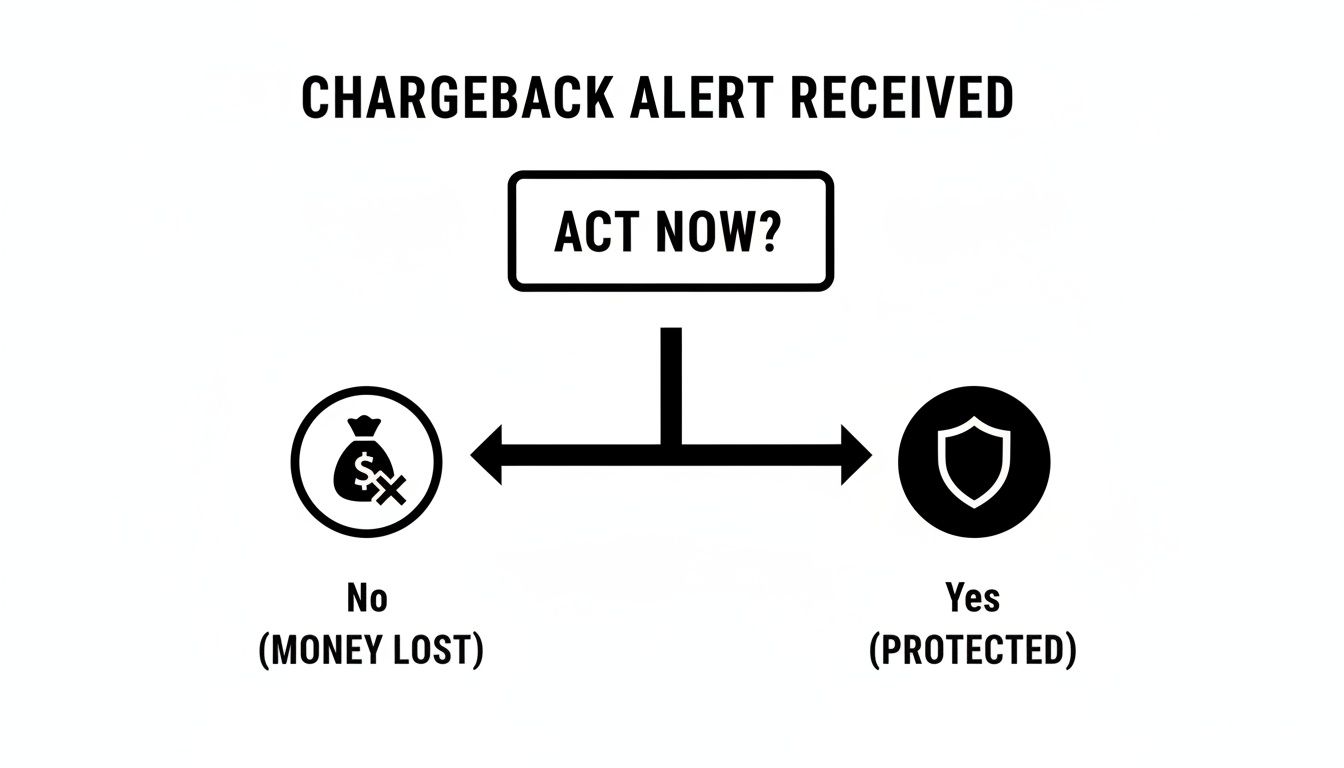
As you can see, the reality is stark. Taking immediate, strategic action gives you a path to protecting your revenue. Doing nothing leads straight to a guaranteed loss. Every single alert demands a decision, not a passive reaction.
A Step-by-Step Workflow for Responding to Alerts
The moment a chargeback alert hits your inbox, the absolute worst thing you can do is panic. Seeing that notification can feel like a direct hit to your revenue, but a rushed or emotional response is a surefire way to lose money. Instead of scrambling, you need a clear, repeatable workflow to turn that anxiety into an organized, effective process.
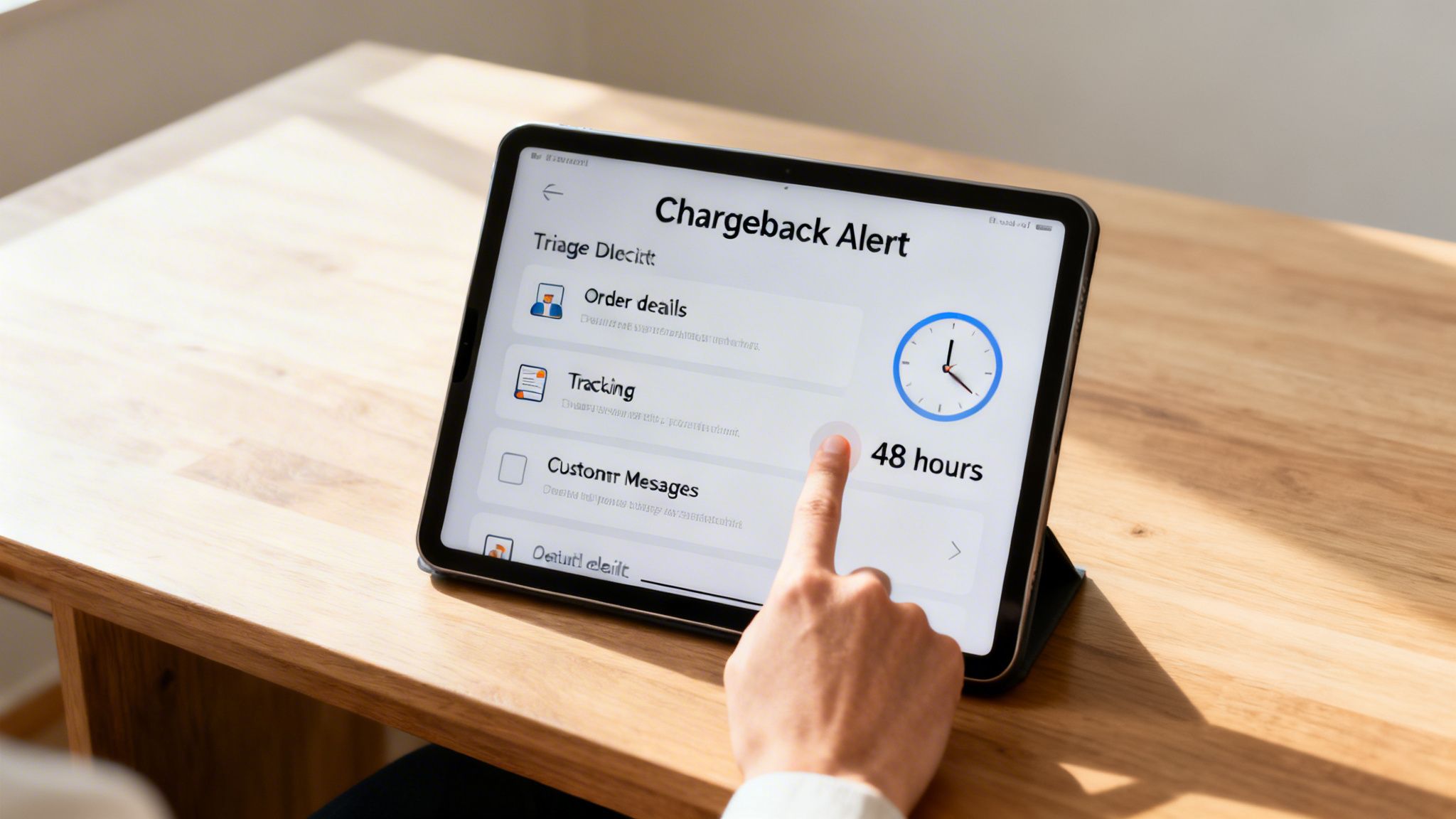
This step-by-step playbook is your guide for handling any alert that comes your way. It’s the same foundational logic we used to build ChargePay's AI, which has successfully handled over 100,000 disputes for Shopify merchants. Follow these steps, and you’ll swap confusion for a clear plan of action.
Step 1: Triage the Alert Immediately
First things first: you need to know what you’re up against. The clock is already ticking. Your very first move should be to figure out the alert type and its deadline.
- Is it a pre-dispute alert? If the alert is from Verifi or Ethoca, you likely have only 24-72 hours to act. Think of this as a chance to prevent a full-blown dispute.
- Is it a formal chargeback? If the notification came from Shopify Payments, Stripe, or your processor, the money is already gone. You have more time, usually 7-30 days, but the fight has officially started.
Whatever the deadline is, mark it on your calendar right away. Missing it means an automatic loss. No exceptions.
Step 2: Gather Your Evidence
With the deadline set, your next job is to put on your detective hat. You need to pull together every piece of information that proves the order was legitimate. Don't put this off—this data can be scattered across different systems, and digging it up takes time.
Start building a case file with this essential evidence:
- Order Details: The complete Shopify order information, including what was purchased, the transaction amount, and the date.
- Customer Information: The customer's full name, email, shipping address, and billing address.
- Payment Verification: AVS (Address Verification System) and CVV match results from Shopify. This is powerful proof that the true cardholder authorized the payment.
- Shipping & Delivery Proof: The tracking number and, most importantly, the delivery confirmation showing the package arrived at the address the customer provided.
- Customer Communications: Any emails, chat logs, or support tickets related to the order. These can be absolute gold for disproving claims like "product not as described."
Step 3: Assess the Reason Code and Decide
Now, look at the reason code that came with the dispute. This code tells you why the customer is disputing the charge. Is it an "Unrecognized Transaction," which points to potential fraud? Or is it "Product Not Received," which suggests a delivery issue?
This is your critical decision point. Based on the reason code and the strength of the evidence you just gathered, you have to choose your path:
- Refund to Protect Your Ratios: If it’s a pre-dispute alert and your evidence feels flimsy, issuing a refund might be your best move. It stings to lose the sale, but it protects your merchant account from getting a damaging chargeback mark.
- Fight to Win Back Your Revenue: If you have solid, compelling evidence that directly contradicts the customer's claim, it's time to fight. For formal chargebacks, this is your only path to recovering the funds.
For merchants choosing to fight, the goal isn't just to respond—it's to win. This means crafting a response that is clear, concise, and packed with undeniable proof. A well-structured argument makes all the difference, and you can see what banks are looking for by reviewing an example of a rebuttal letter.
This manual, multi-step process is exactly what makes chargebacks so draining for busy Shopify owners. It’s a massive time-sink that pulls you away from actually running and growing your business. This is why automation isn't just a nice-to-have; it's the only way to scale your defense. A tool like ChargePay automates this entire workflow—from identifying the alert to gathering evidence and submitting a winning response—so you never have to think about it again.
Proactive Strategies to Reduce Friendly Fraud
Wrestling with chargeback alerts one by one often feels like you're just playing defense. But what if you could stop a big slice of them from ever happening in the first place? A surprising number of disputes don't come from criminals, but from your own customers—a problem known as friendly fraud. This is when a customer disputes a legitimate charge, usually because they don't recognize it, forgot about it, or are trying to get something for free.
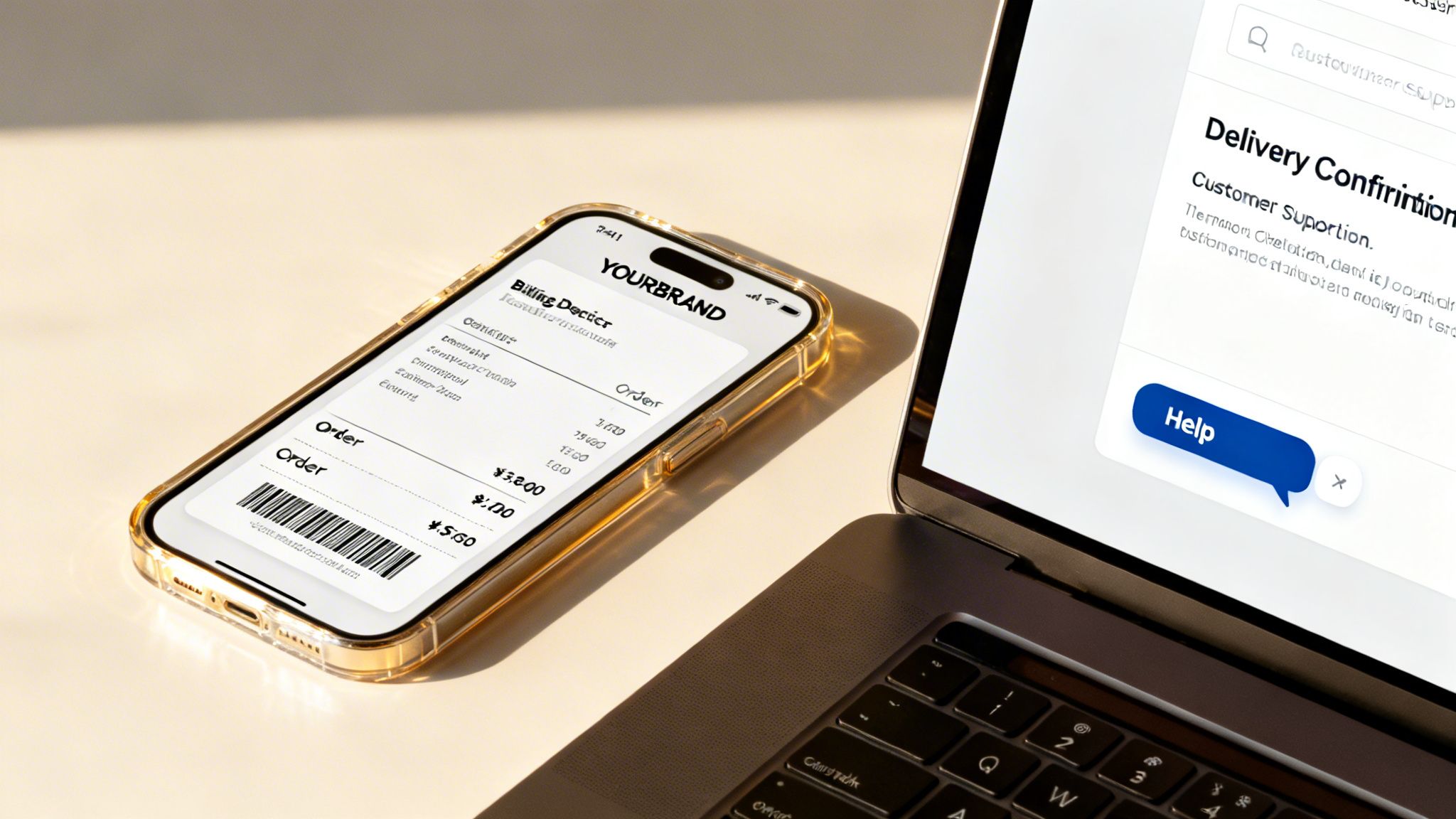
The good thing is, you can head off many of these disputes with a few simple, proactive tweaks to how your store runs. These adjustments don't just cut down on your chargebacks; they actually create a much better experience for your customers. It's a true win-win.
Make Your Billing Descriptor Crystal Clear
One of the top reasons for friendly fraud is painfully simple: a customer glances at their credit card statement and sees a charge from a business name they don’t recognize. If your official company name is "Global Merchandise LLC" but your storefront is "Super-Cool Sneakers," that gap is a chargeback just waiting to happen.
Your billing descriptor—the name that shows up on their statement—has to be instantly recognizable.
- Bad Descriptor:
SP*GLOBALMERCHLLC - Good Descriptor:
SP*SUPERCOOLSNEAKERS
This is one of the most effective fixes you can make. A clear, brand-focused descriptor gets rid of that "what on earth is this?" moment that sends customers running to their bank to file a dispute.
Tighten Up Your Policies and Communication
When it comes to chargebacks, ambiguity is your enemy. Your shipping, return, and cancellation policies need to be incredibly easy to find and dead simple to understand. When customers feel uncertain or ignored, they’re far more likely to use a chargeback as their first problem-solving tool.
Here’s how you can build a stronger defense:
- Obvious Policies: Don't bury your return and shipping rules in the fine print. Link to them clearly from your product pages, checkout process, and order confirmation emails.
- Proactive Shipping Updates: Set up automated emails or texts for every step of the delivery journey—when the order is confirmed, when it ships (always with a tracking link), and, most importantly, when it's delivered.
- Accessible Customer Service: Make it a breeze for customers to contact you. A visible "Contact Us" page with an email, phone number, or live chat gives them a direct line to solve issues without ever involving the bank.
That simple delivery confirmation email isn't just good customer service. It doubles as powerful evidence that can help you win a "product not received" dispute down the road.
By making these small, proactive changes, you’re not just preventing disputes; you’re building trust. Customers who know what to expect and feel like they’re in the loop are far less likely to become the source of your next chargeback alert.
These strategies drastically reduce the number of alerts you have to deal with in the first place, saving you time and protecting your revenue. And for the disputes that still manage to slip through, ChargePay’s AI is there to handle the fight for you, winning back your money on autopilot.
How ChargePay Automates Your Chargeback Defense
Trying to fight chargeback alerts by hand is an exhausting, uphill battle. For a busy Shopify owner, it’s a distraction you just can’t afford. The whole process of sifting through alerts, hunting down evidence, writing responses, and watching deadlines feels like a massive drain on your time—time that should be spent growing your business.
It’s a fight you’re practically set up to lose. That’s why we built ChargePay. We wanted to turn this messy, manual headache into a simple, hands-off process.
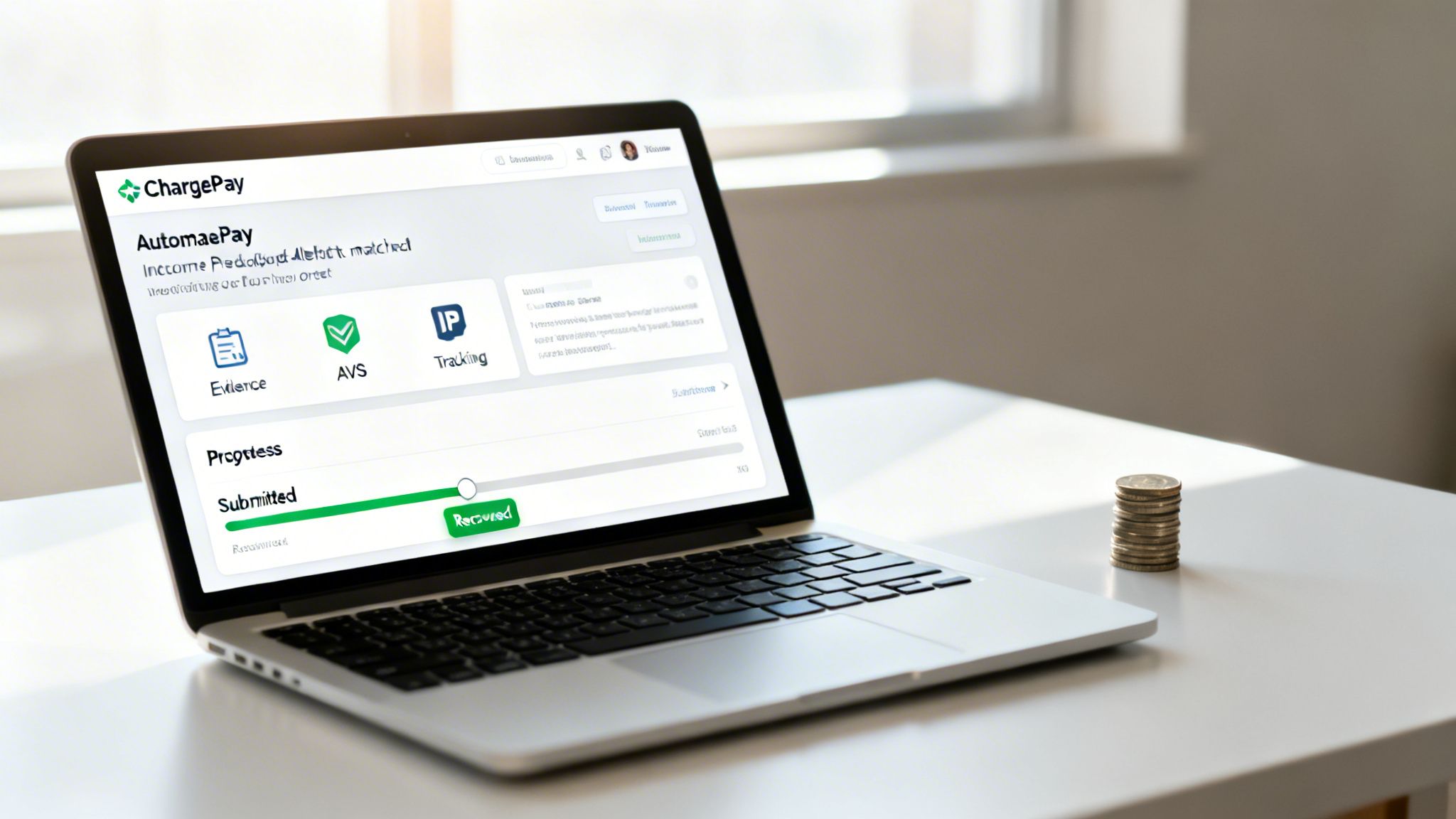
From Alert to Revenue Recovered, on Autopilot
When you install ChargePay, our AI-powered platform links up directly with your Shopify store and payment gateways. The second a chargeback alert hits your account, our system jumps into action for you. No more panic, no frantic search for order numbers—just immediate, intelligent work.
Here’s a look at how our AI takes over the entire workflow:
- Instant Alert Detection: Our system is on watch 24/7. The moment an alert comes in, whether it’s a pre-dispute notice or a formal chargeback, our AI catches it right away.
- Automated Evidence Gathering: The AI instantly connects the alert to the right Shopify order. From there, it gathers all the crucial evidence you need to win, including AVS/CVV match data, IP logs, shipping confirmations, and even customer emails.
- AI-Powered Rebuttal Writing: Our system looks at the dispute’s reason code and crafts a professional, convincing rebuttal letter. This isn't a generic template; it’s a custom response built with the specific evidence needed to shut down that claim.
- Submission Before the Deadline: The complete evidence package and rebuttal are automatically submitted to the bank on your behalf. You’ll never miss a critical deadline again, guaranteed.
Built for Shopify, Proven by Data
ChargePay is an officially recognized "Built for Shopify" app, which means we meet the platform's highest standards for performance, security, and user experience. Our 4.9-star rating on the Shopify App Store comes from real merchants who have seen the difference firsthand. We’ve handled over 100,000 disputes for stores just like yours.
The results speak for themselves:
- 92.4% Win Rate: We successfully win the vast majority of disputes we fight, putting that money right back where it belongs—with you.
- $2.8M+ Recovered: We’ve recovered millions of dollars in lost revenue for merchants, turning would-be losses into wins.
ChargePay automates your chargeback defense, allowing AI to manage the entire dispute lifecycle. For merchants, this means turning a complex, high-stakes issue into a solved problem, similar to how modern businesses are using compliance process automation to handle regulatory challenges without manual effort.
Ignoring automation is getting more expensive by the day. The true cost of chargebacks goes way beyond just the refund amount. For every dollar lost to fraud, it costs U.S. merchants an average of $4.29.
Trying to handle chargeback alerts manually is like trying to empty the ocean with a bucket. With ChargePay, you get an automated system that not only fights for you but actually wins. By putting your defense on autopilot, you can finally stop the revenue leak and get back to what you do best.
Ready to see what our AI can do for your store? You can explore the full range of features and see how we deliver results on our product page.
Stop Losing Money to Chargebacks Today
Let's bring this all together. Chargeback alerts are more than just a nuisance; they're a growing threat that chips away at your Shopify store's bottom line. Every time an alert pops up, you're faced with a choice.
Do you keep spending your valuable time fighting a manual battle you’re probably going to lose? Or do you automate your defense and get back to what you do best—growing your business? We built ChargePay specifically to take this entire frustrating process off your plate, turning a constant revenue leak into a problem you no longer have to think about.
The Clear Choice for Shopify Merchants
You can keep trying to manage the chaos on your own. That means digging through order data, trying to piece together the right evidence, and hoping you don't miss a strict deadline. It’s an exhausting and inefficient way to work. Honestly, it’s a guaranteed way to lose money you rightfully earned.
Or, you can let our AI take over the fight. We designed ChargePay as a "Built for Shopify" app, and we’ve earned our 4.9-star rating because we deliver on our promises. Our system works around the clock in the background, fighting—and winning back—your money.
At ChargePay, we've turned chargeback defense into a science. With a 92.4% win rate across more than 100,000 disputes handled, we’ve recovered over $2.8 million for our merchants. Our results speak for themselves.
Get Started with Zero Risk
Here’s the best part: our pay-per-win model means there is absolutely zero risk to you. We only get paid when we successfully recover your money. If we don’t win the dispute, you don't pay a single cent. It’s that straightforward.
Every day you wait is another sale you risk losing for good. Don't let another dollar slip through your fingers because of a frustrating, preventable chargeback. Your time is far too valuable to waste on a problem that can be automated away.
It's time to stop the drain on your revenue. Install ChargePay from the Shopify App Store and start protecting your profits instantly.
Your Top Chargeback Alert Questions, Answered
Still have some questions about chargeback alerts and what to do when they land in your inbox? We get it. Let’s clear up a few common things we hear from Shopify merchants trying to protect their bottom line.
How Quickly Do I Really Need to Respond to an Alert?
Think of chargeback alert deadlines less like suggestions and more like a ticking clock you can't ignore. The window you have to act depends entirely on the kind of alert you get.
- Pre-dispute alerts, the ones from networks like Ethoca or Verifi, are the most urgent. You’re often looking at a tight 24-72 hour deadline. Acting fast here is your golden ticket—it can stop a formal chargeback from ever hitting your account.
- Formal chargeback notifications from Shopify Payments or PayPal give you a little more breathing room, usually somewhere between 7-30 days. But here's the catch: the money has already been yanked from your account. The fight to get it back is officially on.
In every single case, speed is your best friend. The faster you can fire back a response with the right evidence, the better your odds. This is exactly why automation is such a game-changer—it ensures you never miss a deadline.
Can I Actually Win Disputes from Friendly Fraud?
Absolutely. Winning a dispute that stems from friendly fraud isn't some urban legend; it’s all about putting together a case the bank can't poke holes in. Customers might honestly forget they made a purchase, or someone in their family used their card, but solid data is tough to argue with.
To win, you have to prove the transaction was legitimate. Compelling evidence is your secret weapon. This includes things like:
- AVS and CVV match results that prove the correct card details were entered.
- Delivery confirmations with tracking numbers showing the package landed on their doorstep.
- IP logs that place the customer's device right at their location when they clicked "buy."
Pulling all this together by hand for every dispute is a massive headache. This is exactly what ChargePay’s AI was designed to do for you—it automatically digs up and packages this exact evidence to build a winning case. We’ve used this playbook to handle over 100,000 disputes, recovering $2.8 million that merchants would have otherwise lost.
What Does Your Pay-Per-Win Model Mean?
It's as simple and straightforward as it sounds: we only get paid when you get paid.
There are no monthly subscriptions, no complicated setup fees, and zero hidden costs. ChargePay takes a percentage of the money we successfully recover for you from a dispute. If we don’t win your money back, you don’t owe us a single penny.
This model makes trying ChargePay completely risk-free. You have nothing to lose and only your hard-earned revenue to gain. It aligns our success directly with yours, which is exactly how we believe a true partner should operate.
Don't let another dollar slip away to a preventable chargeback. ChargePay was built from the ground up to stop the revenue drain and put your entire dispute defense on autopilot. With a 92.4% win rate and a 4.9-star rating on the Shopify App Store, we've shown that our approach gets real results.
Install ChargePay from the Shopify App Store today and start winning back your money.


.svg)



.svg)


.svg)
.svg)
.svg)