

Preventing PayPal chargebacks comes down to a proactive game plan. Think clear communication, rock-solid documentation, and actually using the fraud prevention tools PayPal gives you. So many disputes can be snuffed out before they even start, just by making sure customers recognize your business on their statements and know exactly what to expect.
The Real Cost of PayPal Chargebacks for Your Business
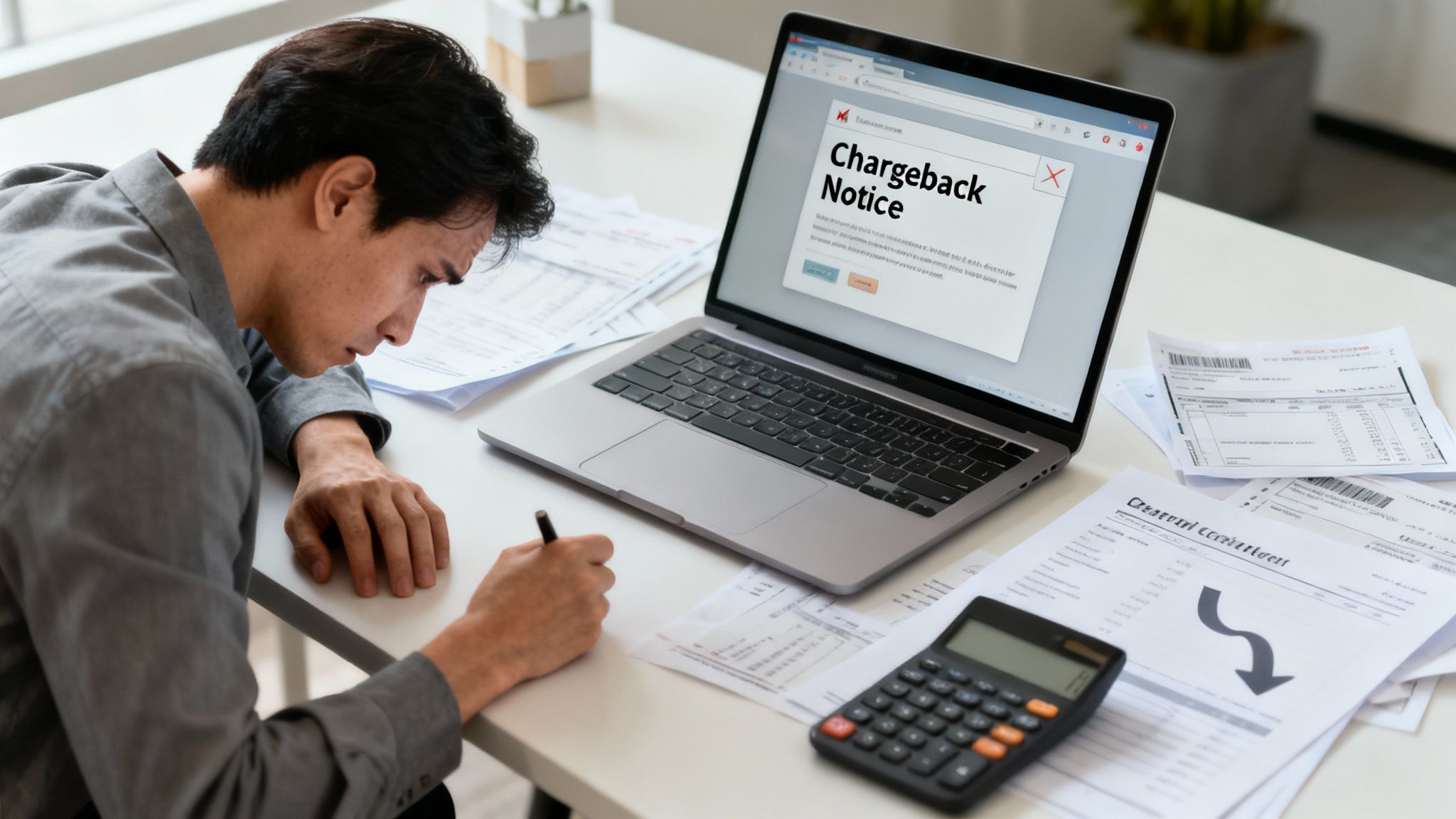
Getting that chargeback notification from PayPal feels like a gut punch. It’s not just about the lost sale; it’s a whole string of frustrating consequences that can drain your time, money, and energy. Too many merchants write it off as a nuisance, but the real cost goes much, much deeper than the initial transaction amount.
Every single chargeback means you lose the revenue from that sale, the product you shipped, and whatever you paid for shipping. Then, to add insult to injury, PayPal hits you with a non-refundable fee for every dispute filed against you. Those fees stack up fast, eating directly into your profit margins. If you want to dig deeper into these costs, check out our guide on what a chargeback fee is and how it really impacts your business.
The Rise of Friendly Fraud
One of the biggest headaches for online sellers today is the explosion of "friendly fraud." This is when a legitimate customer buys something, receives it, and then disputes the charge with their bank or PayPal, often claiming they didn't authorize it or the item never showed up.
They might have simply forgotten about the purchase, failed to recognize your business name on their statement, or, in some cases, they're just trying to get something for free. Whatever the reason, the burden of proof falls on you to prove the transaction was legit.
The situation has gotten intense for merchants. Some reports show PayPal dispute rates have surged by as much as 222% recently. This spike is largely driven by the growth of friendly fraud combined with PayPal's often buyer-centric dispute process, creating a massive challenge for anyone selling online.
This trend has completely changed how you have to approach payment protection. The old methods of just shipping an item and crossing your fingers are long gone. You have to build a defense for every single transaction you process.
Beyond Just Losing Money
The financial loss is only part of the story. The time and resources you burn fighting a single chargeback are huge. You have to drop what you’re doing, scramble to gather evidence like tracking numbers and customer emails, and then submit a detailed response through PayPal’s Resolution Center. All of that is time you could have spent marketing, developing products, or actually growing your business.
Worse yet, a high chargeback rate puts your entire PayPal account at risk. If your dispute ratio climbs above their thresholds, PayPal can start placing holds on your funds, demanding higher reserves, or even suspending your account entirely. Suddenly, the backbone of your payment processing is gone, which can be absolutely devastating.
This is why learning how to prevent chargebacks on PayPal isn't just a good idea—it's essential for survival. This guide will walk you through the practical, real-world strategies to fight back and protect your hard-earned revenue.
Your First Line of Defense Before the Sale
The best way to handle a PayPal chargeback is to make sure it never happens in the first place. Honestly, most disputes aren't born from malice. They often come from simple confusion or security gaps you can easily plug.
By setting up a strong defense before a customer even clicks "buy," you can wipe out a huge chunk of potential problems. Think of it as your pre-emptive strike. It's always cheaper, faster, and way less stressful to prevent a dispute than to fight one after the fact.
Tweak Your PayPal Fraud Settings
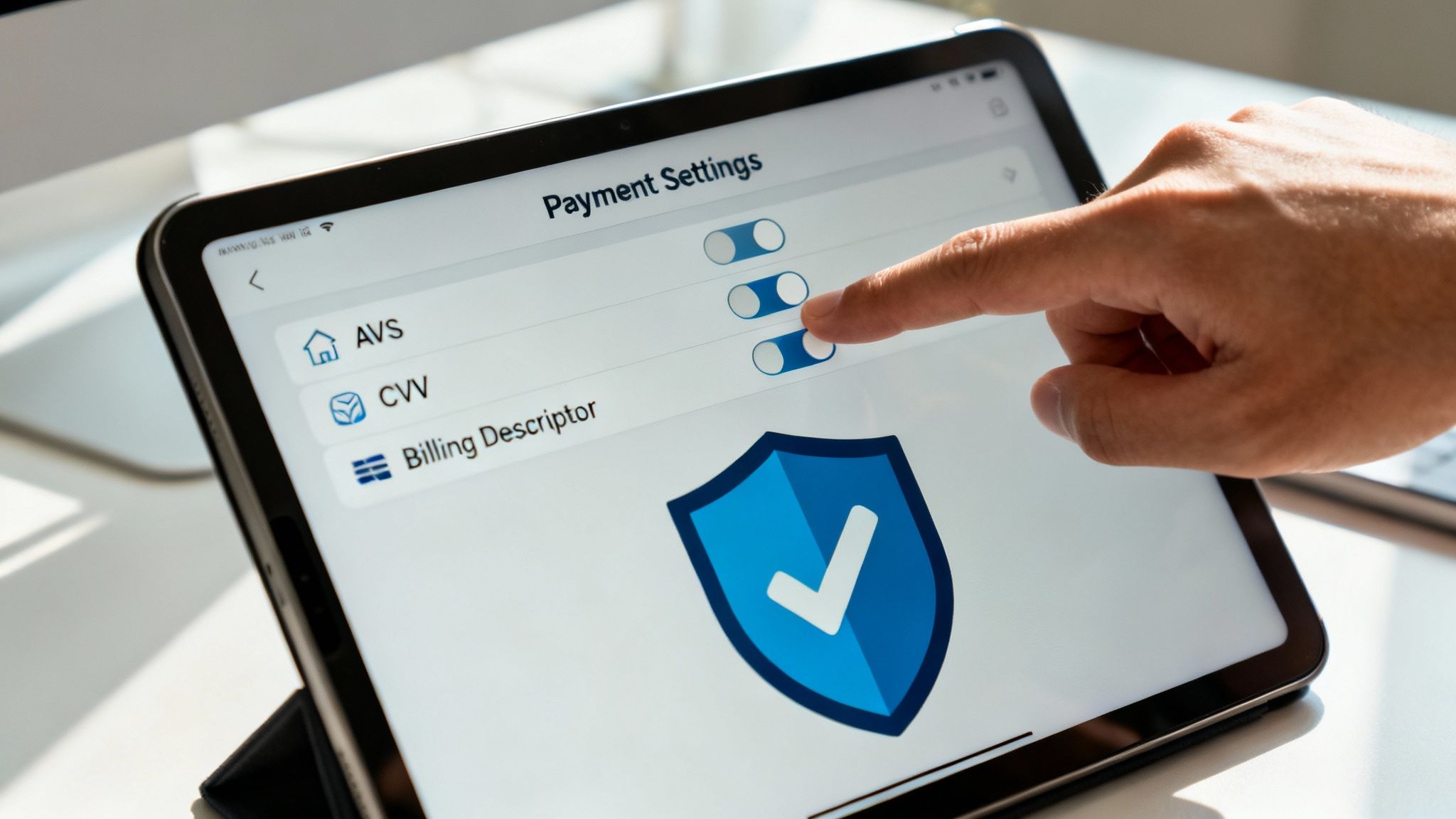
PayPal gives you a solid set of tools to screen transactions, and you absolutely should be using them. These settings act like a bouncer for your store, checking IDs at the door and flagging suspicious activity before it costs you real money.
PayPal's own fraud detection is already impressive, blocking around $500 million in sketchy attempts every quarter. Activating your own settings adds another powerful layer on top of that. Digging into these settings can feel a bit technical, but spending 20 minutes here can save you thousands down the road.
Here are a few quick but powerful tools that can make a massive difference in stopping disputes before they start.
By enabling these features, you strengthen your security and get ahead of high-risk transactions before they're even completed. If you want a deeper dive, our guide on the https://www.chargepay.ai/blog/avs-address-verification is a great place to start.
Make Your Billing Descriptor Crystal Clear
Have you ever looked at your own credit card statement and seen a charge from "SP*WEBSERVICES" or some random string of letters? Your first instinct is probably to panic and call your bank.
That's exactly what your customers do when they don't recognize your business name. This is probably the number one cause of so-called "friendly fraud."
A confusing billing descriptor is an open invitation for a chargeback.
A billing descriptor is just the text that shows up on a customer's bank statement next to a charge. Your goal is to make it instantly recognizable.
The difference is night and day:
You can usually fix this in your PayPal Business account under "Business Information" or "Profile Settings." Look for an option called "Credit Card Statement Name" or something similar. Keep it short, simple, and as close to your public-facing brand name as possible.
A huge part of avoiding disputes is managing client expectations from the very beginning. This includes making sure even your billing info communicates clarity and professionalism. A clear descriptor builds trust and prevents that moment of panic that leads directly to a dispute.
Creating an Airtight Fulfillment and Documentation Process
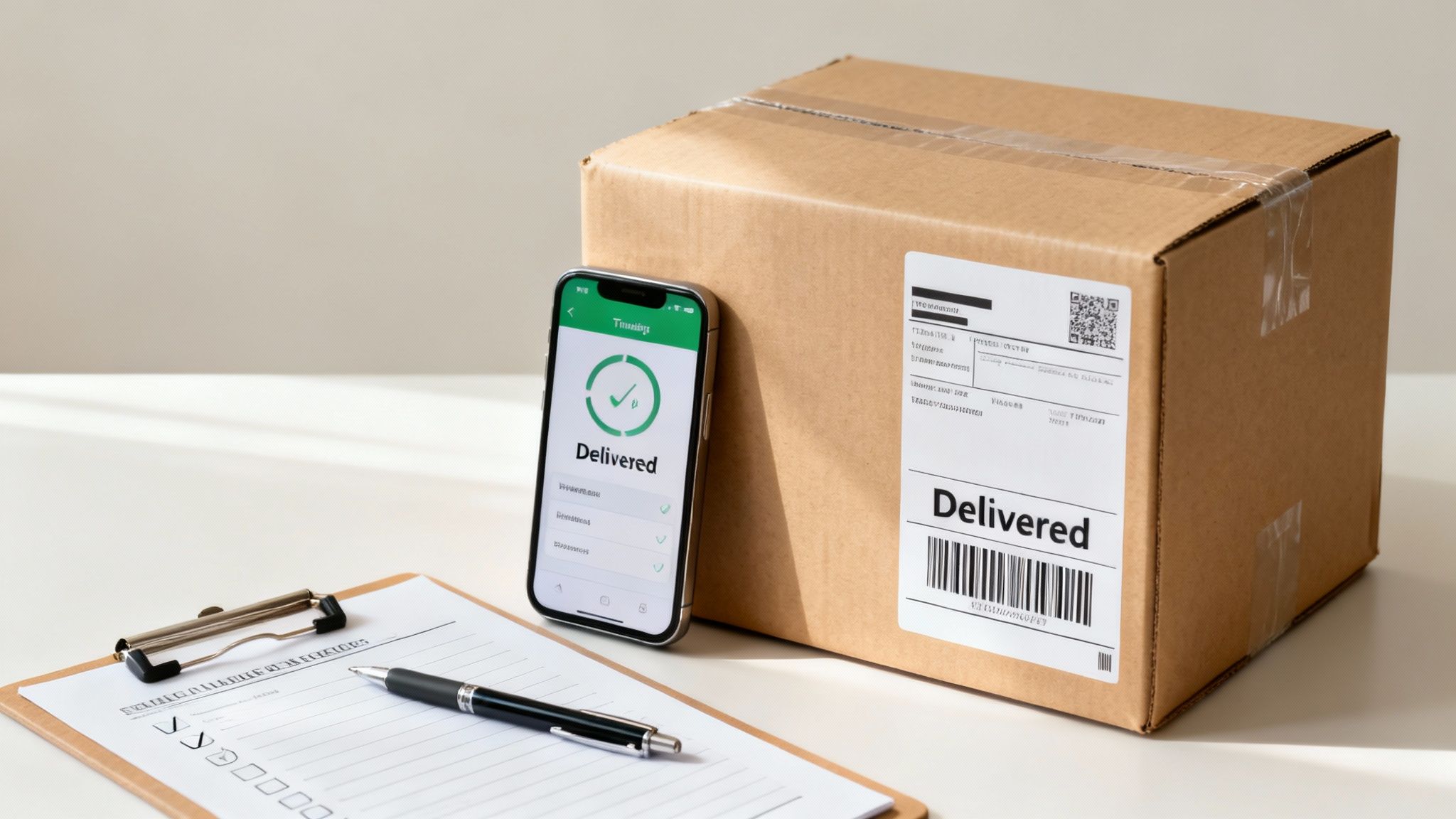
Once a customer clicks "buy," the ball is in your court. Your entire fulfillment process isn't just about getting a product into their hands; it's about building an undeniable paper trail for every single order you ship.
Think of it like this: every shipping label, tracking update, and customer email is another piece of evidence for your files. If a dispute pops up, this evidence is your best—and often only—defense. Without it, you’re basically showing up to a fight empty-handed.
To make your fulfillment and documentation process airtight, you have to know exactly what company records to keep. This is the bedrock of a strong chargeback defense.
Mastering Shipping and Proof of Delivery
The most common—and infuriating—type of chargeback is the "Item Not Received" (INR) claim. This is where a customer swears they never got their package, even when you know you sent it. The only way you’re winning these is with cold, hard proof.
This means you must always use a shipping service that provides tracking and delivery confirmation. I've seen too many merchants try to save a few bucks by shipping without tracking, only to lose the entire sale. It's just not worth the risk.
And for your higher-value items? Don't just stop at tracking. You absolutely need to require a signature upon delivery.
While it adds a small cost, signature confirmation is the ultimate proof that the package was physically handed to someone at the correct address. For items over $750, PayPal's Seller Protection policy explicitly requires it.
Skipping this tiny step on expensive orders is a guaranteed way to lose a dispute. It's a non-negotiable part of your strategy if you’re serious about protecting your revenue.
Building Your Evidence File for Every Order
Let's get specific about what PayPal actually wants to see when you're fighting an INR claim. Just telling them "I shipped it" will get you nowhere. You need to present a clear, organized case file for that specific transaction.
Your goal is to make it impossible for the PayPal reviewer to side with the buyer. A sloppy response or missing documents makes it easy for them to just rule against you and move on.
Here’s the essential documentation you should have ready for any order at a moment's notice:
- Proof of Shipment: This should be a crystal-clear image or screenshot of the shipping label. It has to show the recipient's name and address, and it must match what's on the PayPal transaction details perfectly.
- Proof of Delivery: A screenshot from the carrier’s website showing the tracking status as "Delivered" is crucial. Make sure that screenshot includes both the tracking number and the delivery address for context.
- Customer Communications: Keep copies of any emails or messages you've exchanged with the customer, especially if they confirm their address or ask about the order status.
Having these documents organized and easily accessible means you can respond to a dispute in minutes, not hours. For a deeper dive into tackling these specific claims, you can learn more about handling Item Not Received PayPal disputes in our detailed guide. Building this "case file" for every single transaction transforms your fulfillment process from a simple operational task into a powerful chargeback prevention tool.
Using Great Customer Service to Prevent Disputes
So many PayPal chargebacks don't start with a scammer trying to pull a fast one. They begin with simple customer frustration. A buyer who can't figure out your return policy or feels like their emails are going into a black hole is far more likely to hit the "dispute charge" button than one who feels heard and respected.
This is exactly where your customer service stops being a cost center and becomes one of your most powerful chargeback prevention tools.
Making it easier for a customer to get a refund directly from you is always better than forcing them to go through PayPal or their bank. Let's do the math: a direct refund costs you the sale. A chargeback costs you the sale, a non-refundable fee, and a strike against your merchant account. The choice is pretty clear.
Make Your Policies Impossible to Miss
First things first, stop treating your policies like legal jargon. Think of them as helpful guides for your customers. Confusing or buried policies on shipping, returns, and refunds are a direct line to "friendly fraud" disputes. When a customer doesn’t know what to expect, they’ll assume the worst when a tiny issue pops up.
Your policies need to be crystal clear, written in plain English, and ridiculously easy to find. Don't just stick a link in your website's footer and call it a day.
Here’s how to make them visible and actually effective:
- Link them everywhere: Put links to your policies on product pages, in the shopping cart, and definitely during the checkout flow.
- Create a dedicated page: Build out a clear FAQ or "Help Center" that answers the big questions: How long does shipping take? How do I start a return? What’s your refund process?
- Confirm in your emails: Reiterate key policy points in your order confirmation emails. Something as simple as mentioning your standard return window or shipping timeline sets the right expectations from the get-go.
This kind of proactive approach removes the element of surprise that so often fuels disputes.
Proactive Communication Is Your Best Friend
In e-commerce, silence is the enemy. Once a customer has handed over their money, they want reassurance that you're on the job. Automated, proactive communication is your ticket to keeping them in the loop and building trust at every single stage.
An informed customer is a patient customer. It's that simple. When they know what’s happening, they're far less likely to panic and file a claim.
A simple order confirmation email, immediately followed by a shipping notification with a tracking number, can wipe out a huge percentage of "Item Not Received" disputes. It’s instant proof that you’re working on their order and gives them the power to track their own package.
Think about the emails you're sending. They shouldn't just be transactional receipts. Use them as a chance to show you care about service. For instance, in your shipping confirmation email, add a small note like, "Questions about your order? Just reply to this email, and our team will get back to you within 24 hours!" This tiny addition points a frustrated customer toward you, not toward PayPal’s dispute button. You can also check out our article on the best practices in customer service to really dial in your communication strategy.
Respond Quickly and with Empathy
When a customer finally reaches out with a problem, the clock starts ticking. Seriously. More than 60% of disputes can be solved directly between you and the buyer if you just respond promptly. A slow or unhelpful response is a guaranteed way to turn a simple question into a formal chargeback.
Your goal should be to answer all customer emails and messages within 24 hours. Even if you don't have the perfect solution right away, a quick reply that says, "Thanks for reaching out, we're looking into this for you," makes a world of difference. It tells the customer they've been heard.
When you do respond, lead with empathy. Instead of getting defensive, start with phrases like, "I'm so sorry to hear you're having an issue with your order," or "I completely understand how frustrating that must be." This immediately disarms the situation and shows you're on their side, working toward a solution that works for everyone. It makes customers feel valued and way more willing to work with you directly.
Navigating PayPal Seller Protection and the Resolution Center
When a dispute email lands in your inbox, it's easy to feel like you're already on the defensive. But PayPal has systems in place to help—if you know how to use them. Think of Seller Protection and the Resolution Center as your playbook for responding to and, hopefully, winning disputes.
PayPal Seller Protection isn't a magic wand, but it’s a powerful shield against specific types of chargebacks. It's designed to protect you from claims of "Unauthorized Transaction" and "Item Not Received." If you check all the boxes and meet the requirements, PayPal will cover the loss even if the dispute is decided in the buyer’s favor.
Understanding Seller Protection Eligibility
To qualify, you have to follow a strict set of rules. It’s not enough to just ship the product; you have to do it exactly the way PayPal wants. One small slip-up can make you ineligible, so it's critical to get this right every single time.
Your eligibility really boils down to a few key actions:
- Ship to the Right Address: This is a big one. You must ship the item to the exact address provided on the PayPal "Transaction Details" page. No exceptions. If a customer emails you asking to send it somewhere else, you have to politely refuse or refund the order and ask them to repurchase with the correct address.
- Provide Proof of Shipment and Delivery: For "Item Not Received" claims, you need a valid tracking number from a major carrier showing that the item was shipped and delivered.
- Get a Signature for High-Value Items: For any transaction totaling $750 or more, signature confirmation is mandatory as proof of delivery. This is absolutely non-negotiable for protection.
Following these rules is your ticket to leveraging PayPal's safety net. It’s often the difference between absorbing a loss and having PayPal cover it for you.
Responding Effectively in the Resolution Center
When a dispute is filed, the clock starts ticking. The PayPal Resolution Center is where the entire process plays out, and you typically have just 10 days to respond. A slow or incomplete response is an almost guaranteed loss.
The key to winning is providing clear, compelling evidence that directly refutes the customer’s claim. Don’t just upload a tracking number and hope for the best. You need to build a mini-case file for the PayPal reviewer. Our guide on the PayPal Dispute Resolution Centre dives deeper into specific strategies for this.
When you respond, be professional, concise, and stick to the facts. The reviewer is looking at hundreds of cases a day. Make their job easy by presenting your evidence in a way that’s impossible to misunderstand.
The infographic below shows a simple decision-making process for handling customer issues before they escalate into formal disputes.
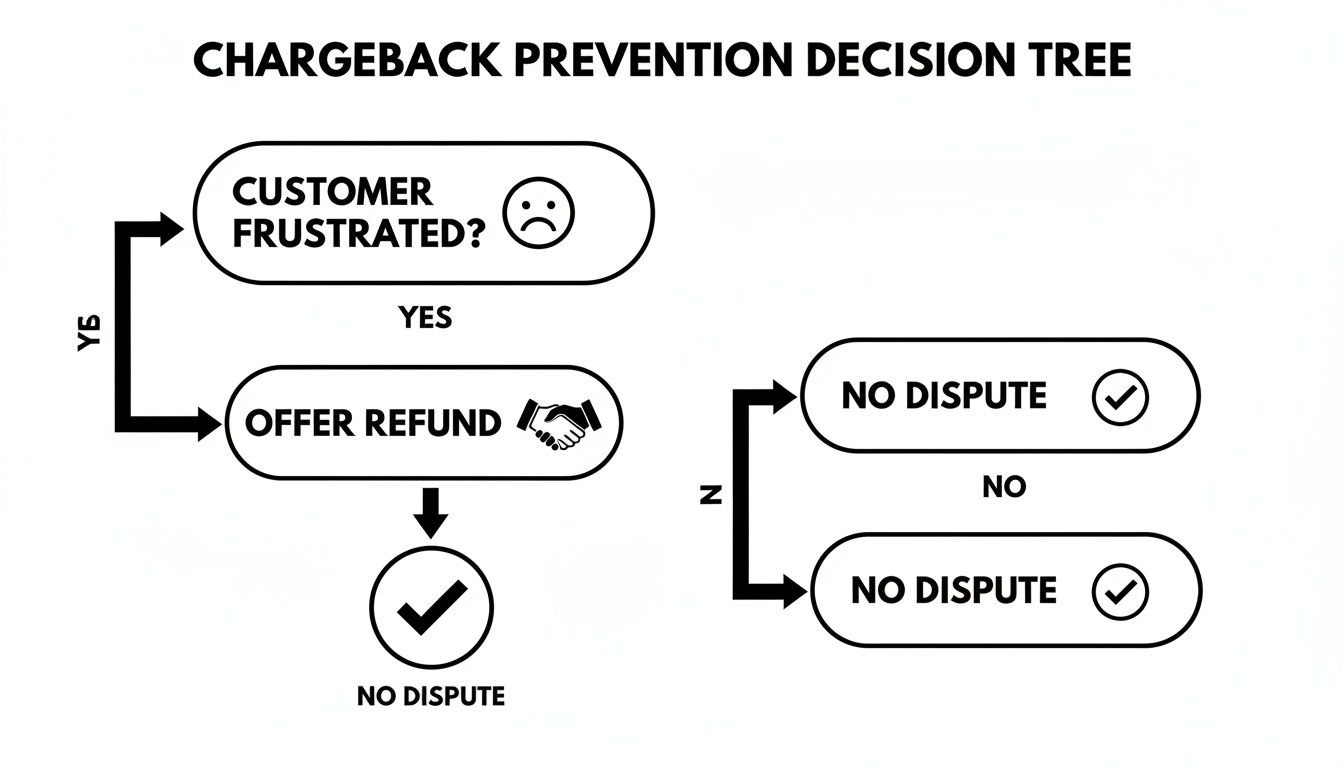
As you can see, sometimes offering a direct refund to a frustrated customer is the quickest and cheapest path to avoiding a formal dispute and a black mark on your account.
A Quick Guide to Evidence by Reason Code
To win, you need to provide exactly what PayPal is looking for based on the specific chargeback reason. Just uploading a random shipping receipt won't cut it if the claim is about something else.
Here’s a breakdown of what you need for the most common PayPal chargeback reasons.
Having this evidence organized and ready to go is half the battle. When a dispute hits, you won't have to scramble to find everything you need.
The Real Cost of a High Chargeback Rate
Ignoring chargebacks or losing too many of them has serious financial consequences beyond just the lost sale.
PayPal typically charges a non-refundable $20 dispute fee, but the true financial hit grows when you factor in the lost product and original transaction amount. Worse, merchants face much tougher penalties as their chargeback rates climb. If your chargeback rate creeps above 0.75% to 1% of your total transactions, PayPal can place your account into a monitoring program, which comes with extra fees and restrictions.
For high-volume sellers, this threshold is easier to cross than you might think. Staying on top of your dispute rate isn't just about winning individual cases; it's about protecting the long-term health of your PayPal account and your entire business.
Common Questions About PayPal Chargebacks
Diving into the world of PayPal disputes can feel a little overwhelming, and it's natural to have questions. Getting straight answers helps you move faster and smarter when a problem pops up. Let's tackle some of the most common things merchants ask.
How Long Do I Have to Respond to a PayPal Chargeback Claim?
When a chargeback hits, the clock starts ticking. PayPal typically gives you just 10 days to get your response and all your evidence into the Resolution Center.
This isn't a soft deadline—it's firm. If you miss that window, you’ve almost certainly lost the case. The funds get automatically reversed to the buyer, and you lose any chance to plead your side of the story.
What Is the Difference Between a PayPal Dispute and a Chargeback?
It's easy to get these two mixed up, but the difference is critical.
A PayPal dispute is the initial stage. This is a direct conversation between you and your customer, all handled within PayPal's system. Think of it as your first, and best, opportunity to resolve things directly—maybe it was a simple misunderstanding you can clear up with a quick message.
If that conversation goes nowhere, the issue can be escalated to a chargeback. This is the formal, more serious phase where the buyer's credit card company gets involved to forcibly reverse the payment. A chargeback directly impacts your account health and standing, so it's a much bigger deal.
Can I Prevent Friendly Fraud Completely?
The short answer? No, unfortunately not. You can't completely stop someone from knowingly disputing a legitimate purchase. That’s the very nature of friendly fraud.
But you absolutely can (and should) build a strong defense to minimize its impact.
Your best weapon is solid evidence. By using clear billing descriptors, providing top-notch customer service, and meticulously documenting every transaction and shipment, you create a powerful defense against these baseless claims. The more proof you have, the better your chances of winning.
Stop losing revenue to tedious manual disputes. ChargePay uses AI to automatically fight and win chargeback cases for you, recovering up to 80% of your lost funds without you lifting a finger. See how it works at https://www.chargepay.ai.


.svg)



.svg)


.svg)
.svg)
.svg)