

If you're still relying only on traditional credit and debit cards, you might be leaving money on the table. Today's customers expect more flexibility, speed, and security at checkout than ever before. Offering a variety of payment options isn't just a nice-to-have; it's a key part of growing your business, improving conversion rates, and meeting what people now expect.
Deciding which options are right for your store can be tough. From the instant settlement of crypto to the sales-boosting power of 'Buy Now, Pay Later,' the world of payments is full of powerful new tools. This guide breaks down 10 key alternative methods of payment with straightforward pros, cons, and practical tips. You'll learn exactly what you need to know to choose the best solutions for your business. Let's explore how you can get paid faster, smarter, and more securely.
1. Cryptocurrency Payments
Cryptocurrency is a unique way for customers to pay directly from their digital wallets using assets like Bitcoin or Ethereum. For you, this means peer-to-peer transactions that skip the usual banking systems, often leading to faster settlement times and lower fees compared to credit cards. This approach opens up your business to a global audience that prefers the security and privacy of blockchain technology.

How to Get Started
Setting up crypto payments is more straightforward than you might think. Payment gateways like Coinbase Commerce or BTCPay Server plug directly into e-commerce platforms such as Shopify. The growing availability of digital currencies on major exchanges shows they are becoming more mainstream, as seen with Klink Token going live on platforms like Binance and Kucoin.
However, crypto transactions can bring new challenges, especially with disputes. Because transactions are often final, handling customer issues requires a specific strategy. For a deeper look, you can learn more about handling crypto-related disputes to protect your revenue. To make the process smoother, consider these tips:
- Prioritize Stablecoins: Start by accepting stablecoins like USDC or USDT to avoid price swings.
- Automate Conversion: Use a service that automatically converts crypto payments to your local currency.
- Educate Your Customers: Give clear, simple instructions on how to complete a purchase with crypto.
2. Digital Wallets (Mobile Payment Apps)
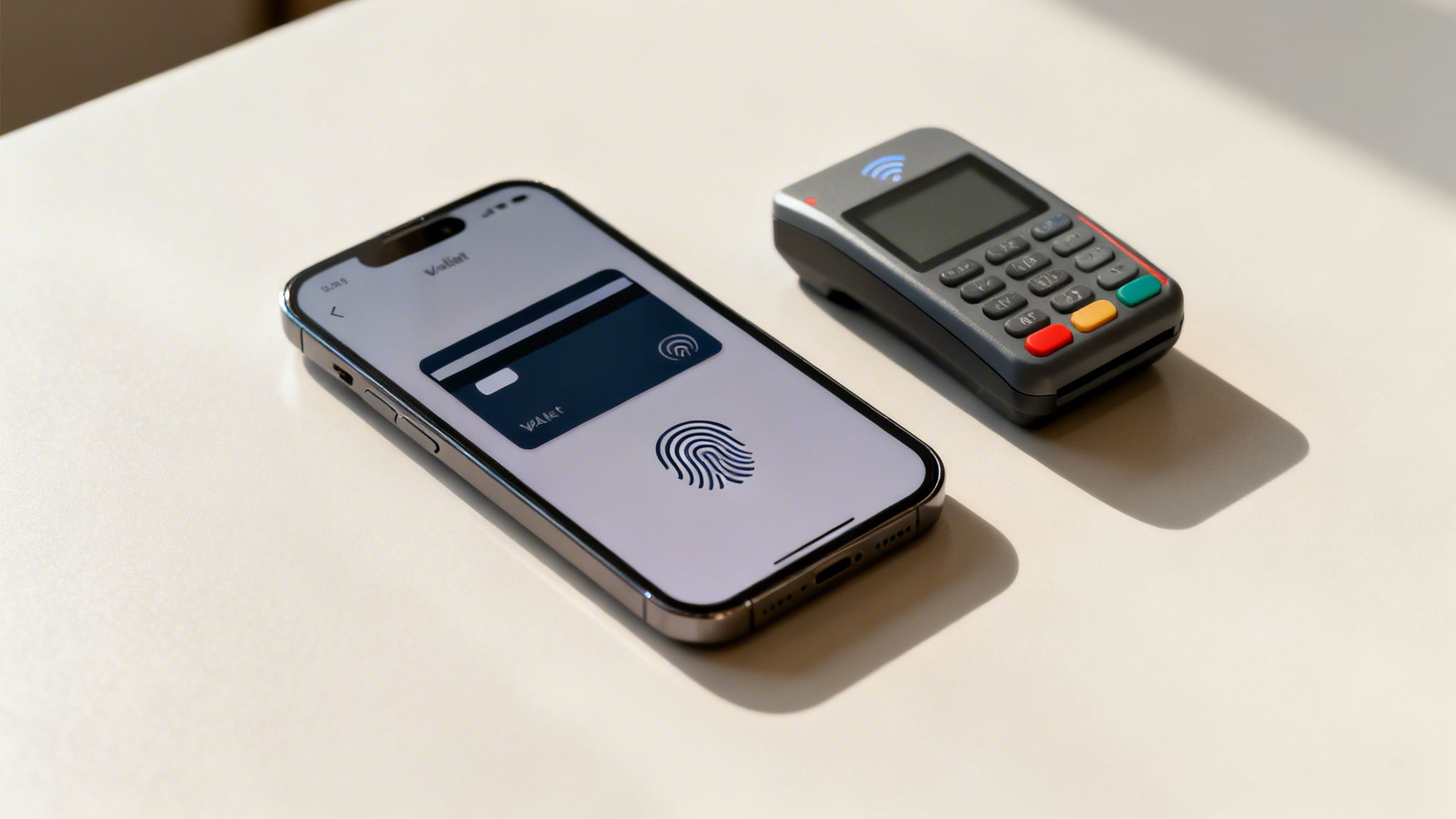
Digital wallets, also known as mobile payment apps, are smartphone-based systems like Apple Pay and Google Pay that securely store a customer's payment information. This tech allows for fast, contactless payments both online and in-store. For merchants, this means a smoother checkout that cuts down on abandoned carts and boosts security through tokenization, where actual card details are never shared. It has become a go-to alternative method of payment, making buying easier and reducing the risk of typing errors.
How to Get Started
Adding digital wallets to your checkout is simple, as major e-commerce platforms like Shopify have built-in support for Apple Pay and Google Pay. The huge popularity of these services, with companies like PayPal expanding their own digital wallet offerings, shows that customers love the convenience. If you already use a payment processor like PayPal, adding these options is often easy; you can check out the details of the PayPal Checkout integration to see how it works.
To make the most of digital wallets, focus on giving your customers a seamless experience. Here are a few tips to get started:
- Display Wallet Icons: Make sure to prominently show logos for Apple Pay, Google Pay, and others at checkout.
- Enable One-Click Purchasing: Let returning customers complete their purchases with a single tap.
- Test Across Platforms: Check that the payment process works smoothly on iOS, Android, and web browsers.
- Offer Wallet-Specific Promotions: Encourage people to use them by offering small discounts for paying with a digital wallet.
3. Buy Now, Pay Later (BNPL)
Buy Now, Pay Later (BNPL) services like Klarna and Afterpay have become a popular alternative method of payment, letting customers split their purchases into smaller, interest-free installments. For merchants, offering BNPL can seriously boost conversion rates and average order values by making pricier items more affordable. These platforms handle the payment collection and take on the risk if someone doesn't pay, which simplifies things for your business. The rapid growth is clear, with Afterpay's acquisition by Block (formerly Square) for $29 billion showing its huge impact.
How to Get Started
Integrating BNPL options is straightforward, as providers like Affirm and PayPal’s "Pay in 4" offer simple plugins for major e-commerce platforms. These services are designed to work alongside traditional payment methods, giving customers more flexibility at checkout.
While BNPL is great for sales, it often comes with higher dispute rates, typically 3-5 times more than credit cards. Managing these installment-related claims is crucial. To protect your revenue while offering this payment flexibility, follow these best practices:
- Monitor Dispute Rates: Keep a close eye on BNPL chargebacks and use a service with automated representment like ChargePay to handle them efficiently.
- Clarify Terms: Clearly explain all installment terms on your product and checkout pages to avoid customer confusion.
- Strengthen Fraud Detection: Implement checks for identity verification mismatches, as these are common sources of fraud with BNPL.
4. ACH Transfers (Bank Account Transfers)
Automated Clearing House (ACH) transfers are a great alternative method of payment, letting customers pay directly from their bank accounts. This method bypasses credit card networks entirely, making it a budget-friendly choice for merchants, especially for recurring billing and high-value B2B sales. While settlement can take 1-3 business days, the much lower processing fees and fewer chargebacks make it a compelling option for businesses like subscription services or software companies.
How to Get Started
Setting up ACH payments is easy with modern payment processors like Stripe, which provide all the necessary tools. While ACH disputes are less common than credit card chargebacks, they follow different rules and can be tricky to handle. To protect your business from unexpected losses, it's a good idea to understand how to handle ACH return charges and set up a clear process. To add ACH payments effectively, try these tips:
- Secure Verification: Use a service like Plaid to instantly and securely verify customer bank accounts.
- Incentivize Adoption: Offer a small discount, such as 0.5% off, for customers who choose to pay via ACH.
- Focus on Recurring Revenue: Prioritize ACH for subscriptions and B2B invoices where its cost savings will make the biggest difference.
5. Open Banking / API-Based Payments
Open Banking is an alternative method of payment that uses APIs to let customers pay directly from their bank accounts, cutting out traditional card networks. Pushed by regulations like PSD2 in Europe, this approach allows merchants to start secure, bank-to-bank transfers with the customer's permission. This direct connection often leads to lower transaction fees, faster settlement times, and a big drop in fraud compared to card payments. It provides a smoother, more integrated checkout experience for customers.
How to Get Started
Implementing Open Banking is usually done by partnering with a service that connects you to thousands of banks through a single API. Companies like Tink and TrueLayer offer integrations that can be added to your existing checkout flow. Wise (formerly TransferWise) famously uses this technology to offer fast, low-cost international money transfers, showing its power and reliability. For merchants, the lower dispute rates on direct bank payments can also be a major win.
To make the process work for your business, try these tips:
- Partner with Aggregators: Use a provider like Tink or TrueLayer to tap into a wide network of banks without building individual connections.
- Secure Customer Consent: Implement a clear and secure permission flow to comply with rules and build trust.
- Verify Balances in Real-Time: Use API features to check customer balances before starting a payment to reduce failures.
6. Invoice-Based Payments (B2B)
Invoice-based payments are a standard alternative method of payment in the B2B world, allowing businesses to pay for goods or services after getting an invoice instead of right away. This system, powered by platforms like Bill.com and Coupa, helps manage cash flow for both buyers and sellers. For merchants, it provides clear paperwork for every transaction, greatly reducing the chance of payment disputes and chargebacks because the purchase agreement is clearly laid out from the start.
How to Get Started
Setting up invoice-based payments is a must for any e-commerce store with B2B clients. Platforms like Shopify B2B have built-in invoicing features, while special AP automation tools can connect with your existing systems to manage the whole process. The impact of these systems is huge, with Coupa helping with over a trillion dollars in supply chain payments and Bill.com serving more than two million small businesses.
To ensure a smooth invoicing process and get paid on time, it’s best to have clear procedures in place. For those rare but complex B2B disputes, using a service that understands invoice-based transactions, such as ChargePay, can help protect your revenue. Consider these tips for an effective system:
- Automate Three-Way Matching: Match the purchase order, invoice, and receipt automatically to prevent errors.
- Offer Early Payment Discounts: Encourage quick payments by offering a small discount for settling invoices early.
- Set Clear Payment Terms: Clearly define due dates, accepted payment methods, and late fees on every invoice.
7. Virtual Card Numbers / Disposable Cards
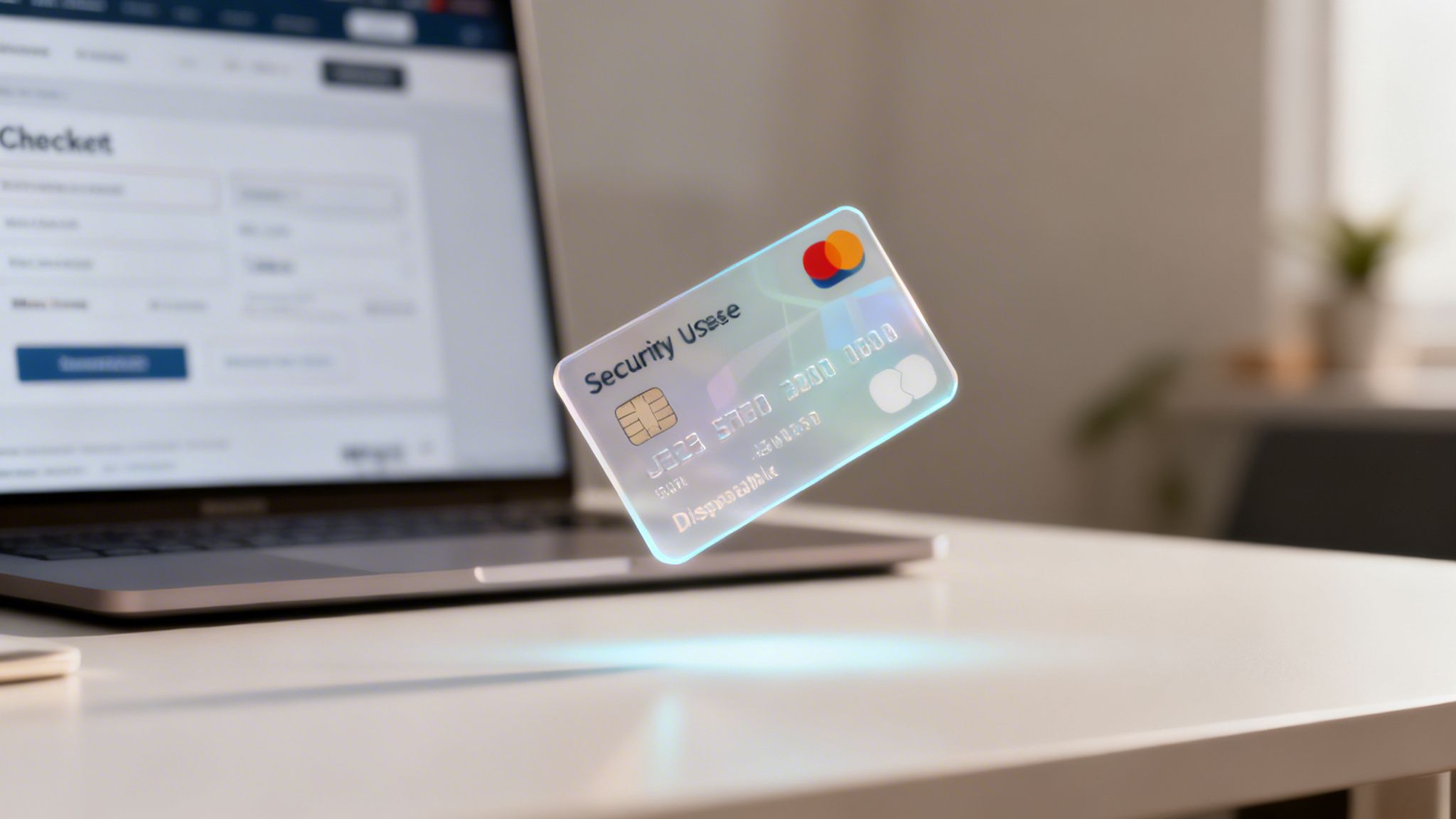
Virtual card numbers are temporary or limited-use numbers that customers generate for specific online purchases. This alternative method of payment protects their actual card details by creating a unique number for each purchase, which seriously cuts down on fraud risk. Services like Privacy.com and Capital One's Eno have made these disposable cards popular, offering a secure way to shop online without revealing primary account info. For merchants, this means lower fraud rates and more trust from privacy-focused shoppers.
How to Get Started
Supporting virtual cards is easy since they process just like standard credit card payments. The main thing to think about is managing subscriptions, as single-use cards will be declined on renewal. By using good subscription management tools, you can automatically notify customers to update their payment details. This process relies on a secure system like tokenization, where sensitive data is replaced with a unique identifier. To better understand the tech behind this security, you can explore how tokenization in payments works and how it protects transactions.
To make virtual cards a smooth option for your customers, consider these tips:
- Support Recurring Cards: Ensure your system can handle both single-use and recurring virtual card options.
- Communicate Security: Highlight the security benefits of using virtual cards on your checkout page.
- Streamline Updates: Implement a simple process for subscribers to update their card information when a virtual number expires.
8. Embedded Finance / Buy-With-Prime
Embedded finance brings third-party payment services directly into your store's checkout, letting customers use trusted accounts like Amazon Pay without leaving your site. This alternative method of payment reduces friction by using established payment networks and pre-filled customer data, which helps simplify checkout and reduce fraud. A great example is Amazon's Buy with Prime, which has been shown to increase shopper conversion by an average of 25%. Platforms like Google Pay and Affirm also offer embedded experiences that make buying seamless for millions of users.
How to Get Started
Adding an embedded finance solution is often a simple integration, especially on platforms like Shopify. These services handle the transaction from start to finish, including managing any disputes that come up, which significantly lowers your workload. This means you can focus on your business while a major provider handles the complexities of payment processing and chargebacks. For any payment methods you manage directly, you can use ChargePay to automate dispute resolution.
To effectively add embedded finance to your checkout, consider these steps:
- Test and Measure: For Shopify stores, try an option like Buy with Prime to see how it affects your conversion rates.
- Offer Choice: Place embedded payments alongside your traditional options so customers can choose their preferred method.
- Monitor Performance: Keep an eye on your chargeback rates after you add it to confirm the promised reduction in disputes.
9. Blockchain-Based Payment Networks (Lightning Network, Layer 2s)
Blockchain-based payment networks, like Bitcoin's Lightning Network or Ethereum's Layer 2 solutions, are another forward-thinking alternative method of payment. These systems work on top of existing blockchains to allow for instant transactions with very low fees, solving the scaling issues that can make direct blockchain payments slow and expensive. This makes them great for lots of small purchases, like in gaming or for software subscriptions. For merchants, this offers nearly instant settlement and gets rid of traditional chargebacks, as transactions are final.
How to Get Started
Integrating these advanced networks can seem complex, but new services are making it easier. For instance, the Strike app uses the Lightning Network to enable fast payments, while platforms like Polygon and Arbitrum are widely used for NFT and gaming payments because they're so fast. For businesses looking to go deeper, resources are available to help you understand and build blockchain applications that power these payment networks. To get started, consider these practical steps:
- Evaluate for High-Frequency Use: See if your business involves frequent, small transactions where speed is really important.
- Use Managed Providers: Partner with processors like BitPay that handle the technical side of Layer 2 or Lightning payments.
- Start with a Pilot Program: Roll out the payment option to a small group of beta testers or customers to check the integration.
- Automate Fiat Conversion: Set up automatic conversion to your local currency to protect your revenue from price swings.
10. Blockchain-Verified Identity (Self-Sovereign Identity / SSI)
Self-sovereign identity (SSI) gives people control over their digital identity through secure credentials verified on a blockchain. For merchants, SSI is an emerging way to improve payment security, not just a way to pay. It reduces fraud by confirming a customer's identity with cryptography, getting rid of the need for vulnerable central databases. This approach can simplify compliance for things like KYC/AML and significantly cut down on chargebacks related to identity fraud, adding a secure layer to your payment process.
How to Get Started
While not a direct payment method itself, adopting SSI principles gets your business ready for the future of secure transactions. Initiatives like Estonia's e-governance program and the Sovrin Foundation's network show how it works in practice. To prepare for this shift, you can explore the standards being developed by the W3C Decentralized Identifiers Working Group. Getting ready for this technology can give your business an edge in security and customer trust.
Consider these steps to stay ahead:
- Test Verifiable Credentials: Explore using verifiable credentials for high-risk product categories to add a layer of security.
- Prepare Your Systems: Start planning how your KYC systems could work with SSI in the future.
- Document Your Progress: Share your journey into adopting new identity verification methods to build trust with customers.
10 Alternative Payment Methods Comparison
Putting It All Together: Your Next Steps in Payments
We've covered a wide range of payment options, from the instant convenience of digital wallets and the AOV-boosting power of Buy Now, Pay Later, to the B2B efficiency of invoice payments and the low-cost reliability of ACH transfers. The key takeaway isn't that you need to adopt every single one. Instead, it’s about understanding which alternative methods of payment will really connect with your specific customers and support your business goals.
The future of e-commerce is about offering choice. A customer who prefers the security of a virtual card is different from one who wants the flexibility of BNPL. By carefully choosing your payment options, you remove friction at checkout, build trust, and ultimately encourage more completed sales. Think of each payment method as a different key that can unlock a new part of your market.
Your Action Plan for Smarter Payments
So, what should you do next? Start small and be smart about it.
- Analyze Your Audience: Use customer data and surveys to find out how your shoppers want to pay. Are they younger and more likely to use BNPL, or are they businesses that would benefit from ACH or invoicing?
- Pick One or Two to Test: You don't need a complete overhaul overnight. Add one new option, like a popular digital wallet or a BNPL service, and closely watch its impact on conversion rates and average order value.
- Prepare for Complexity: More payment methods can mean more operational headaches, especially when it comes to disputes and chargebacks. Each system has its own rules, and managing them manually is a recipe for lost revenue and wasted time.
Adopting new payment technology is only half the battle. Protecting the revenue you generate is just as important. As you add these modern payment solutions, having a system in place to manage the inevitable increase in dispute complexity is not just smart, it's essential for sustainable growth.
As you introduce more alternative methods of payment, you also open the door to more complex chargeback disputes. ChargePay uses AI to automate the entire dispute process across platforms like Stripe and PayPal, as well as BNPL providers, recovering your revenue while you focus on your business. Learn how ChargePay can protect your bottom line.


.svg)



.svg)


.svg)
.svg)
.svg)