

As a Shopify merchant, you're in a constant fight to protect your revenue from chargebacks. But what if a simple six-digit number could be your secret weapon? We're talking about the Bank Identification Number, or the BIN on a credit card. These are the first 6 digits, and they tell you a surprising amount about the card, the bank that issued it, and even where that bank is located.
Your First Defense Against Fraudulent Chargebacks
For anyone running a Shopify store, the BIN isn't just a piece of trivia—it's intelligence you can act on to shut down fraud before it even starts. When you understand what the BIN represents, you can spot transactions that just don't feel right long before they turn into expensive, time-consuming disputes. Think of it as a crucial tool in your fraud-fighting toolkit, one that directly protects your bottom line.
And let's be real, the stakes have never been higher. The chargeback problem is only getting worse. Right now, merchants are losing an estimated $4.61 for every $1 in chargebacks they have to deal with. It's projected that the global chargeback volume will jump from 261 million transactions to 324 million by 2028. That’s a massive 24% increase. Proactive defense isn't just a good idea; it's a necessity.
Why BINs Matter for Your Store
Imagine the BIN as the digital fingerprint of a credit card. It gives you immediate context for every sale, helping you answer some really important questions:
- Is this a prepaid card? These can be a bigger risk. Fraudsters love them because they're anonymous.
- Does the card’s country match the customer's location? A mismatch between the issuing bank’s country and the shipping address is a classic red flag for fraud.
- What type of card is it? Knowing whether you're dealing with a debit, credit, or corporate card can add another valuable layer to your risk assessment.
By using this data, you can build a smarter, more effective defense. For example, you can automatically flag an order for a manual review if it comes from a prepaid card issued in a high-risk country, even if the shipping address is local. This is exactly how we’ve helped over 100,000 merchants recover more than $2.8M—by using data points just like BINs to build airtight dispute cases.
At ChargePay, we use data like this to achieve a 92.4% success rate on the 100K+ disputes we manage. It’s about turning raw information into recovered revenue.
Of course, looking at the BIN is just one piece of the puzzle. It's also vital to understand broader security standards like PCI compliance for small businesses, which is all about protecting your customers' card data.
But for targeted, real-time fraud prevention, BINs are your front line. To add even more protection, you can combine BIN analysis with other tools. Check out our guide on how 3-D Secure authentication works to see how another layer of security can make a huge difference.
How to Look Up and Analyze BIN Data
Okay, so you get what a BIN on a credit card is. But how does that string of numbers actually help you protect your store? You don't need a magnifying glass to figure out what those first six digits mean. There are plenty of straightforward tools out there, often called BIN checkers, that do the heavy lifting for you.
At its core, the process is pretty simple. When a customer enters their card details, the first six digits—the BIN—immediately tell you which bank issued the card. Think of it as a digital return address for the bank.

A quick lookup can reveal the card brand (like Visa or Mastercard), the type of card (debit, credit, or prepaid), and even the issuing bank’s name and home country. This gives you a fast, first-glance snapshot of where the transaction is coming from.
Free vs. Paid BIN Lookup Tools
You can find plenty of free BIN lookup websites with a quick search. Just pop in the first six digits, and they’ll spit back some basic information. It's a handy way to get a feel for the data.
The problem is, for a serious Shopify merchant, these free tools just don't cut it. They give you the "what" but not the "so what?" You get the basics, but you're missing the deeper context you need to sniff out sophisticated fraud.
This is where paid BIN services or integrated platforms shine. They dig much deeper, providing enriched data that’s genuinely useful for fraud prevention:
- Prepaid Card Identification: Is the card a disposable, high-risk prepaid card? Fraudsters love these because they're hard to trace.
- Card Level: Is this a standard, gold, or business card? Knowing this can add important context to the size and type of purchase.
- Risk Scores: Advanced services will often assign a risk score to the BIN itself, flagging numbers that have a history of being linked to fraudulent activity.
A paid tool can instantly raise a red flag on an order where the card's issuing bank is in Germany, but the customer’s shipping address is in Florida. That kind of mismatch is a huge warning sign that a free tool would likely miss.
Let’s be real, though—manually checking every single order isn’t going to work. That's where automation becomes your new best friend. A powerful chargeback management platform automates this whole process, cross-referencing BIN data with all the other transaction details in real-time.
If you're looking for more ways to lock down your checkout, our guide on credit card number validation offers some great strategies. By setting up smart, automated rules, you can stop bad orders in their tracks before they ever ship. That means saving yourself time, money, and the inevitable headache of a chargeback down the road.
Using BIN Analysis to Uncover Friendly Fraud
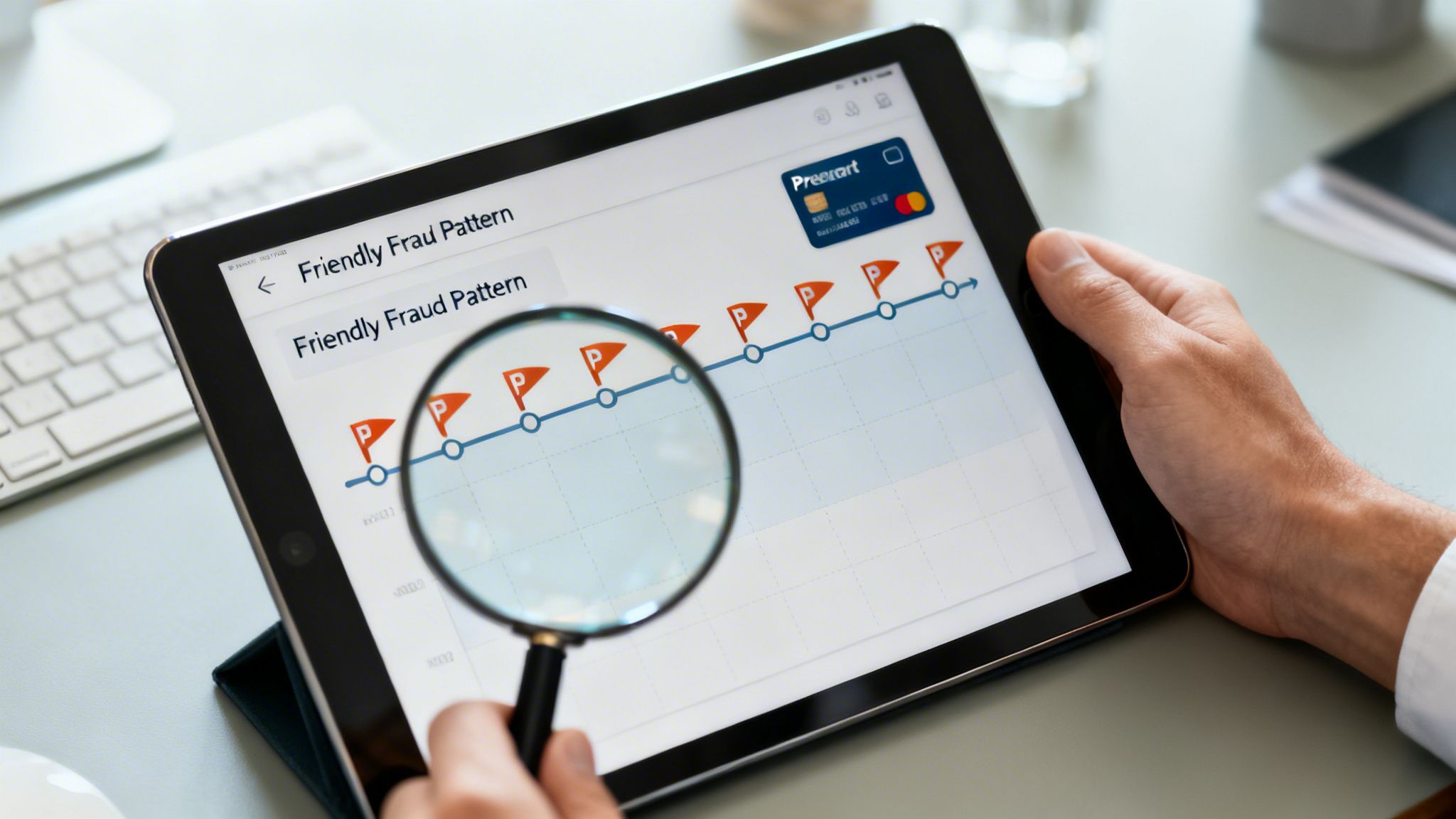
While BIN analysis is a fantastic tool against obvious fraud, its real power for many Shopify merchants is in fighting a much sneakier problem: friendly fraud. This is when a real customer buys something from you, then turns around and disputes the charge with their bank, claiming they never made the purchase or the item never showed up. It’s frustrating, expensive, and a huge headache to prove.
On the surface, the transaction looks completely fine. The shipping address matches the billing address, the CVV code is correct, and every other check passes. But looking at the BIN on the credit card can uncover patterns that your standard fraud filters will almost always miss, helping you connect the dots on what looks like random behavior.
This kind of "first-party misuse" has absolutely skyrocketed. Industry reports show it's now behind over 21% of all chargebacks, making it the number one reason for disputes worldwide. What’s really concerning is that 10% of consumers actually admitted to trying it themselves in a recent Mastercard chargeback findings report.
Spotting Red Flags with BIN Data
Repeat friendly fraudsters are getting smarter. They know that using different prepaid cards or digital wallets makes it tough for you to link their orders together and fight back effectively. They're essentially trying to create distance between their real identity and their purchases.
A simple BIN lookup cuts right through that noise. It can immediately tell you if a card is prepaid—a major red flag when you see it alongside other suspicious behaviors.
Here’s a real-world example we see all the time:
- A customer makes a few small, successful orders, each with a different prepaid card.
- Your BIN data shows all these cards come from the same little-known card issuer.
- Then, they place a much larger order using yet another prepaid card from that same issuer.
- A week after you confirm delivery, they file a chargeback, claiming the purchase was fraudulent.
Without BIN analysis, each order looks like a one-off event from a new customer. But by looking at the BIN, you can see the clear pattern: one person testing your store with small purchases before hitting you with a big one they plan to dispute. This is exactly the kind of evidence that helps you build a stronger case. You can dive deeper into these tactics in our guide on what is friendly fraud.
This isn't just theory. Connecting BIN data to customer history is a practical way to build a profile of a potential friendly fraudster. It gives you the ammunition you need to fight disputes that once seemed unwinnable.
Strengthening Chargeback Responses with BIN Evidence
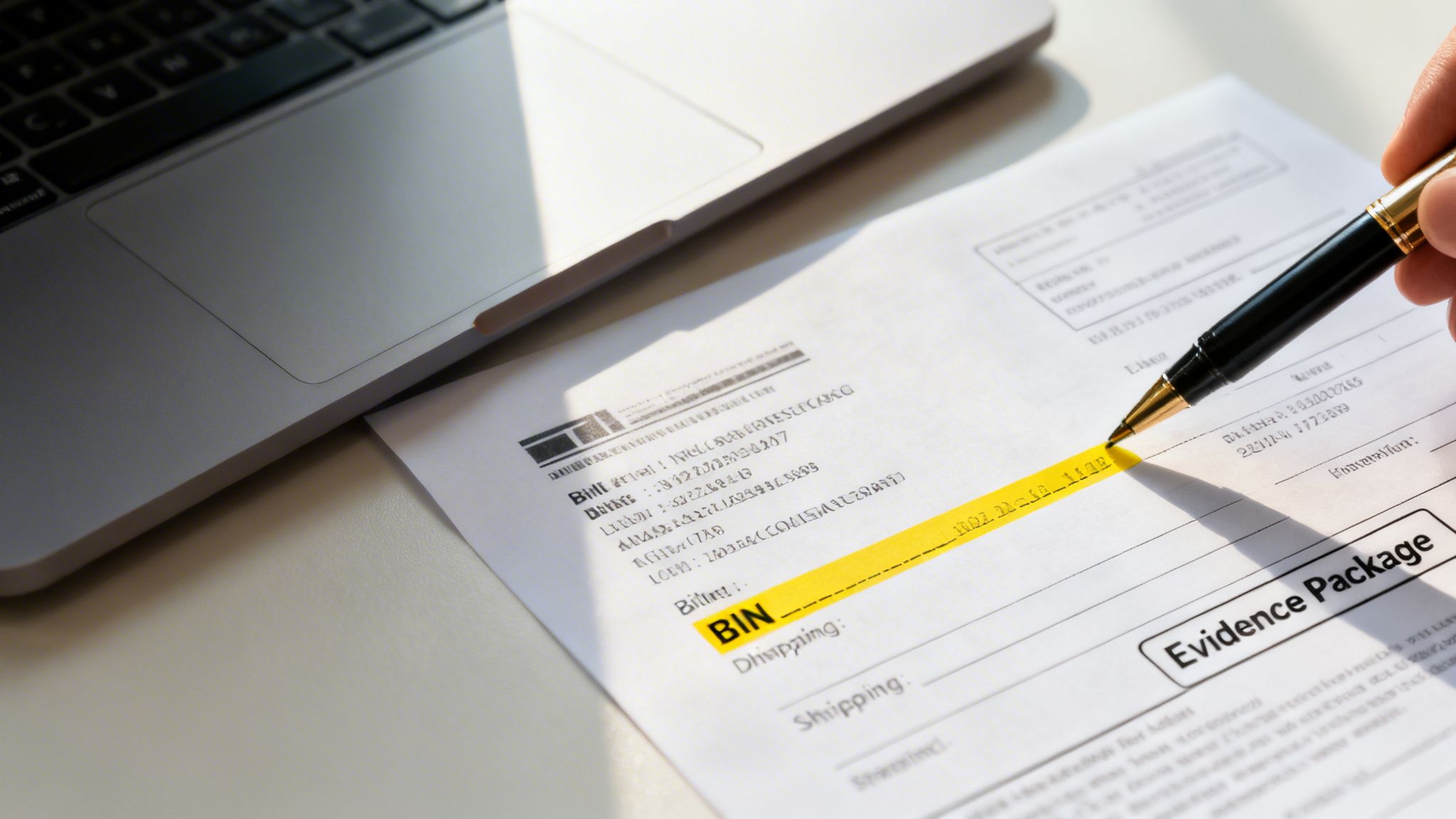
When you’re staring down a chargeback, the evidence you bring to the bank is everything. You can't just claim a charge was legit; you have to prove it with solid, undeniable facts. This is where information from the BIN on a credit card can be a surprisingly powerful tool in your corner.
Think of it as adding a crucial layer of proof that connects the actual customer to their purchase. It helps turn a simple transaction record into a story that's much harder for a bank to ignore.
Building an Airtight Case with BIN Data
Let's walk through a frustratingly common scenario: a customer files a chargeback, claiming a purchase was unauthorized. They swear they never made the order, and suddenly it's your word against theirs. This is where a quick BIN lookup can completely change the game.
Imagine you get a chargeback for a $350 order that was shipped to a customer in Miami, Florida. A quick check of the BIN reveals the card was issued by a regional bank located right there in Miami. That’s your "aha!" moment.
You can now include this detail in your chargeback response, and it makes your case much stronger.
Your rebuttal can state something like this: "The transaction was completed using a card issued by Miami Community Bank, which is based in the same city as the customer's verified shipping and billing address. This geographic match strongly suggests the legitimate cardholder, who lives in Miami, was in possession of the card and authorized this purchase."
This one piece of data creates a direct link between the physical credit card and the customer's known location. Suddenly, their claim of an "unauthorized transaction" starts to look pretty flimsy. It's no longer a simple he-said-she-said situation; you've brought data to the fight. Knowing how to present this info is key, and you can see great examples in a good rebuttal letter guide.
This is exactly how ChargePay helps Shopify merchants win back their revenue. Our AI doesn't just gather data—it strategically uses evidence like BIN analysis to build compelling dispute packages. We've handled over 100,000 disputes and recovered more than $2.8 million for our merchants by turning these small data points into winning arguments, hitting a 92.4% success rate. It’s all about using every tool at your disposal to protect your bottom line.
Setting Rules for International Orders and High Risk Countries
Going global is a massive step for any store. But with that growth comes a new set of headaches, especially when it comes to fraud and chargebacks. You'll quickly find that the risk isn't the same everywhere. The first six digits of every credit card—the BIN—tell you exactly which country a card comes from, giving you a surprisingly simple way to get smarter about how you handle international orders.
This piece of information is a game-changer because chargeback rates can be drastically different from one country to the next. For example, while the United States has a relatively low chargeback ratio of 0.47%, countries like Mexico and Brazil are much higher at 2.81% and 3.48%, respectively. You can discover more insights about global chargeback trends on PayCompass to get a real sense of how varied the landscape is.
Creating Smart Fraud Rules in Shopify
Armed with this knowledge, you can use the bin on credit card to build custom fraud rules right into your Shopify workflow. Instead of applying a single, blunt approach to all international orders, you can be much more surgical. This isn't about outright blocking sales from entire countries; it's about knowing which orders need a second look.
For example, you could set up your system to automatically flag any order that checks certain high-risk boxes:
- Country Mismatch: This is a classic red flag. The card's issuing country (from the BIN) is different from the shipping or billing country.
- High-Risk BIN Country: The purchase is coming from a card issued in a country known for high chargeback rates.
- High Order Value: A big order is placed using a card from a high-risk BIN country. This definitely warrants a pause before you ship anything.
Think of these rules as your own custom safety net. Orders that look a bit fishy are automatically paused for manual review. This gives you the breathing room to verify the customer’s identity before the product goes out the door, saving you from a potential loss.
The goal here is to strike a balance between airtight security and a smooth customer experience. You don't want to kill legitimate international sales by being too aggressive. Smart BIN rules let you focus your manual reviews where the risk is highest, so you can approve the good orders that much faster.
Using BIN data to manage international risk is a must for any Shopify store that wants to scale globally without seeing its chargeback losses scale right along with it. It allows you to step into new markets with more confidence, knowing you have a system in place to catch suspicious activity. This proactive approach is exactly what we champion at ChargePay, where we've helped over 100,000 merchants protect their revenue from these kinds of preventable losses.
Automate Your Fraud Defense with ChargePay
As your Shopify business grows, manually checking the BIN on a credit card for every order just isn't realistic. You’ve got a business to run, and playing detective with six-digit numbers all day isn’t the best use of your time. This is where automation becomes a lifesaver, protecting your revenue without slowing you down.
And that's exactly what ChargePay was built for.
Your Automated Chargeback Partner
Think of us as your always-on chargeback management team. Our AI platform handles the entire chargeback process, from spotting fraud before it happens to winning disputes for you. We’re proud to have earned a Built for Shopify badge and a 4.9-star rating because we’ve designed ChargePay to make your life easier.
Our system looks at transaction data in real-time, using BIN information along with dozens of other signals to flag suspicious orders before they become a problem.
When a dispute does land on your plate, you don't have to do a thing. Our AI immediately starts building a rock-solid case to fight it.
We automatically pull together all the compelling evidence needed to win, including geographic analysis from the BIN, IP address data, and customer history. This powerful, data-backed response is submitted for you, well ahead of any deadlines.
With ChargePay, you can stop worrying about chargebacks and get back to what you do best: growing your business. We've already managed over 100,000 disputes for our merchants, recovering more than $2.8M in revenue that would have otherwise been lost.
The best part? You only pay when we win a dispute for you. And with a 92.4% win rate, you can trust that we’re turning chargebacks from a headache into a solved problem.
Ready to see how it all works? You can learn more about the ChargePay AI platform and how we can transform your chargeback process.
Install ChargePay from the Shopify App Store today and let our AI take up the fight for you.
Frequently Asked Questions About BINs
We get it—once you start digging into what the BIN on a credit card is all about, a bunch of questions usually pop up. Here are some straightforward answers to the ones we hear most often from Shopify merchants just like you.
Can I Block All Prepaid Cards Using BINs?
Technically, yes, you could use BIN data to spot and block every single transaction coming from a prepaid card. But honestly, that’s usually a terrible idea.
Plenty of perfectly legitimate customers use prepaid cards for all sorts of reasons—maybe for budgeting, or they received one as a gift. Blocking them outright means you’re turning away good sales and frustrating real customers.
A much smarter approach is to treat the prepaid card info as just one piece of the puzzle. Instead of a hard block, you can set up a rule to simply flag those orders for a quick manual look-over. That way, you catch potential issues without scaring off genuine buyers.
Is Using BIN Lookup Data Compliant with Privacy Laws?
Yes, absolutely. Using BIN data for fraud prevention is standard practice and generally compliant with privacy laws like GDPR and the CCPA. The reason is simple: the BIN itself contains zero personally identifiable information (PII) about the cardholder.
All it does is identify the bank that issued the card, where that bank is located, and the type of card it is. Using this data to protect your store is a completely normal and legal security measure in ecommerce.
Think of it this way: you're checking the bank's "zip code," not the cardholder's home address. This distinction is what keeps you compliant while still protecting your store from fraud.
How Can I Start Using BIN Analysis on My Shopify Store?
The most effective way to get started is with an app that handles the heavy lifting for you. While Shopify's built-in fraud analysis offers some basic checks, a dedicated chargeback management app like ChargePay gives you a much deeper, automated analysis right out of the box.
ChargePay uses BIN data, along with dozens of other risk signals, to protect your store in real-time. Our AI does the work for you, from flagging suspicious orders before they become a problem to fighting disputes when they happen.
At ChargePay, we turn complex data points like BINs into recovered revenue for your store. With a 92.4% win rate and a 4.9-star Built for Shopify rating, our AI platform is your ultimate defense against chargebacks.
Install ChargePay from the Shopify App Store and let our AI start protecting your business today.


.svg)



.svg)


.svg)
.svg)
.svg)