

Payment fraud isn't a side issue for Shopify stores. It's a margin problem, an operations problem, and a customer service problem all at once. 79% of organizations reported attempted or actual payment fraud attacks in 2024 according to the Association for Financial Professionals data cited here. For online sellers, the pressure is even more concentrated because card-not-present fraud drives most of the damage.
Most store owners feel fraud as a series of separate annoyances. A disputed order here. A suspicious checkout there. A support ticket from someone claiming they never bought the item. In practice, those issues belong to the same system. Good payments fraud prevention blocks what you can before fulfillment, catches what looks wrong after the sale, and recovers revenue when a dispute still lands.
Why Your Store Is Leaking Money to Payment Fraud
Payment fraud usually does not hit at checkout. It hits after you have already paid to acquire the customer, approved the order, packed the box, and shipped it.
Then the dispute lands, the revenue disappears, and the order that looked profitable turns into a loss.
That is why fraud drains more cash than many Shopify owners realize. One bad order can wipe out product cost, shipping, fulfillment labor, ad spend tied to the sale, and the bank penalty attached to the dispute. If you want a clearer view of the full cost, this breakdown of a chargeback fee shows where the margin goes.

The leak is bigger than the disputed order
The obvious loss is the refunded transaction. The bigger problem is what happens around it.
A single fraudulent or disputed order creates operational drag across the business. Support has to answer the complaint. Ops has to pull order records. Finance has to reconcile the loss. If the pattern keeps repeating, teams start approving fewer borderline orders, which cuts into legitimate revenue too. That trade-off is real. Stores that tighten too hard lose good customers. Stores that stay too loose fund fraud with their own margin.
For e-commerce merchants, card-not-present payments carry more risk because the store cannot verify a physical card or ID at the point of sale. The Federal Trade Commission's guidance on online shopping fraud reflects the same reality from the consumer side. Remote transactions create more room for disputes, delivery claims, and unauthorized-use allegations.
Practical rule: If the first serious review of an order happens after the chargeback notice arrives, the store is already defending from behind.
Fraud prevention includes revenue recovery
Blocking bad orders matters, but it is only part of the job. Some fraud will still get through. Some cases will not be pure criminal fraud at all. They will turn into disputes from real cardholders, family-use claims, or buyers who recognize the charge only after calling the bank first.
That is why strong fraud management has two jobs. Reduce bad approvals before fulfillment, then recover revenue on disputes that should be fought and won.
ChargePay's published figures show 200K+ cases handled, $10.8M+ recovered, and a 92.4% win rate. The useful takeaway is not the brand mention. It is the operating model behind it. Stores get better results when dispute handling is treated as part of fraud prevention, not as back-office cleanup after the money is gone.
The stores that control fraud well do not treat chargebacks as random noise. They treat them as a measurable revenue leak, then close that leak from both sides. Prevention on the front end. Evidence and recovery on the back end.
Your First Line of Defense Smart Prevention Policies
Apps help, but weak store policies create chargebacks long before any fraud tool has a chance to help. Many disputes begin with confusion, not elaborate criminal behavior. A customer didn't understand the shipping timeline. They didn't recognize the billing descriptor. They expected an easier return. Then they called the bank instead of your support team.
Write policies for evidence, not just compliance
The strongest return and refund policy does two jobs at once. It gives honest buyers confidence, and it gives you a paper trail when someone disputes a transaction later.
A practical policy usually needs:
- Clear return window language so the customer can't say the process was hidden
- Visible refund conditions for opened, used, final sale, or custom items
- Plain shipping expectations on preorder, made-to-order, or delayed items
- A support contact path that is easy to find before a customer escalates to the bank
Keep the language plain. If a customer has to decode your terms, you've already made your dispute evidence weaker.
Set expectations before the order becomes a complaint
The best anti-chargeback email is often an ordinary operational email sent at the right time.
Use your order flow to confirm the details a bank will later care about:
- Order confirmation with product name, amount, billing descriptor, and support contact
- Fulfillment update with tracking or delivery timing
- Delay notice if inventory or carrier issues affect shipment
- Return instructions that make the correct path easier than filing a dispute
A customer who knows what they bought, when it ships, and how to contact you is harder to convert into a chargeback.
I also recommend reviewing where customers contact you outside email. If your brand handles community support in Discord, the tactics used to reduce Discord customer support scams are useful because they show how fake support interactions can confuse buyers and create downstream payment disputes.
Make your policies visible in the places that matter
Merchants often hide critical terms in the footer and wonder why customers say they never saw them. Put key policy details closer to the buying moment.
A simple placement table helps:
| Store area | What should appear |
|---|---|
| Product page | Return eligibility, shipping timing, preorder status if relevant |
| Cart | Refund summary, support contact, delivery note |
| Checkout adjacent content | Billing descriptor reminder and support path |
| Order confirmation email | Full order details and next steps |
| Shipping confirmation email | Tracking, ETA, support link |
This isn't glamorous work, but it works. Strong policies reduce confusion-driven disputes and make every later fraud tool more effective.
Hardening Your Checkout with Fraud Detection Signals
Shopify gives merchants useful fraud signals, but too many stores treat them like a single yes or no score. That's not how good order review works. A suspicious order is usually a pattern, not one isolated flag.

Read signals in combinations
One failed signal doesn't automatically mean fraud. A billing and shipping mismatch might be a gift. A customer traveling can create an odd geolocation result. A new email domain can still belong to a real buyer.
What matters is how signals stack.
- Billing and shipping mismatch gets more serious when the customer is new and the order is high value.
- AVS mismatch with correct CVV may be a typo, but it deserves scrutiny if other signals look off.
- Multiple failed payment attempts can mean card testing or a buyer trying several cards under pressure.
- IP geolocation discrepancy becomes more meaningful when the shipping address is a freight forwarder or reshipper.
- Email risk issues matter more when the address looks newly created, random, or inconsistent with the customer name.
A useful mental model is simple. One weak signal means review. Several weak signals together often mean cancel.
Know when to add authentication
If you're not using stronger authentication on risky orders, you're making checkout decisions with less evidence than you could have. For merchants who want a plain-English explanation of the trade-offs, this guide to 3-D Secure authentication is a good place to start.
3DS won't solve every fraud problem. It can add friction, and you shouldn't trigger extra checks blindly. But on the right transactions, it can separate a real cardholder from a fraud attempt before you ship.
Order review shortcut: Don't ask, "Is this flag bad?" Ask, "Does this order make sense as a real customer purchase?"
Payment method choice changes your baseline risk
Some payment types are just riskier by design. The clearest example comes from check-based payments. Businesses moving from checks, which carry a 63% fraud exposure rate, to real-time digital payments can reduce fraud incidents by up to 97%, according to Talli's summary of payment fraud prevention statistics.
Most Shopify merchants aren't dealing with physical checks at checkout, but the lesson still matters. Real-time verification and monitoring reduce the space fraudsters have to operate in. Delayed, manual, or weakly verified payment flows create more room for abuse.
Checkout hardening doesn't stop at the payment form
Your checkout is connected to the rest of your stack. Fraudsters also look for weak store infrastructure, compromised scripts, and vulnerable pages that can expose customer data or create fake payment experiences. If you're tightening the broader environment around transactions, this guide on protecting SMB websites is a practical companion.
Good checkout review isn't about declining more orders. It's about approving the right ones with more confidence.
Using Post-Sale Monitoring to Catch What Slips Through
Some fraudulent orders look clean at checkout. The card works. The address seems normal. The customer responds if contacted. Then the pattern changes after purchase.
That's why strong payments fraud prevention doesn't end at authorization.

Review orders by pattern, not one by one
Post-sale review works best when you stop looking at each order in isolation. Fraud rings and repeat abusers often expose themselves across a cluster of actions.
Watch for combinations like these:
- Multiple orders from a new customer shipped to different recipients in a short span
- Repeated purchases of the same SKU that can be resold easily
- Urgent support messages asking you to change the delivery address after payment
- Orders that pass checkout but come with unusual email replies, broken grammar, or copied message templates
- Several customers using the same device, phone, or address pattern inside a short review window
The point isn't to build a giant manual queue. It's to identify the small group of orders worth pausing before fulfillment.
Build a simple hold and release workflow
Most stores don't need a complex fraud department. They need a repeatable routine for edge cases.
A practical workflow looks like this:
| Order state | What to do |
|---|---|
| Low concern | Auto-fulfill as normal |
| Medium concern | Hold briefly and verify customer details |
| High concern | Cancel or request stronger confirmation before shipping |
For medium-concern orders, basic checks go a long way. Verify whether the email has a coherent history with your brand. Check whether the shipping destination appears to be a parcel forwarding service. Compare the order behavior with what normal customers buy from your store.
If you want to mature this process, it helps to think in terms of dedicated transaction monitoring solutions rather than isolated fraud flags. Monitoring is about sequences, timing, repetition, and behavior over time.
Fraud review gets better when your team asks, "What happened around this order?" instead of only "Did this order pass checkout?"
Use post-purchase communication as a detection tool
Fraudsters often reveal themselves when they need something changed. A request to rush shipping, reroute a package, split an order, or change customer details after payment deserves attention.
Legitimate customers can make those requests too, of course. The difference is context. If the request arrives alongside other warning signs, don't treat it like normal service work.
This is the last checkpoint before product leaves your hands. Once fulfillment happens, your options shrink fast.
How to Win the Fight Against Friendly Fraud
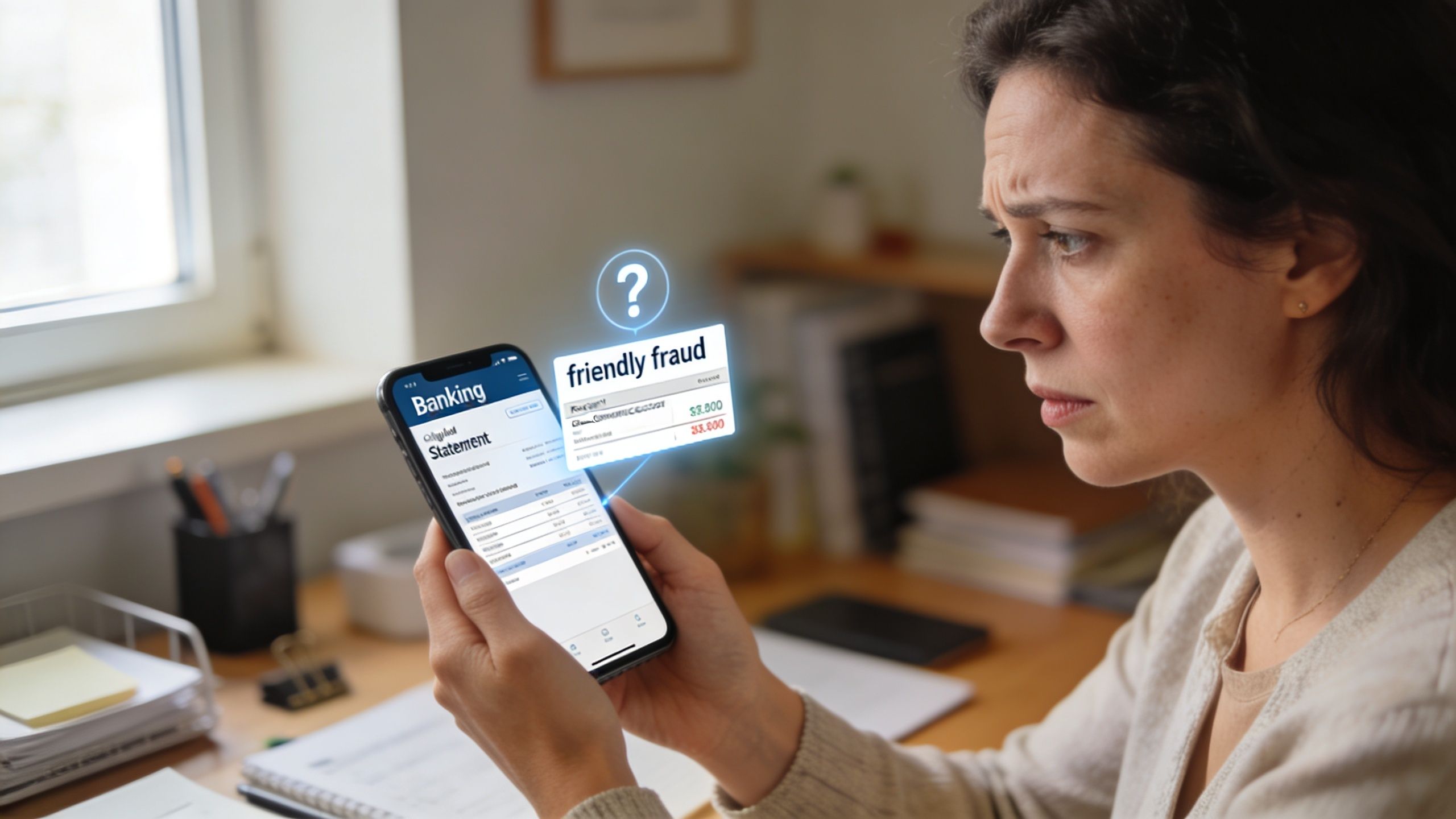
The chargebacks that frustrate merchants most often come from real customers, not stolen cards. Friendly fraud accounts for 40% to 70% of all e-commerce disputes, according to the summary provided by FIS. That's why so many merchants feel blindsided. The order looked legitimate because, in many cases, it was.
Friendly fraud is messy, not mysterious
A customer might forget the purchase. Their spouse might place the order. They might not recognize the descriptor. Or they may decide the bank is easier than your return process.
Then there's the harder version. The customer received the item, kept it, and still disputed the charge.
That's why merchants need a playbook for friendly fraud, not just generic card fraud rules. Different dispute types need different evidence, and first-party abuse usually hinges on proving that the purchase was authorized and fulfilled as described.
The evidence that actually helps
When merchants lose representment, the usual problem isn't that they had no evidence. It's that they had scattered evidence.
You need one tight package that shows a clear story:
- Transaction proof showing the purchase date, amount, and payment approval
- Customer identity indicators such as matching name, email, account history, or device-related consistency where available
- Order records including item details, timestamps, and any customer-selected variants
- Fulfillment proof like tracking, delivery confirmation, or pickup records
- Customer communication that shows post-purchase engagement, delivery questions, support requests, or satisfaction before the dispute
- Policy visibility showing the customer had access to your terms, refund process, or delivery expectations
That package should read like a case file, not a folder dump.
Banks don't reward effort. They reward clear evidence tied to the card network reason code.
A lot of merchants still fight disputes manually. That usually means copying screenshots, digging through email threads, and trying to hit deadlines between other jobs. It's slow, inconsistent, and expensive in staff time.
Here's a useful walkthrough on how merchants think about evidence and responses in practice:
Automation changes the economics
Many stores leave recoverable money behind. They don't lose because every dispute is unwinnable. They lose because fighting each one by hand isn't practical.
One option in the Shopify ecosystem is ChargePay. It automates chargeback handling by building dispute responses, organizing supporting evidence, and submitting representment without requiring manual drafting from the merchant. For stores dealing with repeat friendly fraud, that kind of workflow matters because it turns dispute response from a backlog problem into an operating process.
The bigger point is strategic. Friendly fraud shouldn't sit in the books as an automatic write-off. If a customer authorized the order and received the goods, the merchant should fight the claim.
The KPIs That Matter for Fraud Management
A fraud program can drain margin fast. Organizations spend an average of 10% of annual e-commerce revenue to manage payment fraud in Europe and the US, and 42% of card issuers report saving more than $5 million over two years with AI-based fraud prevention tools, according to data from Juniper Research. For Shopify stores, the takeaway is practical. Fraud cost sits in lost orders, labor, avoidable declines, and disputes you should have won.
Tracking chargeback count alone tells you there is a leak. It does not show which team, rule, or workflow is causing it. Stores that improve fraud performance use a dashboard that measures prevention and recovery together.
That matters because fraud prevention is not just a blocking function. It is a revenue recovery function too. If your stack stops bad orders but your dispute process still loses clean, defensible cases, margin keeps leaking.
Track the numbers that change decisions
A useful fraud dashboard for a Shopify merchant should include:
- Dispute win rate to measure whether your evidence and representment process returns money
- Revenue recovery rate to show how much disputed revenue comes back to the business
- Manual review load to expose payroll cost and review bottlenecks
- Order cancellation accuracy to catch rules that reject good customers and suppress conversion
- Support-to-dispute overlap to find chargebacks that started as shipping, refund, or communication failures
Chargeback rate still belongs on the dashboard. It just should not run the dashboard by itself. This guide on ecommerce chargeback rate is useful if you want a tighter read on how to interpret that number.
Measure fraud ROI the way finance does
Many merchants undercount fraud cost because they only log the order amount from the dispute. However, the actual cost usually runs higher. Teams spend time reviewing flagged orders, pulling tracking, checking CRM notes, preparing responses, and fixing customer issues that later become disputes.
Use a simple operating table:
| KPI | Why it matters |
|---|---|
| Win rate | Shows whether your dispute process brings revenue back |
| Recovery value | Ties fraud operations to dollars recovered |
| Time per dispute | Shows hidden labor cost |
| False decline or over-cancel pattern | Protects approved revenue and repeat purchase rate |
| Repeat dispute customer pattern | Flags abuse, policy friction, and service gaps |
For a wider reporting framework, Carti's guide to master e-commerce performance metrics complements fraud reporting well because it connects dispute outcomes to store profitability.
The stores that get this right treat fraud as an operating system. They measure what was blocked, what slipped through, what was recovered, and what it cost to do the work. That is how you turn fraud management from a cost center into a function that protects revenue.


.svg)



.svg)


.svg)
.svg)
.svg)