

You know the order type. The customer wants expensive inventory, wants it fast, and gives you just enough normal-looking detail to make cancellation feel risky. The billing name checks out at a glance, but the shipping destination feels off. Maybe it's going to a forwarding address. Maybe the email looks disposable. Maybe the customer never replies when you ask a simple verification question.
That's often where chargebacks start.
A lot of merchants hear the term straw buyer and assume it belongs to gun law or mortgage fraud, not Shopify. But the basic pattern shows up in e-commerce all the time. One person places the order. Another person is the actual beneficiary. The setup is meant to hide identity, dodge scrutiny, or make the transaction look clean long enough for your product to leave the warehouse.
If you run a Shopify store, understanding what a straw buyer is helps you do two things better. First, you can catch suspicious orders before fulfillment. Second, when fraud still slips through, you're in a stronger position to document what happened and fight the dispute.
That Strange Order You Just Received Might Be a Problem
A suspicious order rarely announces itself as fraud. It usually arrives dressed as a normal sale.
You might see a first-time customer buy high-resale inventory with rush shipping. The billing and shipping details don't line up. The phone number works, but nobody answers. The customer account was just created. The order passes enough checks to make your team hesitate, but not enough to feel comfortable.
That kind of order can involve a straw buyer. In plain terms, someone visible makes the purchase, but someone else is the actual end user. In e-commerce, that often means the person receiving the goods isn't the person whose payment credentials should be tied to the order, or the person placing the order is acting to shield the actual fraudster.
Why this matters to your revenue
For Shopify merchants, the damage usually shows up later as a chargeback. By then, the product is gone, the payment is reversed, and you're also dealing with fees, admin time, and a higher fraud burden on future orders.
The hard part is that many of these orders don't look outrageous. They look slightly wrong.
Practical rule: If an order makes your team say “something feels off,” slow it down before you ship it.
That instinct matters more than many merchants realize. Fraud tied to reshippers, account misuse, and identity concealment tends to leave small clues, not dramatic ones. If you already have repeat problem buyers, this guide on how to blacklist, block, and ban scammers on Shopify is worth keeping nearby.
What usually doesn't work
A lot of stores rely on a single signal. They trust AVS alone. Or they only review orders above a certain price. Or they assume mismatched billing and shipping means fraud every time.
That approach creates two problems. You miss fraud that looks ordinary, and you annoy legitimate buyers who are sending gifts, shipping to work, or using a family card with permission.
The better approach is pattern review. Look at the order as a whole. One odd detail might be harmless. Several in combination deserve action.
What a Straw Buyer Really Is
At the core, a straw buyer is an intermediary. They acquire goods, property, or financial instruments for the ultimate end user, often to hide who the true beneficiary is or whether that person was even eligible to buy it in the first place. The arrangement becomes illegal when it's used to evade legal restrictions, and the primary warning sign is intent to deceive, not merely acting on someone else's behalf, as explained in Unit21's definition of a straw purchase.

A simple way to think about it
Say a person wants to buy from a members-only shop but can't. They ask someone who can get in to make the purchase for them. If that helper is just buying a gift openly, there may be nothing wrong with it. If the helper is being used to conceal the true buyer or bypass rules, that's where the problem begins.
The same logic applies online. The person who appears in your order data may not be the person who wants the goods. That difference matters when the transaction is structured to hide identity, avoid a block, evade screening, or set up a later dispute.
Agency is not the same as deception
Often, merchants get tripped up at this point. Buying something for another person is not automatically fraud.
A legitimate proxy purchase can happen every day in commerce. Parents buy for kids. Assistants buy for executives. One spouse buys with the other spouse's knowledge. Gift purchases happen constantly. Those transactions only become dangerous when the buyer is being used to mislead the seller or payment system.
A straw buyer isn't defined by “buying for someone else.” The real issue is whether the transaction is built to deceive.
That distinction overlaps with what many merchants call first-party fraud on Shopify. The face of the transaction can look legitimate while the intent behind it is not.
Why merchants should care about the definition
If you understand the intent piece, your reviews get sharper. You stop overreacting to normal gift behavior, and you stop underreacting to layered fraud that hides behind a clean-looking customer profile.
That's the practical value of knowing what a straw buyer is. It gives you a better frame for deciding when to verify, when to hold, and when to cancel.
Common Straw Buyer Schemes Outside of E-commerce
The term “straw buyer” didn't start in online retail. It became widely known in regulated, high-risk transactions where hiding the actual buyer creates serious legal and financial harm.

Firearms
In firearm purchases, a classic straw buying pattern is simple. A person who can legally pass the purchase process buys on behalf of someone who either doesn't want scrutiny or cannot legally buy the firearm directly.
That's not a paperwork technicality. Giffords Law Center explains that federal law treats this as a crime when the buyer falsely claims on ATF Form 4473 to be the “actual transferee/buyer,” and notes the Supreme Court reinforced that point in Abramski v. United States in 2014. The same source states the ATF says illegal firearm straw purchasing can carry penalties of up to 15 years in prison and a $250,000 fine, or up to 25 years in certain cases, and cites a survey of firearm licensees suggesting there are more than 30,000 attempted straw purchases each year. You can review that summary in Giffords' overview of trafficking and straw purchasing.
Real estate and mortgage fraud
Mortgage fraud uses the same structure, just with different paperwork and bigger balance sheets. A fraudster finds someone with decent credit and uses that person to apply for the loan or buy the property. The straw buyer may be promised cash, a cut of profits, or told they're only helping temporarily.
In practice, the legal responsibility stays with the named borrower.
According to FinCEN's mortgage fraud case example involving straw buyers, one Mid-Atlantic scheme lasted approximately three years and generated more than $2,500,000 in losses to banks and commercial lenders. Guidance tied to these schemes also notes familiar patterns such as inflated home values, little or no equity, and the straw buyer ending up exposed to foreclosure.
The pattern that carries over
These examples matter because they reveal the shared structure:
- A qualified front person appears legitimate. They pass checks the actual buyer may not pass.
- The true beneficiary stays in the background. That person gets the benefit while avoiding scrutiny.
- The seller or lender sees incomplete truth. The transaction is approved based on misleading information.
That pattern is exactly why Shopify merchants should care. The product category is different, but the fraud logic is the same.
How Straw Buyers Target Your Shopify Store
In e-commerce, the term usually doesn't appear in the dispute paperwork. You won't open a chargeback and see “straw buyer” stamped across it. What you'll see is an unauthorized charge claim, a suspicious delivery path, or a customer profile that looks normal until you compare the details side by side.

The reshipper version
One common pattern goes like this. A fraudster wants your product but doesn't want it shipped directly to themselves. So they use another person, sometimes knowingly and sometimes as a low-level mule, to receive the order and forward it elsewhere.
Your store sees a domestic customer and a deliverable address. The actual thief stays one step removed.
When the true cardholder notices the charge, they dispute it. You lose the inventory, the sale, and the time spent handling the case. That's why stores selling electronics, limited drops, supplements, and branded apparel often see these transactions turn into avoidable losses.
The clean account version
There's another form that looks more like friendly fraud. A blocked customer, a risky buyer, or someone expecting scrutiny uses a friend's or family member's details to place the order. The account looks cleaner than their own. The shipping destination may be less suspicious. Customer service may even get calm, believable replies.
Then the dispute comes later.
This overlap is one reason many merchants misclassify straw-buyer-related behavior as simple customer confusion. In reality, the visible buyer may have been selected precisely because they were less likely to trigger your filters. If you're seeing this kind of pattern, review your process for high-risk Shopify orders.
When the person paying, the person receiving, and the person communicating don't line up cleanly, you should assume the order needs review.
Why merchants miss it
Most stores don't miss these cases because they're careless. They miss them because each signal, viewed alone, seems explainable.
A different shipping address can be a gift. A new Gmail address can be normal. Expedited shipping can be legitimate. A forwarding location can be routine for international buyers. Fraud hides in combinations.
That's why a strong review workflow matters more than any single rule. You're not looking for one perfect clue. You're looking for a transaction that only makes sense if everyone involved is acting legitimately. When that logic breaks, risk goes up fast.
Red Flags to Detect a Potential Straw Purchase
You don't need a forensic team to spot the warning signs. You need a consistent review habit and a short list of signals your staff can scan quickly before fulfillment.
Signals worth checking together
Here's a practical checklist you can use during order review.
| Signal Category | Red Flag Example | Why It's Suspicious |
|---|---|---|
| Customer identity | Generic customer name paired with a brand-new account | Fraudsters often keep profiles shallow and disposable |
| Billing and shipping | Billing and shipping don't match, especially on expensive items | The visible buyer and real recipient may be different people |
| Address pattern | Multiple orders from different cards ship to the same address | This can suggest reshipping, mule use, or organized testing |
| Email quality | Random-looking or throwaway-style email with no history | Low-effort contact details reduce traceability |
| Shipping behavior | Rush or overnight shipping on a high-resale product | Fraudsters want goods moving before review catches up |
| Customer behavior | Customer avoids verification or gives vague answers | Honest buyers usually clear up simple questions quickly |
| Order mix | Unusual quantity, unusual size mix, or only the most resellable variants | The goal may be resale value, not normal consumer use |
| Account pattern | Prior blocked details reappear with slightly altered customer information | A known buyer may be hiding behind a cleaner identity |
What to do when one signal appears
Don't auto-cancel every order with a mismatch. That creates false positives and lost revenue.
Instead, separate isolated signals from stacked signals:
- One weak signal: hold briefly and verify.
- Several moderate signals: pause fulfillment and request confirmation.
- Repeated pattern across orders: cancel, document, and monitor for reuse.
If address mismatch is one of the triggers in your flow, this guide on AVS address verification helps clarify what it can and can't tell you.
Practical review steps
A manual review doesn't have to be complicated.
- Check consistency: Does the customer name make sense with the email, phone, and shipping recipient?
- Look at order intent: Is this a normal consumer basket, or only easy-to-resell SKUs?
- Ask a simple question: Fraudsters often break on small verification requests.
- Save your notes: If the order later turns into a dispute, your internal record becomes useful evidence.
Review habit: Don't just ask whether the order can be fulfilled. Ask whether the story behind the order holds together.
That single shift catches more fraud than many merchants expect.
How to Prevent and Fight Straw Buyer Fraud
Prevention starts before the chargeback. Recovery depends on what you saved before the package went out.
Build friction in the right places
The goal isn't to make checkout painful for everyone. It's to slow down the orders that carry a mismatch between the visible buyer and the likely real beneficiary.
A workable prevention setup usually includes:
- Risk-based review rules: Flag mismatched addresses, repeat destination addresses, or unusual order combinations for manual review.
- Verification contact: Send a simple email or call request before fulfillment on suspicious orders.
- Shipping discipline: Don't rush expensive inventory out the door just because the customer selected priority shipping.
- Customer history checks: Look for reused addresses, recycled phone numbers, and account details tied to past disputes.
If you want a broader framework, keep this guide to chargeback prevention for Shopify merchants in your operating playbook.
Gather evidence before you need it
When these orders turn into disputes, merchants often lose because the evidence trail is thin. “It looked suspicious” won't win a representment on its own. What helps is a clean, documented record.
Save the things you already touch during review:
- Order details: timestamps, SKUs, variant choices, and checkout data
- Customer communication: replies, non-replies, verification attempts
- Fulfillment proof: tracking, delivery confirmation, carrier milestones
- Internal notes: what triggered review and what your team found
That last point matters. A short internal note written at the time of review is more credible than a reconstructed story weeks later.
A lot of merchants also benefit from seeing how evidence should be organized in practice:
What works and what doesn't
What works is layered control. Review rules, human judgment, verification, and documentation together.
What doesn't work is relying on instinct alone, or assuming delivery proves legitimacy. Fraudulent orders get delivered all the time. Delivery only proves a package arrived somewhere. It doesn't prove the underlying purchase was valid.
The merchants who handle this well treat suspicious orders like future disputes. They review them that way, document them that way, and fulfill them only when the full picture makes sense.
Frequently Asked Questions About Straw Buyers
Is buying a gift the same as a straw purchase
No. A gift purchase can be completely legitimate.
The important difference is intent. As summarized in Wikipedia's overview of straw purchases, these transactions can be legal in some situations but become illegal when they involve fraud, intent to deceive, or transfer to someone who is legally prohibited from buying the item. That's the line merchants should remember.
If a customer openly buys a gift and nothing else looks deceptive, that's not the same thing as someone using another person to hide the actual buyer.
Should you block a customer you suspect is acting as a straw buyer
If the risk signals stack up and the story doesn't hold together, yes, blocking may be the right move. But don't do it based on one weak clue.
A better standard is repeated inconsistency. If the same address, phone, email pattern, or recipient name keeps showing up around suspicious orders or disputes, document it and cut off future transactions tied to that cluster.
Are freight forwarders always a fraud signal
No. They raise risk, but they aren't automatically fraud.
Some legitimate international buyers use forwarding services. The problem is that forwarders also make it easier for a bad actor to distance themselves from the final destination. Treat them as a review trigger, not an automatic conviction.
What if the order looks legitimate but still feels wrong
Pause it and verify. That's often the cheapest decision.
A quick customer confirmation, identity check, or fulfillment hold can save the sale if the buyer is real, or save the inventory if they're not. This is especially important if your shipping process involves outside logistics partners. If you want a clearer sense of where handoffs can create blind spots, this overview of how 3PL warehousing works is useful context.
Can you prove a straw buyer in every chargeback
Usually not in a legal sense, and that's not always necessary for day-to-day operations. Your job as a merchant is to spot the pattern, reduce avoidable shipments, and preserve evidence when the order becomes a dispute.
You're not trying to win a criminal case. You're trying to protect margin.
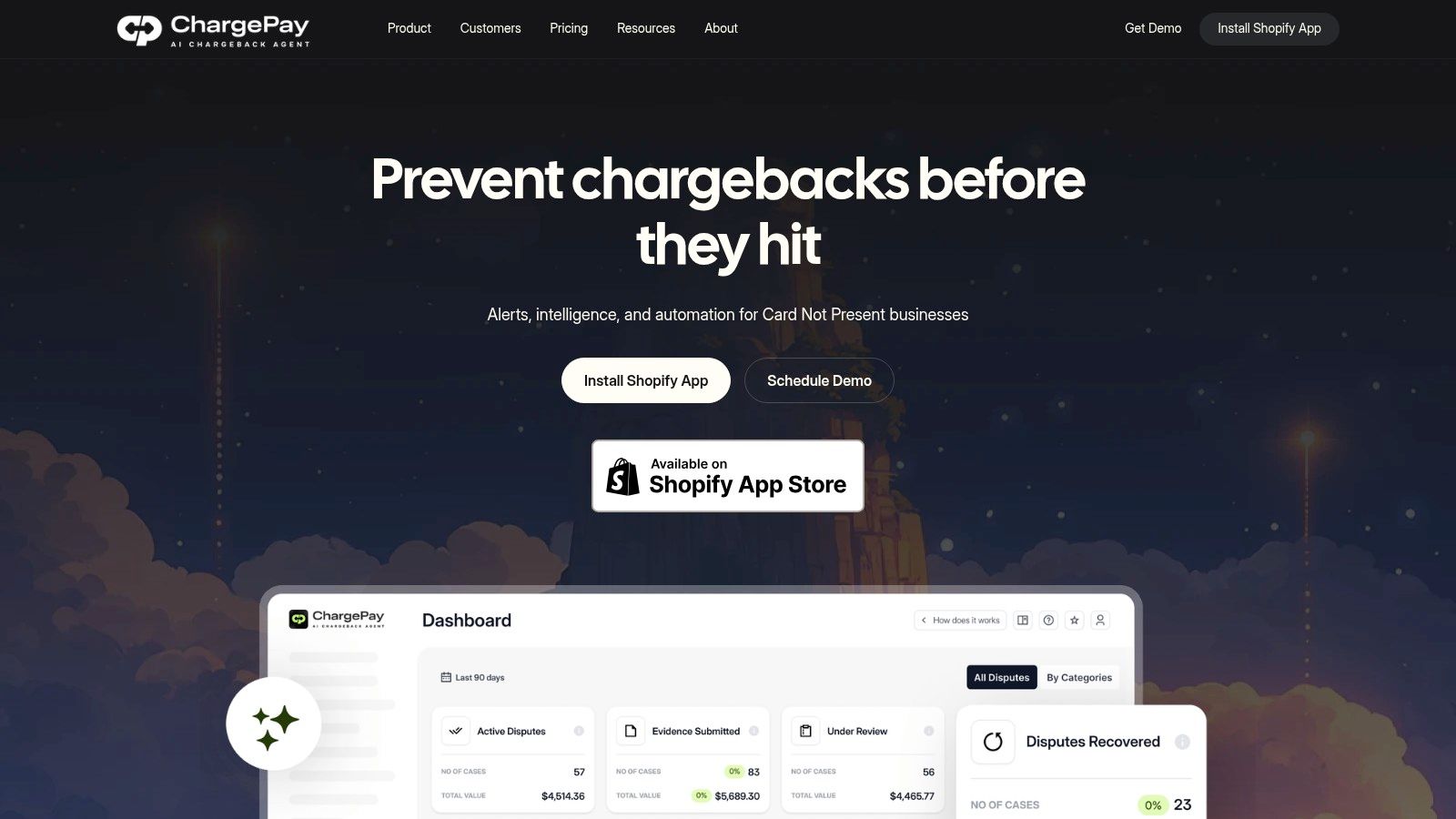
Chargebacks caused by hidden buyers, reshippers, and disguised friendly fraud can drain revenue fast. ChargePay helps Shopify merchants fight back with a 92.4% win rate, 200K+ disputes handled, and $10.8M+ recovered. It has a 4.9-star Shopify App Store rating, carries the Built for Shopify badge, and uses a pay-per-win model so you only pay when money is recovered. If chargebacks are eating into your margin, install ChargePay from the Shopify App Store and put dispute recovery on autopilot.


.svg)



.svg)


.svg)
.svg)
.svg)